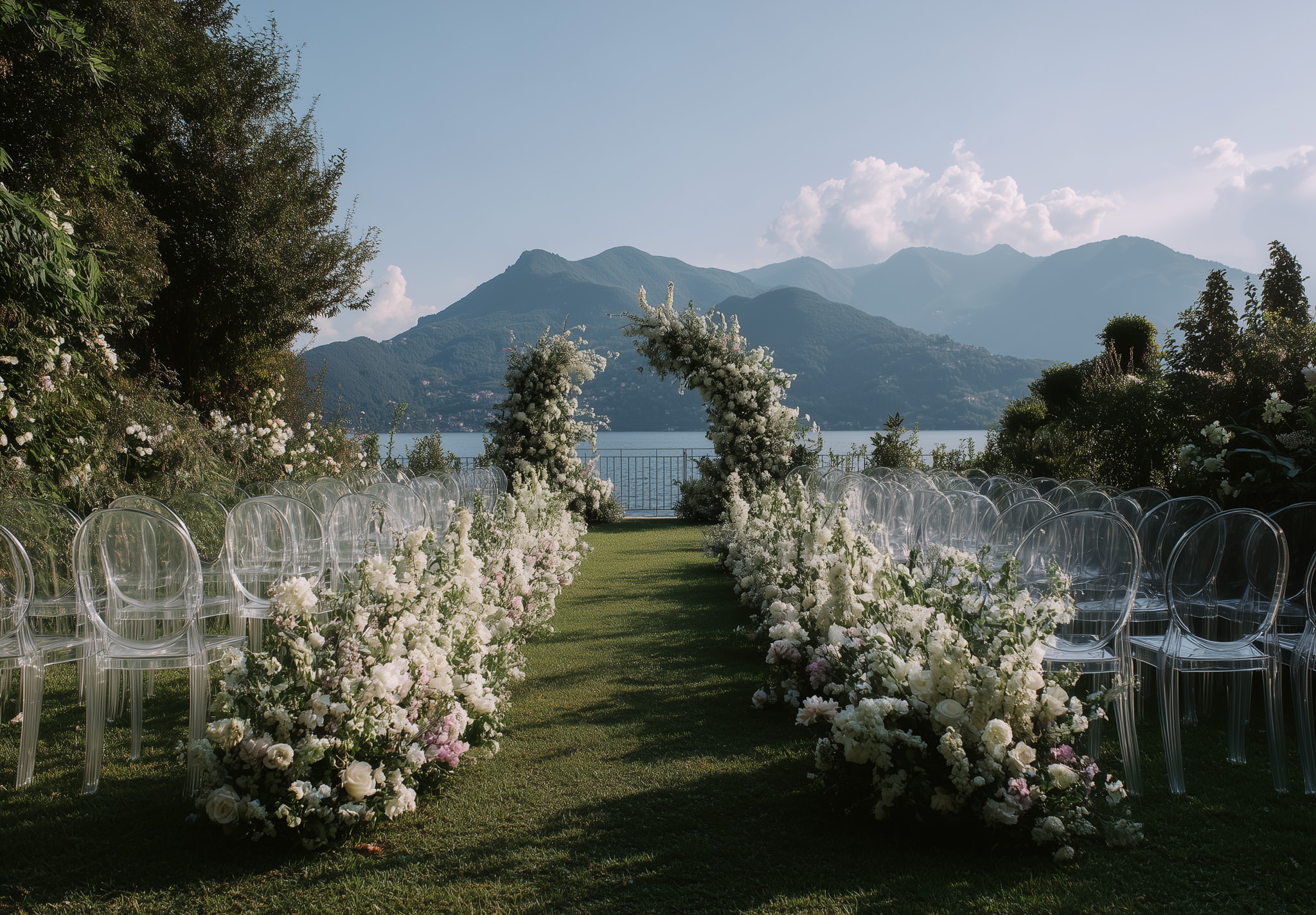
Lake Como has its own climate. The lake sits at the southern edge of the Alps, enclosed between mountain ridges, and the geometry of the basin produces weather patterns that are neither fully Mediterranean nor fully alpine. For a wedding photographer, understanding these patterns is not a nicety. It is how a day is designed.
This article collects the studio’s working note on Como weather and light across the year, written for couples and planners who want realistic expectations rather than marketing-brochure optimism.
The lake as a weather system
Lake Como is 46 kilometers long, narrow, and deep. The water absorbs heat in summer and releases it in autumn, which moderates the surrounding temperatures and creates the microclimate that allows the characteristic Mediterranean vegetation of the lake shore: olive trees, cypresses, oleander, and lemon groves at this latitude.
The mountains around the lake shape the air circulation. The breva rises from the south in mid-morning, driven by the temperature differential between the plain below Como and the alpine valleys above Colico. It reaches peak intensity in the early afternoon and drops at sunset. The tivano descends from the north in the evening and into the night.
These wind cycles create the specific Como day: calm at dawn, gradually textured in the morning, open water with wave activity from eleven to three, calming again in the evening, often glassy at sunset.
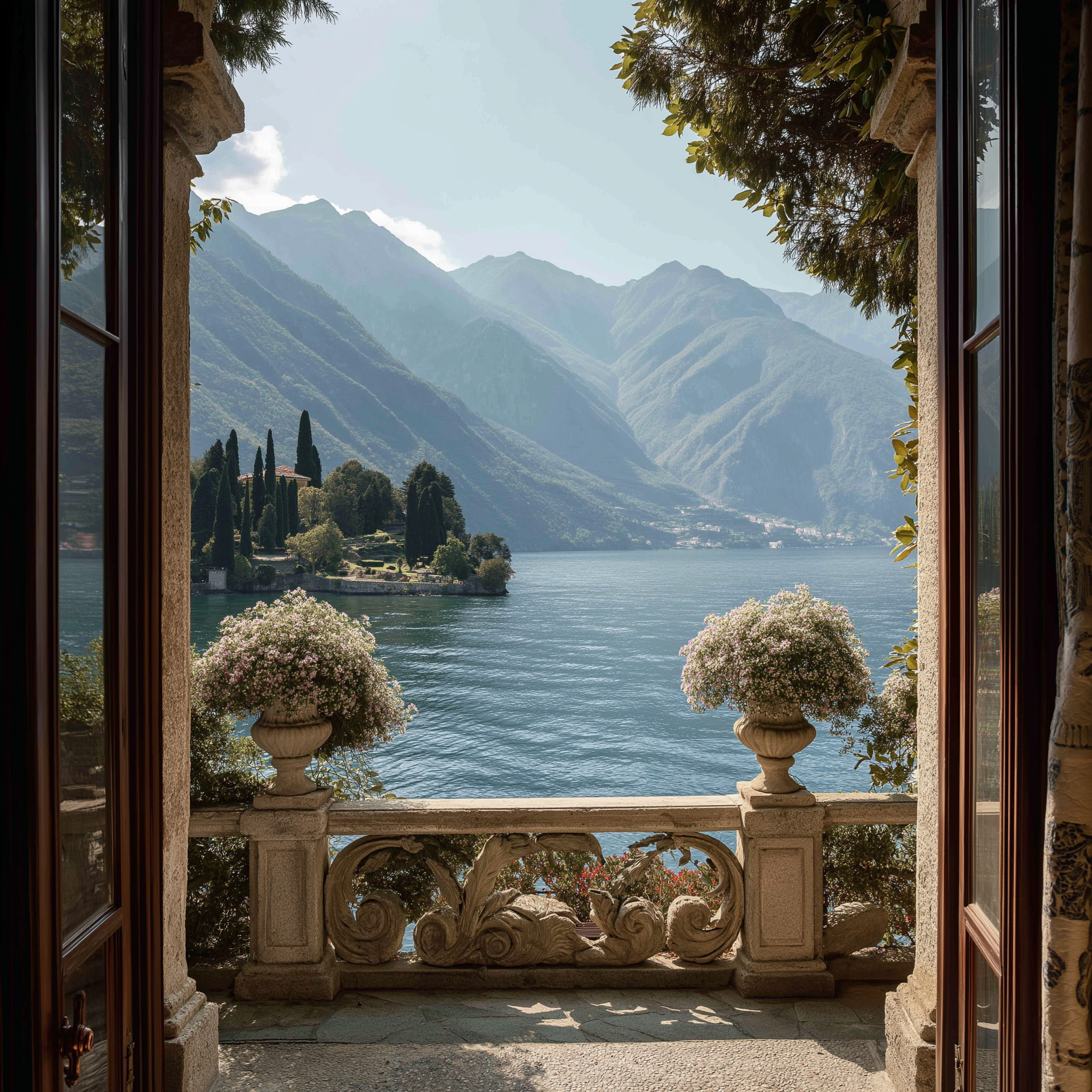
Spring (April to early June)
Spring on Como is variable but rich. April can carry late rain and cool mornings, and the snow on the higher peaks above the lake is still visible at the start of the month. Vegetation wakes rapidly through April and early May, with wisteria, azaleas, and rhododendrons peaking depending on the elevation.
Light is soft, slightly cool, and photographically generous. The mornings have the clarity of alpine air, and the afternoons warm without yet producing the hazy summer quality.
Rain is a real possibility and timelines should include fallback indoor locations. Several of the top venues (Villa d’Este, Villa Passalacqua, Grand Hotel Tremezzo) have extensive indoor spaces that work for rainy ceremony coverage.
Early summer (late May to mid-June)
Early summer is one of the two photographic peaks on Como. The weather stabilizes, the days are long, the vegetation is fully developed without being tired, and the temperatures are warm without being hot. Light is strong but still holds the spring softness through the morning hours, and the afternoon produces a long, usable window from three in the afternoon to sunset.
This is the window we most often recommend for couples who want reliable weather and vibrant light.
High summer (late June to mid-August)
Temperatures rise, the air thickens with humidity, and the lake produces a slight haze that becomes visible in wide shots. The haze is photographically useful in moderation, softening backgrounds and adding atmosphere. It is also a signal that midday light becomes harder to manage: the sun is nearly vertical, the water surface is reflective, and exposed outdoor ceremonies are uncomfortable for guests.
Summer thunderstorms are common, particularly in late afternoon. They are usually short but intense. The studio treats them as opportunities rather than problems: the post-storm hour often produces the most dramatic light of the entire season.
Late summer to early autumn (late August to late September)
The season shifts. Temperatures begin to drop slightly, the humidity decreases, and the light regains clarity. September is the second peak of the year for Como weddings, combining stable weather, strong light, and full venue availability.
Vegetation begins its late-summer depth, not yet autumnal but past the brightness of June. The light quality has a slight amber that is flattering and photographically distinctive.
Autumn (October to November)
October retains warmth in the first two weeks and declines rapidly in the second half. Light is amber and low-angled, and the autumn foliage begins to show on the mountain slopes around the lake. This is the most atmospheric window of the year, with mist rising off the lake on cold mornings and light that carries genuine cinematic quality.
Rain becomes more frequent, and by mid-October the weather risk is material. We recommend October weddings only to couples who value the atmospheric conditions and accept the weather variability.
Winter (December to March)
Cold, short days, frequent rain and fog. The lake is quiet, many venues close or reduce operations, and the photographic conditions are limited but sometimes remarkable. Winter mornings on the lake can produce some of the most beautiful light of the year, particularly around Bellagio and the northern branch when snow reaches the lakeshore.
For full wedding coverage we do not recommend winter. For elopements and editorial portrait sessions, the season has its own appeal.
Microclimate notes
Moltrasio and the stretch from Cernobbio to Torno, on the west shore, are sheltered by the ridge behind them and are often warmer and calmer than Bellagio at the tip of the peninsula. Bellagio is more exposed and receives the wind earlier.
The east shore, from Varenna south to Lecco, receives morning sun and is in shadow in the late afternoon, which affects ceremony timing for venues on that side.
The northern end of the lake, from Menaggio upward to Colico, is cooler and more alpine in character than the southern end, which affects both light quality and vegetation.
What this means for timeline design
Couples and planners who understand the weather patterns can design a timeline that works with them rather than against them. Ceremony timing is set to match the light on the specific venue terrace rather than the clock. Boat transfers are scheduled around the wind cycle. Fallback indoor spaces are identified for every outdoor location. Rain is treated as a planning parameter, not an emergency.
The studio participates in these conversations during the planning cycle and provides venue-specific and date-specific input based on previous experience. In the final days, forecasts from the Italian Meteorological Service enter the conversation.
Frequently asked questions
Is Lake Como reliable for weather?
Relatively, within reason. Late spring and early autumn are the most reliable windows. Summer is generally stable but carries thunderstorm risk. Spring and autumn carry real rain risk.
Does wind often disrupt Lake Como weddings?
Rarely fully. Wind affects boat transfers and open-terrace ceremonies during the mid-day peak. The studio plans around this.
What happens if it rains on the wedding day?
The ceremony often moves indoors or under the covered loggias that most top venues provide. Photography adapts to the indoor settings, which on Como are consistently strong.
Is the light on Como different from other Italian lakes?
Yes. The basin’s alpine geometry produces a light quality that is sharper in the morning and more atmospheric in the evening than the flatter lakes further south.
When is the haze most pronounced?
Mid-summer, particularly in July and early August. It is visible in wide shots across the lake.
How does seasonal variation affect venue pricing?
Substantially. Shoulder seasons offer better pricing than peak. Spring and autumn are often significantly less expensive than June through September for equivalent venues.

