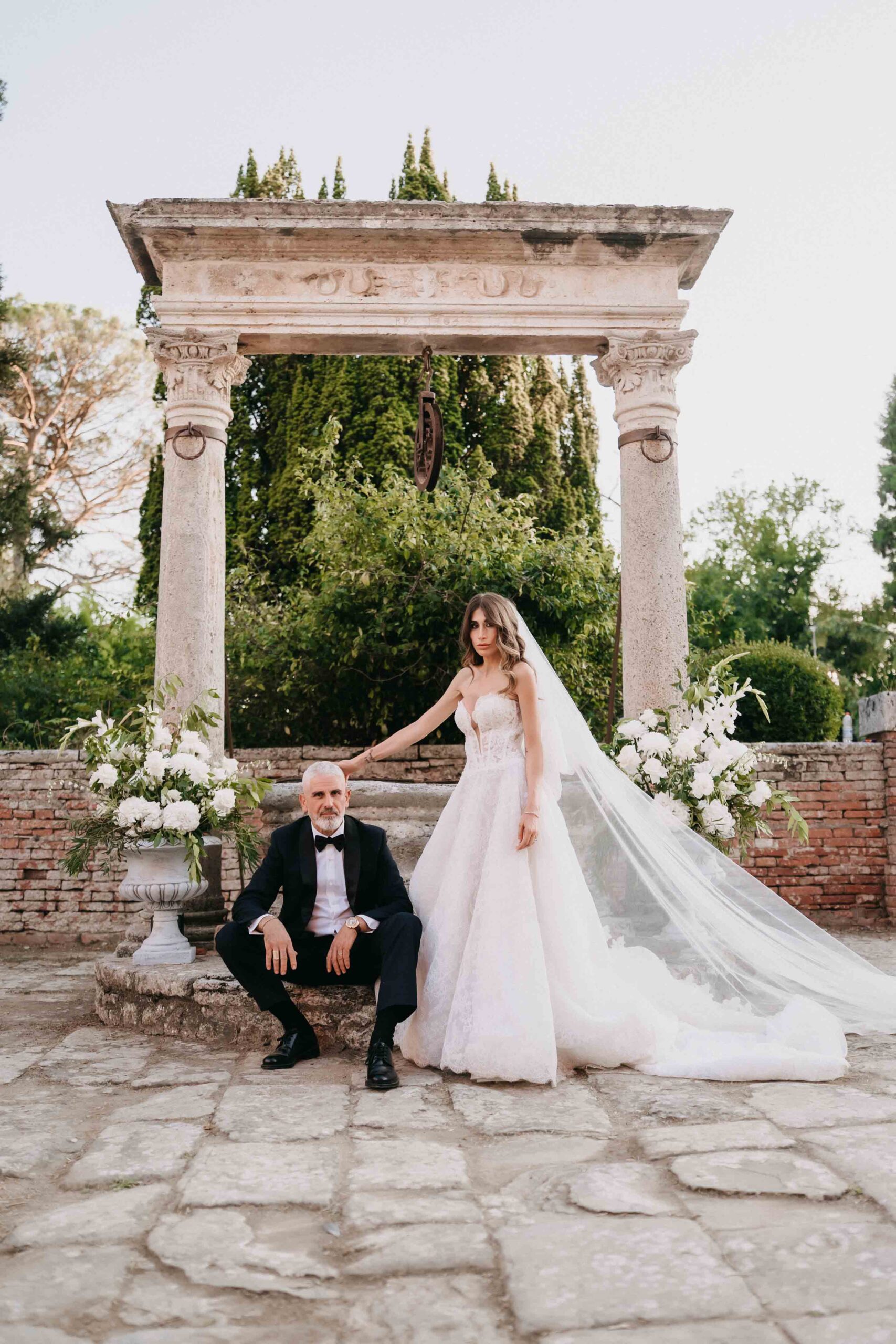
Villa Cetinale is the Tuscan venue that does not look like Tuscan venues usually look. Where most of the region speaks the vocabulary of rolling hills, stone farmhouses, and pastoral informality, Cetinale speaks a different language entirely. It is baroque. It is axial. It is architectural in a way that demands the photographer think about composition in geometric rather than organic terms. For couples interested in a wedding that feels cinematic rather than rustic, Cetinale is arguably the most interesting property in Tuscany.
This piece explains how Roberto Panciatici Studio approaches a Villa Cetinale wedding, why its baroque architecture rewards specific photographic strategies, and what couples should understand about the property before finalising their decision.
A baroque villa in a pastoral region
Villa Cetinale was built at the end of the seventeenth century, commissioned by Cardinal Flavio Chigi and designed by the Roman architect Carlo Fontana. It was restored over the last two decades by the Lambton family, who transformed it from a private residence into one of the most architecturally distinctive wedding venues in Italy.
The villa sits in the hills west of Siena, roughly thirty minutes from the city. Its setting is genuinely pastoral, but the villa itself is not. Its facade faces a central formal garden that runs south in a long axial composition, terminating in a cypress-lined alley that climbs toward an eighteenth-century hermitage at the top of the hill. The entire layout is designed as a visual sequence, a kind of architectural cinema, in which every element points the eye toward the next.
This is unusual in Tuscany. Most Tuscan gardens are organic, meandering, organised around views. Cetinale’s garden is geometric, frontal, organised around axes. For editorial photography, this distinction is consequential.
Why geometry matters for photography
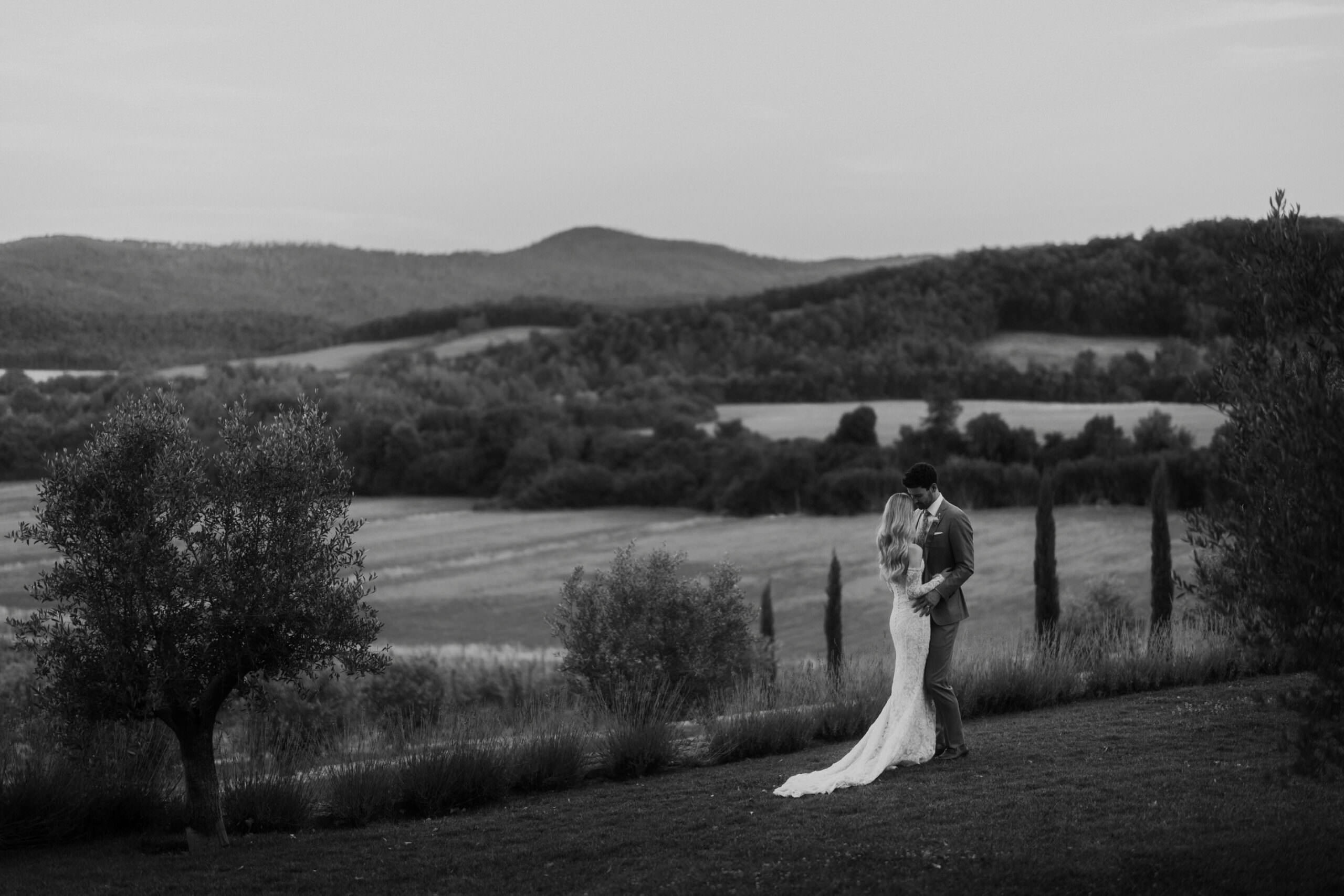
Editorial photography reads more legibly when it has strong structural elements: lines, frames, symmetry, repetition. These elements give the eye something to follow. Pastoral backdrops can be beautiful but they rarely offer structure, which is why so much Tuscan wedding photography ends up feeling similar: golden light, soft landscape, no internal composition.
Villa Cetinale offers exactly the opposite. The facade of the villa is symmetrical. The garden axis is a straight line. The cypress alley is a repeating visual rhythm. The hermitage on the hill is a point of visual resolution. Every one of these elements is a compositional gift for a photographer. A single portrait session at Cetinale produces more structurally interesting frames than entire days at less architectural venues.
For a broader view of how the studio thinks about venue selection in Tuscany, see how to choose a venue in Tuscany for editorial wedding photos.
The light windows that matter at Cetinale
Cetinale’s orientation is specific and photographers who know the property plan timelines around it. The main facade faces south, which means it receives strong frontal light through most of the day but only glows in the warm register for roughly forty minutes before sunset. That window is when the baroque facade transitions from flatly lit to cinematically lit. The ochre stone goes amber, the shadows elongate, the sculptural detail emerges.
The cypress alley runs north-south from the villa toward the hermitage. In late afternoon, the alley fills with lateral light from the west, with cypress shadows crossing the path. Walking shots during this window produce some of the most iconic compositions the venue offers. After sunset, the alley becomes graphic and abstract. The cypresses read as dark silhouettes against the sky, and the hermitage at the end of the path becomes a dot of architectural punctuation.
This means the ceremony at Cetinale should be scheduled to end roughly thirty to forty-five minutes before sunset, so that the recessional and immediate post-ceremony coverage happen while the facade is glowing and the alley is still readable.
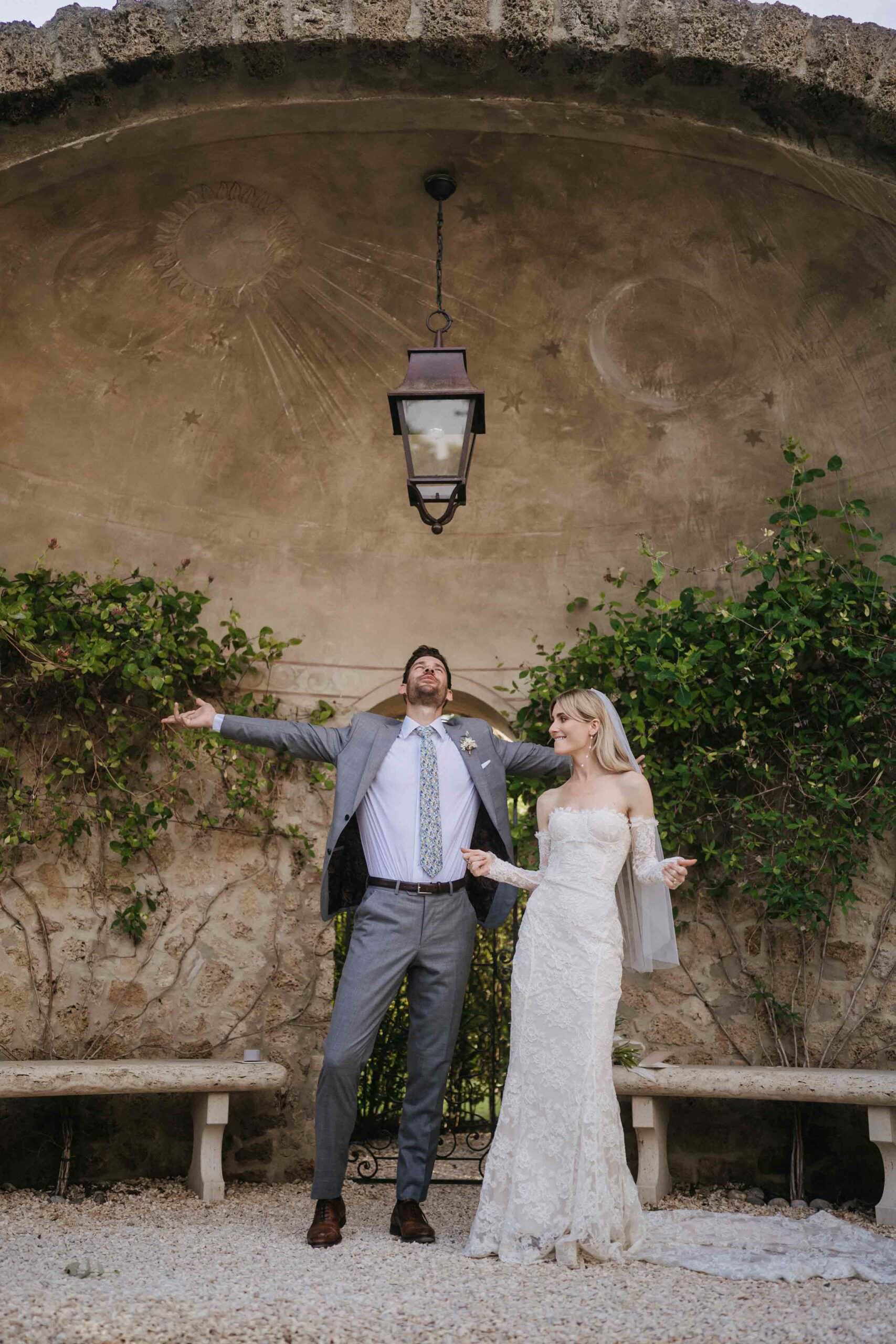
The spaces for a wedding at Villa Cetinale
Cetinale offers a specific, well-defined set of wedding spaces. The property is not sprawling, which is part of its strength. Guests do not transit. Everything happens within a compact, legible sequence of venues:
The main facade terrace, for ceremonies or arrival moments.
The formal garden, for cocktails or for portrait sessions that benefit from geometric backdrops.
The cypress alley, the property’s signature photographic asset.
The villa interiors, used for preparation, indoor reception, or bad-weather contingency.
The hermitage, a climb to the top of the hill that is worth the walk for couples and small photographic sessions.
Who Villa Cetinale is not for
Transparency matters when recommending a venue. Villa Cetinale is not a fit for every couple. It is a fit for couples who respond to architecture, symmetry, and formality. Couples looking for soft, pastoral, Tuscan countryside aesthetics will find Cetinale a surprise, and not always a welcome one. The venue has a strong personality and it asserts itself in every photograph. Designing a wedding there means designing with the villa’s point of view, not against it.
For couples who want the warm, informal, sun-drenched Tuscan feel, other venues in the studio’s portfolio are stronger matches. For couples who are drawn to the idea of a wedding that feels like a Visconti film set, Cetinale is in a category of its own in the region.
How the studio approaches a Villa Cetinale wedding
Roberto Panciatici Studio plans every Cetinale wedding with a specific framework: identify the sunset time, anchor the ceremony at forty-five minutes before, build backward through preparation and forward through dinner. The cypress alley gets a dedicated session timed to the last twenty minutes of warm light. The blue-hour window is used for one or two architectural portraits against the villa’s facade.
Because the property rewards planning so heavily, site visits before the wedding are particularly valuable at Cetinale. A thirty-minute visit with the couple and the planner typically eliminates all the timeline uncertainty and lets the wedding day flow without photographic stress.
For the studio’s complete approach to the region, read wedding photographer in Tuscany.
Frequently asked questions
How many guests can Villa Cetinale accommodate for a wedding?
The villa is typically used for weddings between forty and one hundred and fifty guests. Exact capacity varies by event design and the specific spaces activated. The property team provides official figures during planning.
Is Villa Cetinale available only for full buyout?
Villa Cetinale typically operates on a full-property rental model for weddings, which means the whole villa and gardens are reserved for the event and surrounding days. This is one of the reasons the venue feels private and architecturally complete during a wedding.
How does Villa Cetinale compare to Castello di Celsa?
Both are private Renaissance-era properties in the Siena area, but they operate on different visual registers. Celsa is more intimate and atmospheric, with stronger emphasis on interior scenes and courtyards. Cetinale is more architectural and outdoor-oriented, with its baroque facade and axial garden as dominant elements. Couples often consider both and choose based on aesthetic preference.
Can we have the ceremony in the hermitage?
The hermitage at the top of the cypress alley is a separate structure, historically used for religious retreat. Ceremonies in the hermitage are occasionally arranged but are not the most common configuration. Most Cetinale weddings hold the ceremony on the villa terrace or in the formal garden, with the hermitage serving as a photographic destination for small sessions.
When is the best time of year for a Villa Cetinale wedding?
The venue works across the main wedding season. Late spring (mid-May to early June) and early autumn (September to mid-October) are strongest for photographic outcomes because of light quality and weather stability. For a deeper discussion of seasonal light in Tuscany, see best time of day for wedding photos in Tuscany.
Does the studio have a site visit process for Cetinale?
Yes. For any Cetinale wedding the studio encourages a site visit with the couple and planner in the months preceding the wedding. The villa rewards familiarity, and the timeline is significantly sharper when the photographer has walked the spaces in advance.
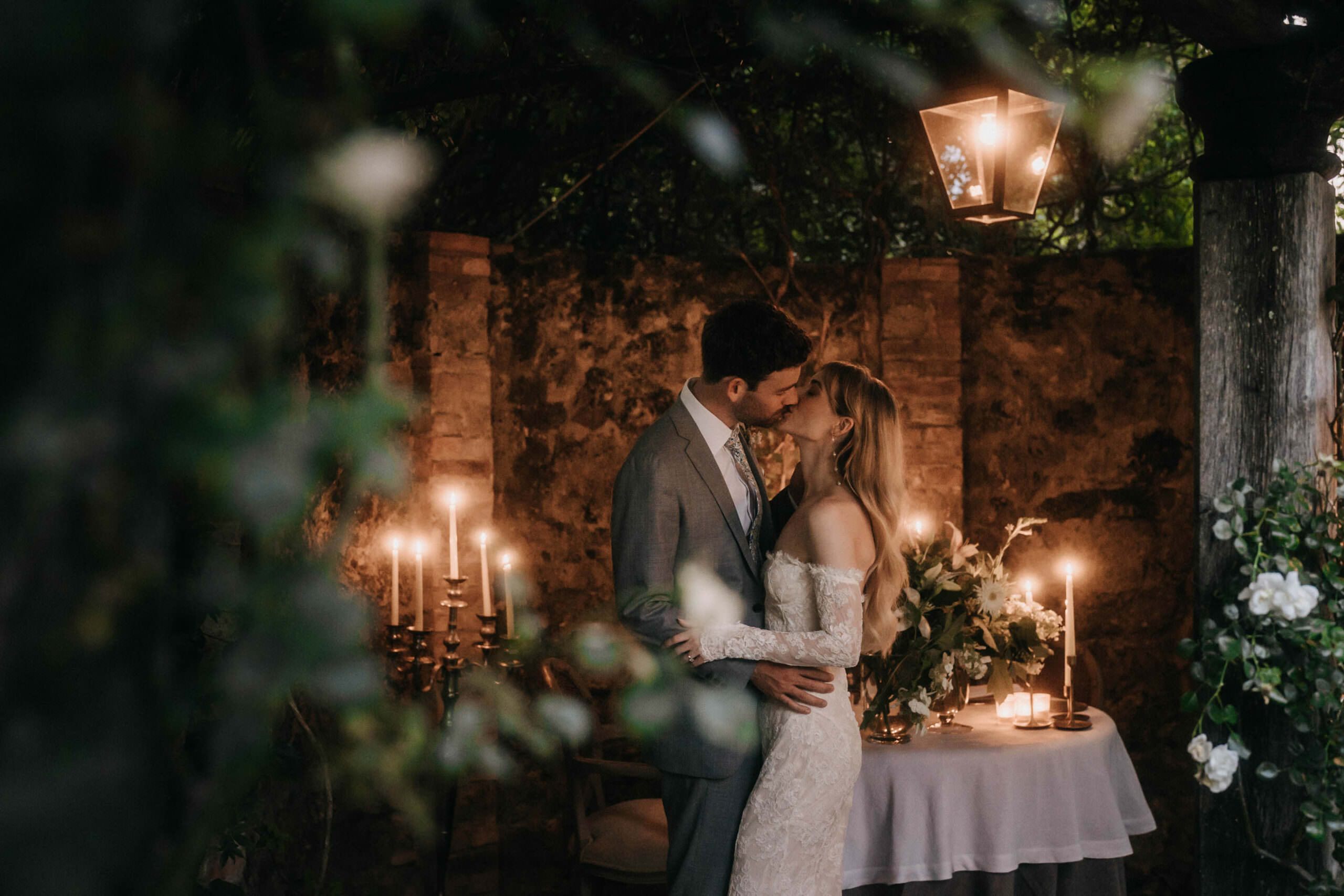
Villa Cetinale is one of the Tuscan venues the studio knows best and returns to most willingly. If you are planning a Cetinale wedding and want to discuss photography, reserve a conversation.

