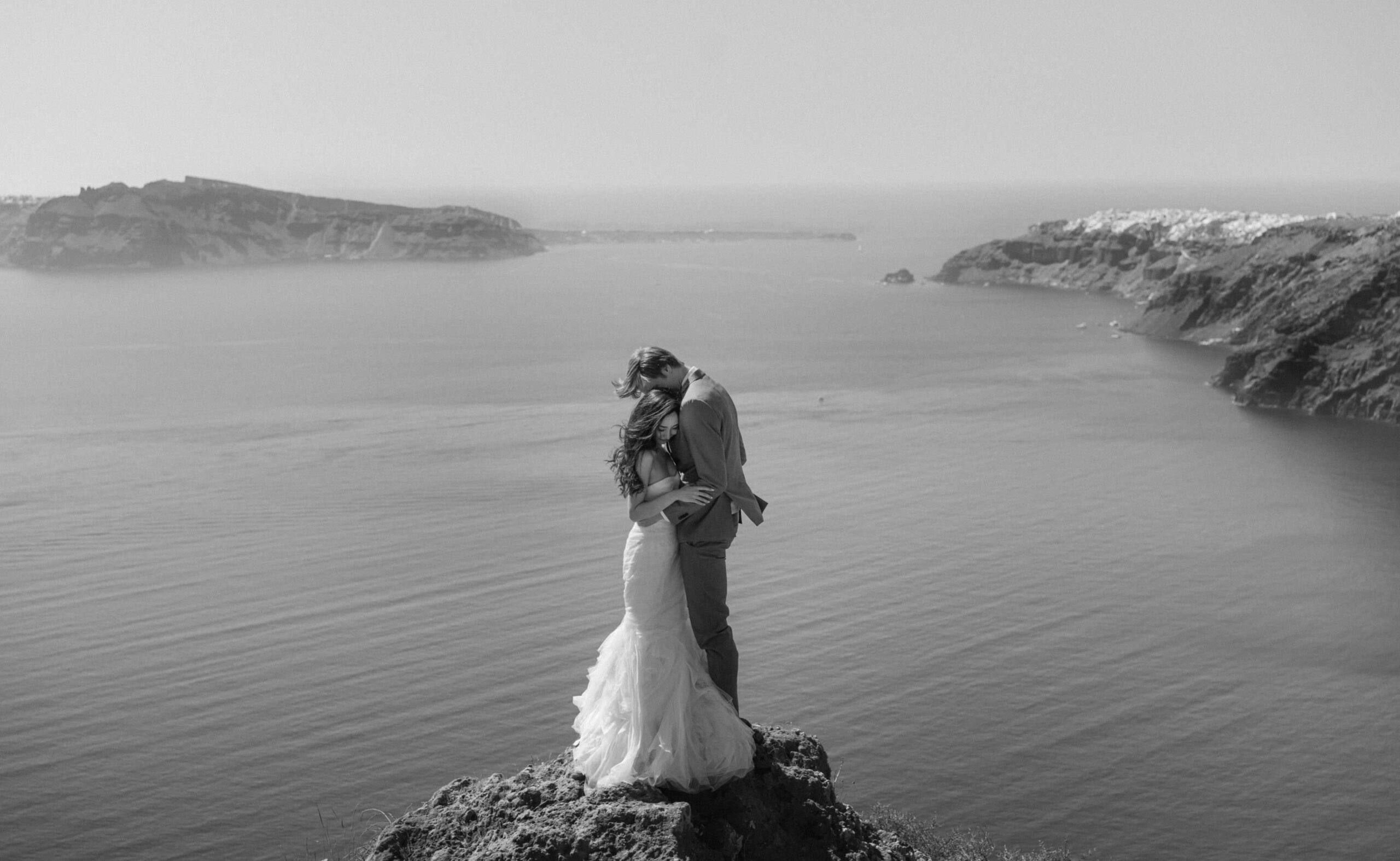
Santorini is one of the most visited islands in the Mediterranean. In peak season, between seven and ten thousand day visitors disembark from cruise ships each morning and move through the same caldera villages that weddings are held in. For wedding photography this is a structural problem, not a seasonal inconvenience. Santorini wedding photography has to be planned to avoid crowds from the first timeline draft.
Roberto Panciatici Studio has worked the island through every phase of the calendar. What follows is the method we use to keep a Santorini wedding archive clear, intimate, and composed, regardless of the cruise schedule. The island approach as a whole is described on the studio’s Santorini wedding photographer page.
Understanding the cruise pattern
The cruise schedule is the single most important variable in a Santorini shoot after the weather. Most ships dock between seven and nine in the morning, disembark passengers who reach Oia and Fira between nine-thirty and ten-thirty, and re-embark by six or seven in the evening. The peak pressure window in Oia runs from ten in the morning to six in the evening. Fira, as the administrative center and the port connection point, is crowded from earlier and stays crowded longer.
The schedule is published in advance by the Santorini Port Authority and by the shipping lines. A photographer working on the island checks it before finalizing any timeline. A day with four ships in port is different from a day with one, and the timeline should reflect that.
Instrument one: the sunrise session
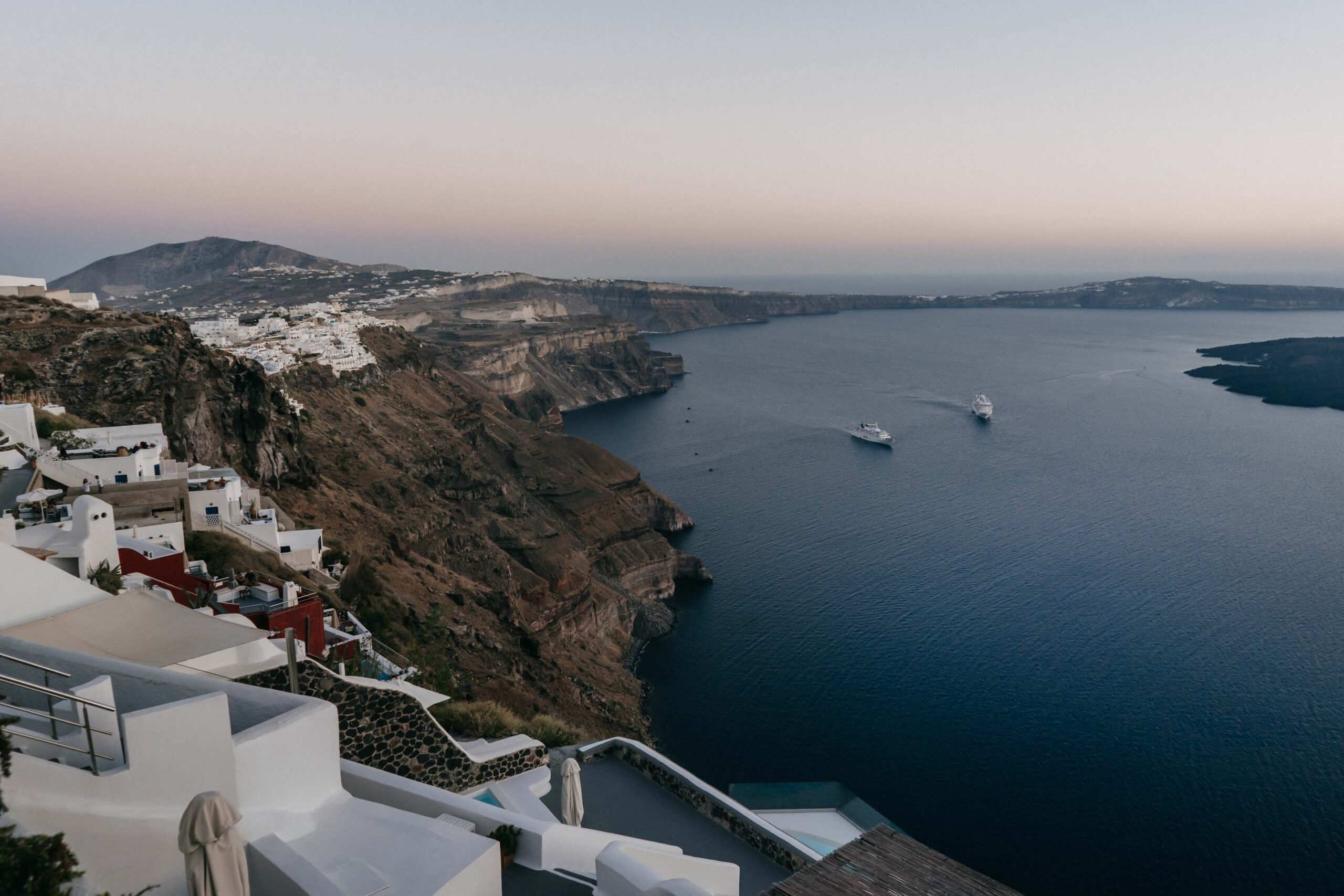
The most effective tool on Santorini is the same one as in Paris: work early. The first two hours after sunrise are the cleanest photographic window of the day on the island, a logic we unpack hour by hour in best time of day for Santorini wedding photos. The cruise passengers have not arrived, the hotel guests are asleep, and the caldera villages are essentially empty.
The cost is a very early call. Hair and makeup begin between three-thirty and four-thirty in the morning. For couples willing to commit to this, the reward is access to Oia, Imerovigli, and Fira in a state most visitors never see them in. The same early-start logic anchors the studio’s work as a wedding photographer in Paris.
For couples not willing to start that early, the fallback is the shoulder-season or off-season date, where the pressure is manageable at other hours.
Instrument two: the interior-island alternative
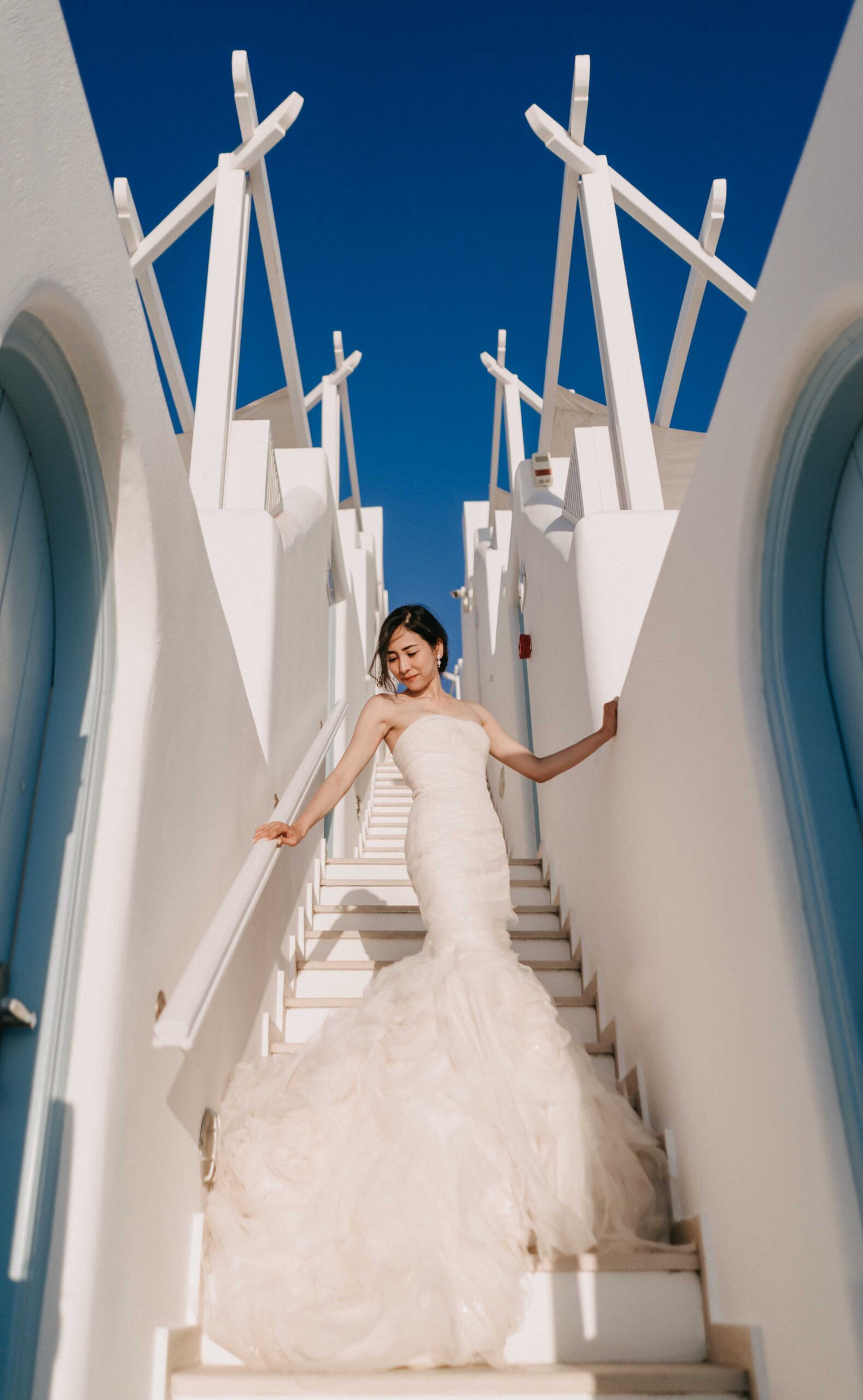
Santorini is larger than the caldera strip suggests. The interior villages, Pyrgos, Megalochori, Emporio, and the smaller settlements around them, carry the same Cycladic architecture and receive a small fraction of the foot traffic. We build at least one portrait window inside one of these villages into most Santorini timelines, and many couples end up preferring the interior-village images to the caldera ones.
Pyrgos in particular, with its restored fortress, its narrow lanes, and its elevated viewpoint, is a complete photographic environment that can absorb a full portrait session without any crowd interference.
Instrument three: private venue control
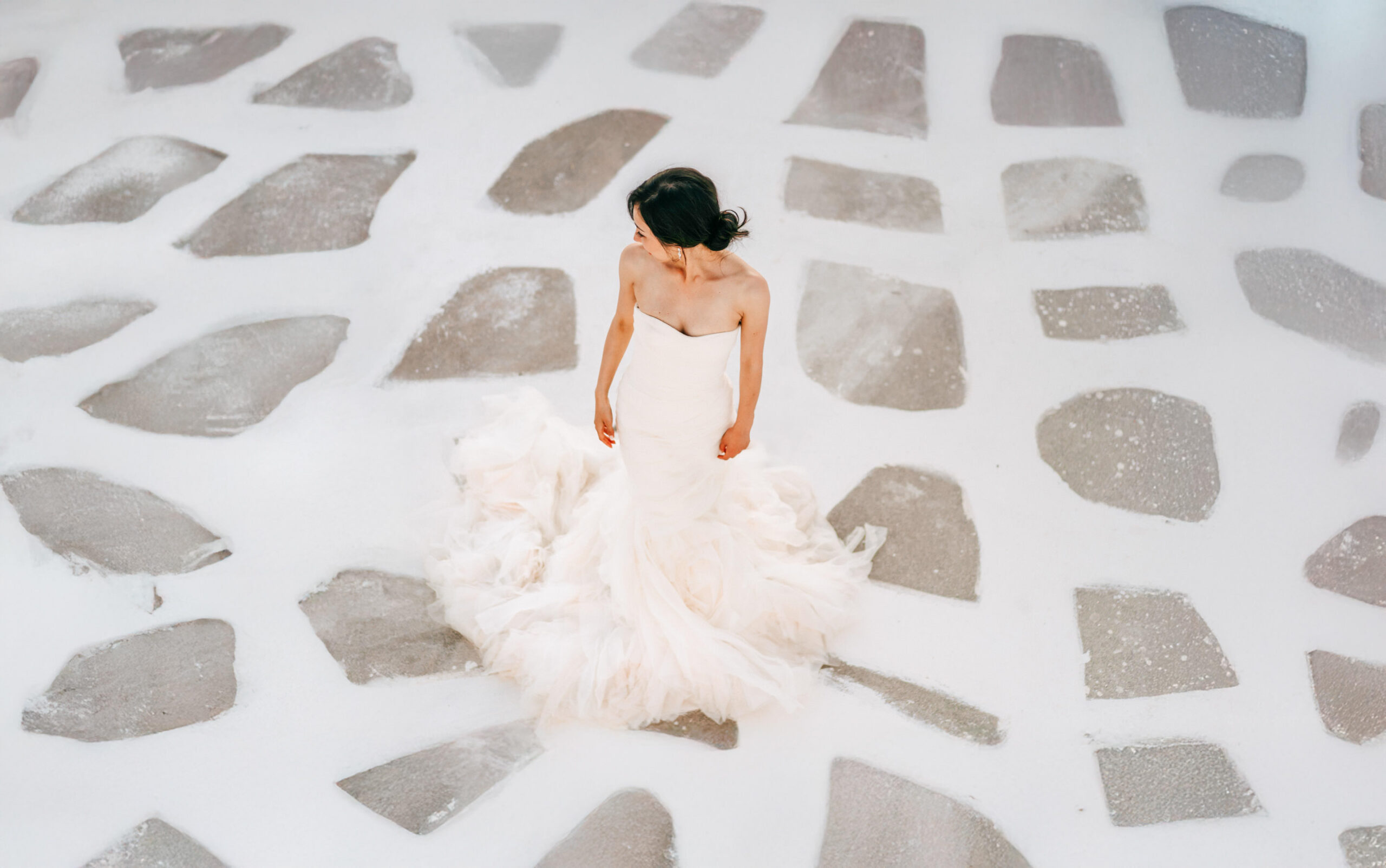
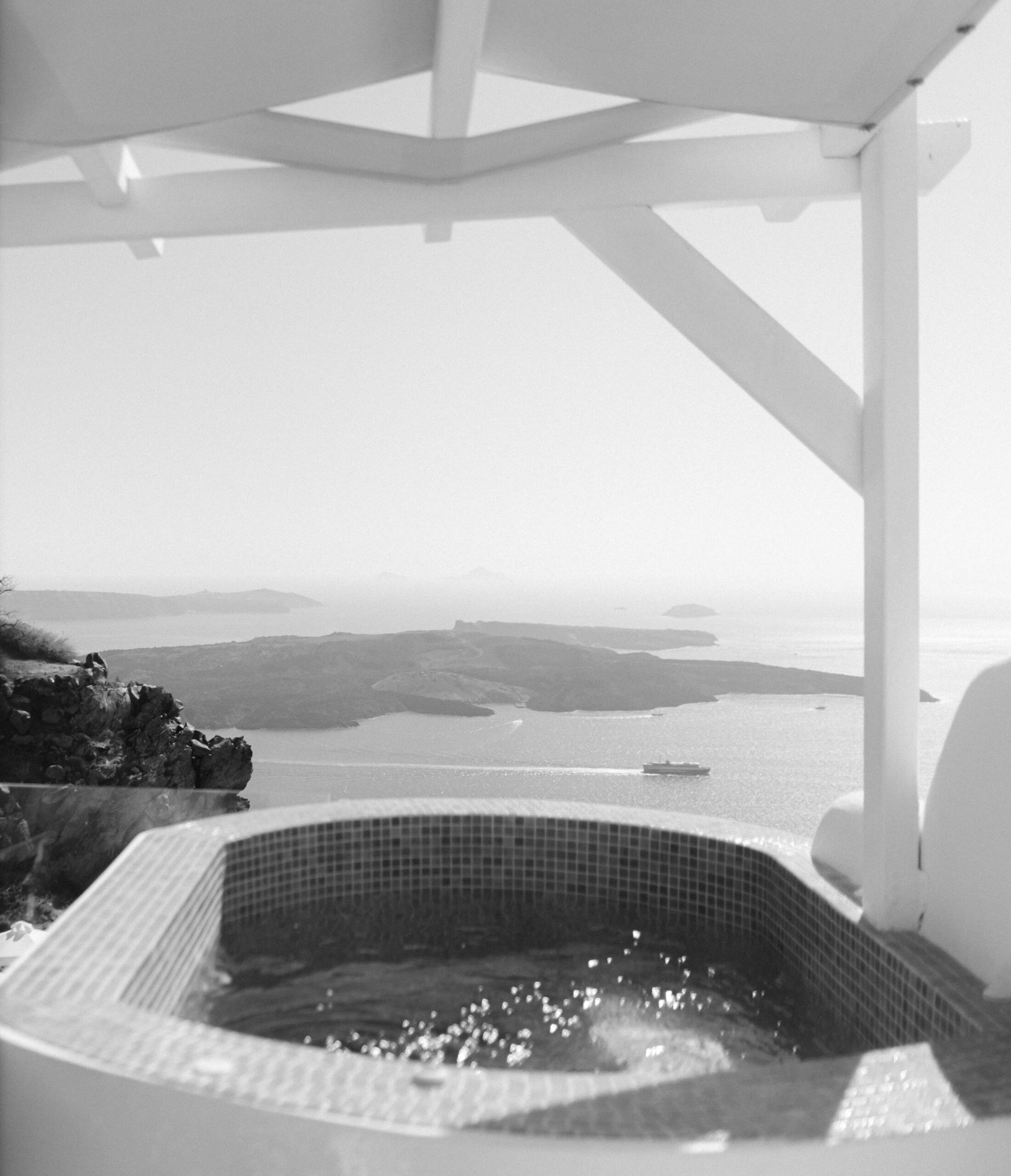
The most reliable way to remove the crowd variable entirely is to stay on the property of a private venue during peak hours. Luxury hotels on the caldera offer suite access, private terraces, and semi-private pool areas that can be used for portrait sessions without any external pressure. Most of the venues the studio works with (Canaves Oia, Grace Hotel, Mystique, Andronis, Katikies) allow this in coordination with the events team.
The timeline then structures itself as: early morning session on public caldera paths, late morning and midday inside the private venue, afternoon ceremony, short late-afternoon portrait session either on the venue terrace or in the interior island, return to the venue for dinner.
Instrument four: date selection
The single most effective long-term lever is the date itself. Santorini in late April, early May, late September, or mid-October offers a genuinely different island from the same island in late July or August. Crowds are present but not overwhelming, temperatures are comfortable, venues are more flexible, and permit coordination is simpler. Where the couple has flexibility on dates, we actively recommend shoulder-season scheduling.
Instrument five: not photographing the canonical angles
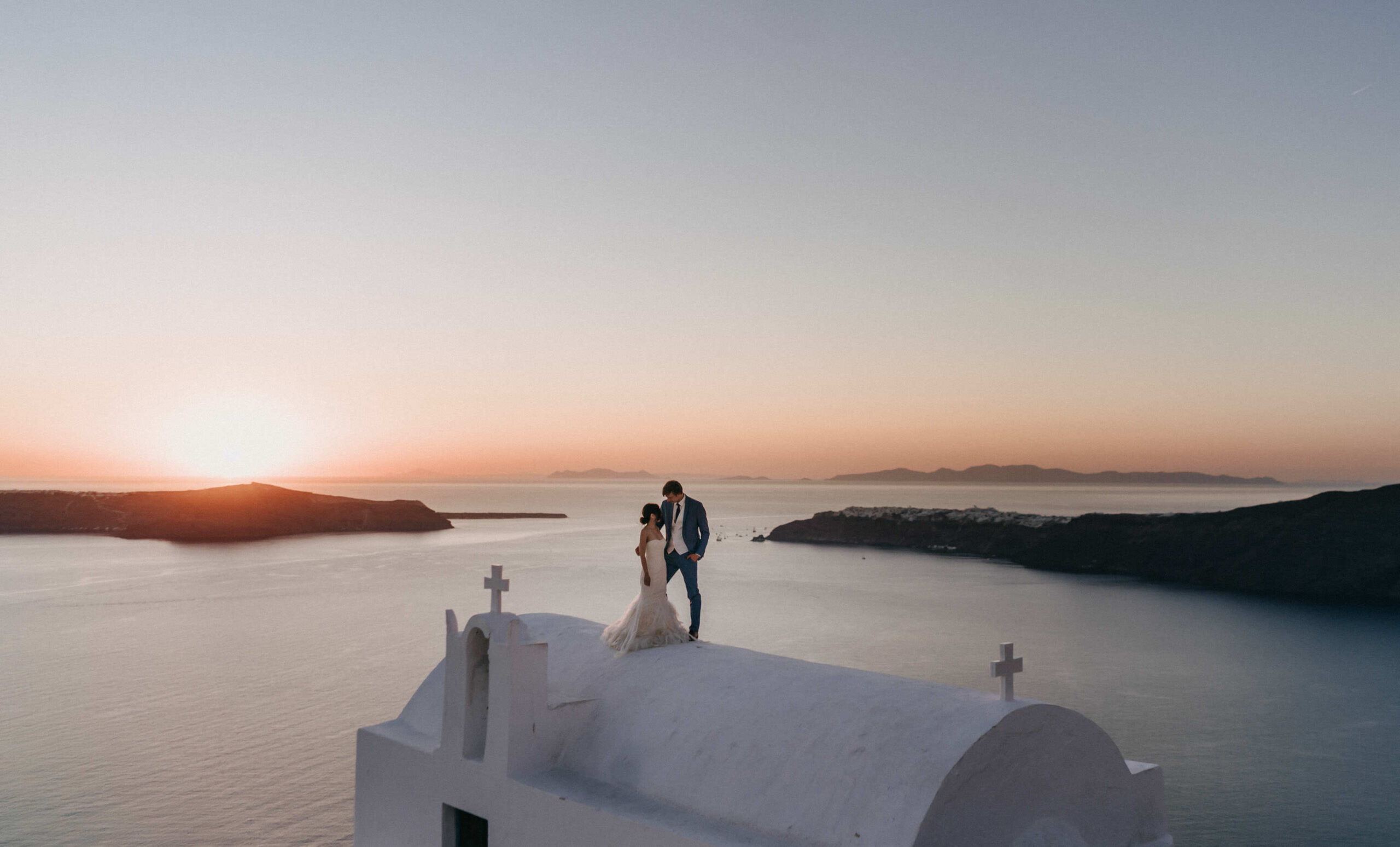
A meaningful part of the Santorini crowd problem is that everyone is photographing the same three or four angles. The rooftop view of the three blue domes in Oia. The central caldera panorama at sunset. The Oia castle terrace. If a Santorini archive does not need to include those specific compositions, the crowd problem largely disappears. The studio’s editorial approach excludes most of these canonical angles by default, which gives us significantly more working freedom across the island.
A practical timeline for peak season
For a Santorini caldera wedding in July, the studio’s recommended method is approximately this. Pre-dawn preparation. Sunrise couple session in Oia or Imerovigli, working the empty caldera paths for sixty to ninety minutes. Return to the venue for breakfast and extended bridal preparation, protected from the heat and the crowd. Midday rest indoors. Late afternoon ceremony at the venue, ideally at the venue’s internal terrace rather than an external cliff location. Brief sunset and blue hour portrait session either on the venue property or at a pre-selected quiet spot reached by private car. Dinner and evening coverage inside the venue.
What we avoid
We avoid the standard caldera walk between ten in the morning and six in the evening. We avoid the rooftop bars in Oia during sunset, which are photographically overused and operationally difficult. We avoid Fira town center between eleven and five. We avoid Red Beach, which has had access restrictions for several years. None of these are absolute rules. They are defaults we override only when a specific brief requires it.
Frequently asked questions
Is Santorini always crowded?
In peak season, yes, in the caldera villages during the day. Shoulder season and early morning hours offer genuinely empty environments. Winter is quiet but many venues are closed.
Is a Santorini wedding in July photographically possible?
Yes, with a timeline that respects sunrise and blue hour, uses private venue space for the midday hours, and avoids the canonical caldera angles during peak tourist pressure.
How does the cruise schedule affect a wedding day?
The cruise schedule determines when the villages are most and least crowded. Roberto Panciatici Studio checks the schedule during timeline planning and adjusts the day accordingly.
Can we rent an iconic Santorini location for exclusive use?
Very few public sites allow full exclusive use. Most luxury hotels on the caldera allow exclusive use of their own terraces and pool areas, which is the closest available approximation.
Does shoulder season really make a difference?
Yes. The difference between late September and late July on Santorini is significant, for crowd pressure, temperature, venue availability, and overall photographic quality.
Should we skip Oia if we want to avoid crowds?
Not necessarily. Oia at sunrise is empty and photographically extraordinary. The issue is Oia between ten in the morning and six in the evening.
If your Santorini date is set and the crowd calendar worries you, reserve a conversation and we will read it against your timeline.
Are you looking for a
wedding photographer?

Are you looking for a
wedding photographer?
We’d love to hear about your unique vision. We will craft something truly unforgettable together.
