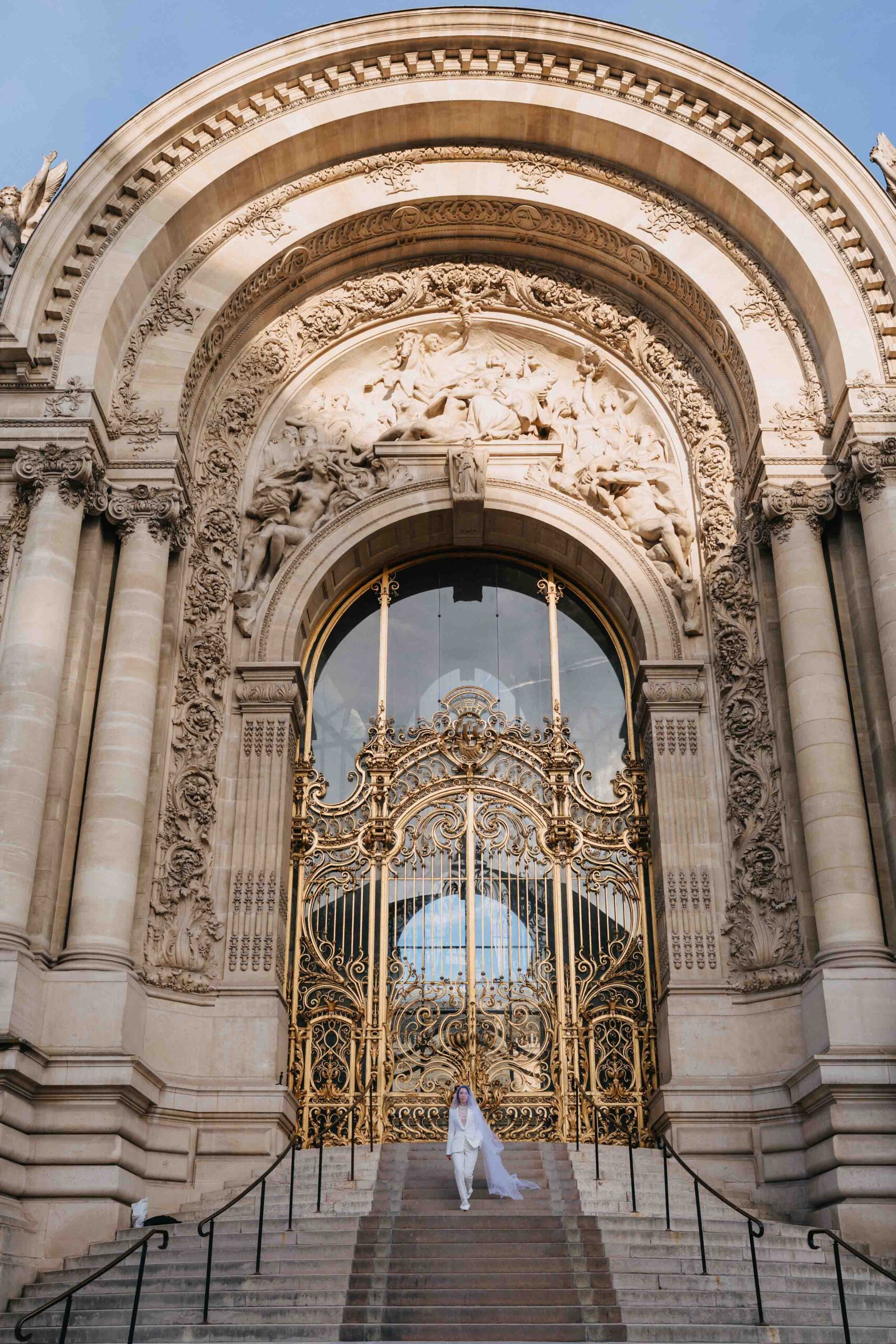
Paris is a regulated city. Most couples who contact the studio with a Paris date in mind ask the same question within the first exchange: do we actually need a permit for wedding photos in Paris. The short answer is yes, for most iconic locations. The long answer is more useful, because it explains how permits shape the shape of the day itself, and where a knowledgeable photographer can turn the process from a complication into an advantage.
This article is a working summary of how Roberto Panciatici Studio handles permit logistics for wedding and editorial photography in Paris, the production side of the studio’s work as a Paris wedding photographer. It is written for couples and planners who want to understand what is happening on the production side before saying yes to a specific itinerary.
Why Paris regulates photography
Paris is one of the most photographed cities in the world, and the municipality treats that status as a public resource to be managed. The stated reasons for the permit system are crowd control, preservation of monuments, protection of visitor experience, and coordination of concurrent activities. The practical consequence for a wedding is that any shoot involving professional equipment, a team of more than two people, or extended presence in a regulated area has to be declared in advance.
The regulation is not hostile. It is predictable. Once a photographer knows which location requires which permit, the paperwork becomes another item on the planning list, on the same level as florist delivery schedules and venue walk-through times.
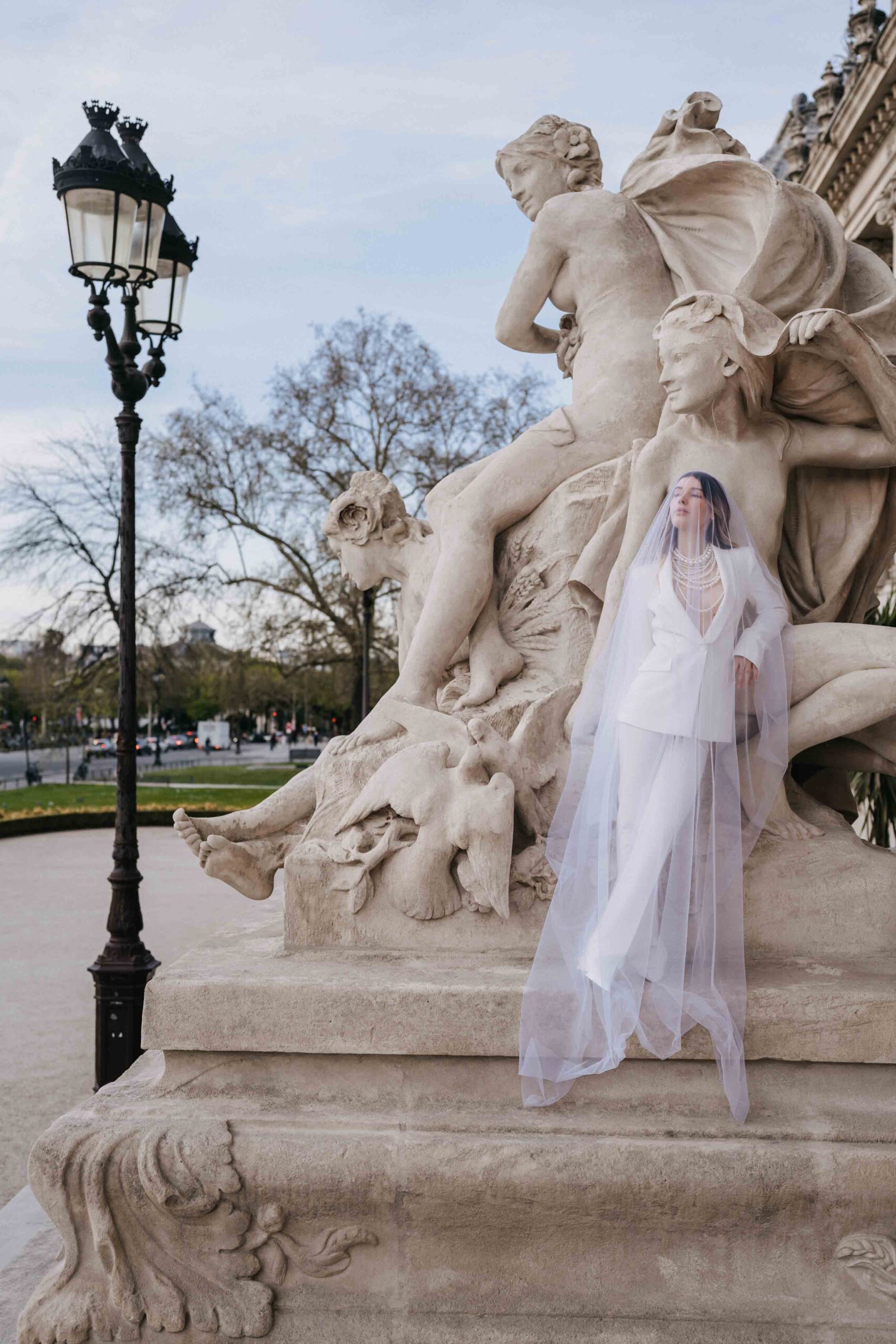
Where permits are required
The regulated perimeter includes three broad categories.
Iconic monuments under municipal control
The Eiffel Tower and its immediate esplanade, the Trocadéro, the Louvre courtyards, and the Place de la Concorde are all managed through the City of Paris and its dedicated film and photography office. Professional photography in these locations requires a formal request, submitted in advance, specifying date, time window, number of participants, and equipment list. Approvals are location-specific and time-specific. A permit issued for the Trocadéro at seven in the morning does not extend to the Louvre at nine.
Public gardens
Luxembourg Garden, Parc Monceau, Jardin des Tuileries, and the Parc de Sceaux are managed by the parks department of the City of Paris or, in the case of Luxembourg, by the French Senate. Each requires its own application. Fees are generally modest for small teams and short windows, and most approvals are granted if the request is made early enough and the proposed timing does not conflict with public events.
Cultural institutions
The Musée Rodin, the courtyards of the Louvre, the Palais Garnier, and Sainte-Chapelle have internal photography policies managed by the institution, not the city. In these cases the request is addressed to the venue directly, and fees can be higher because the site is granting partial exclusivity, not just permission to be present.
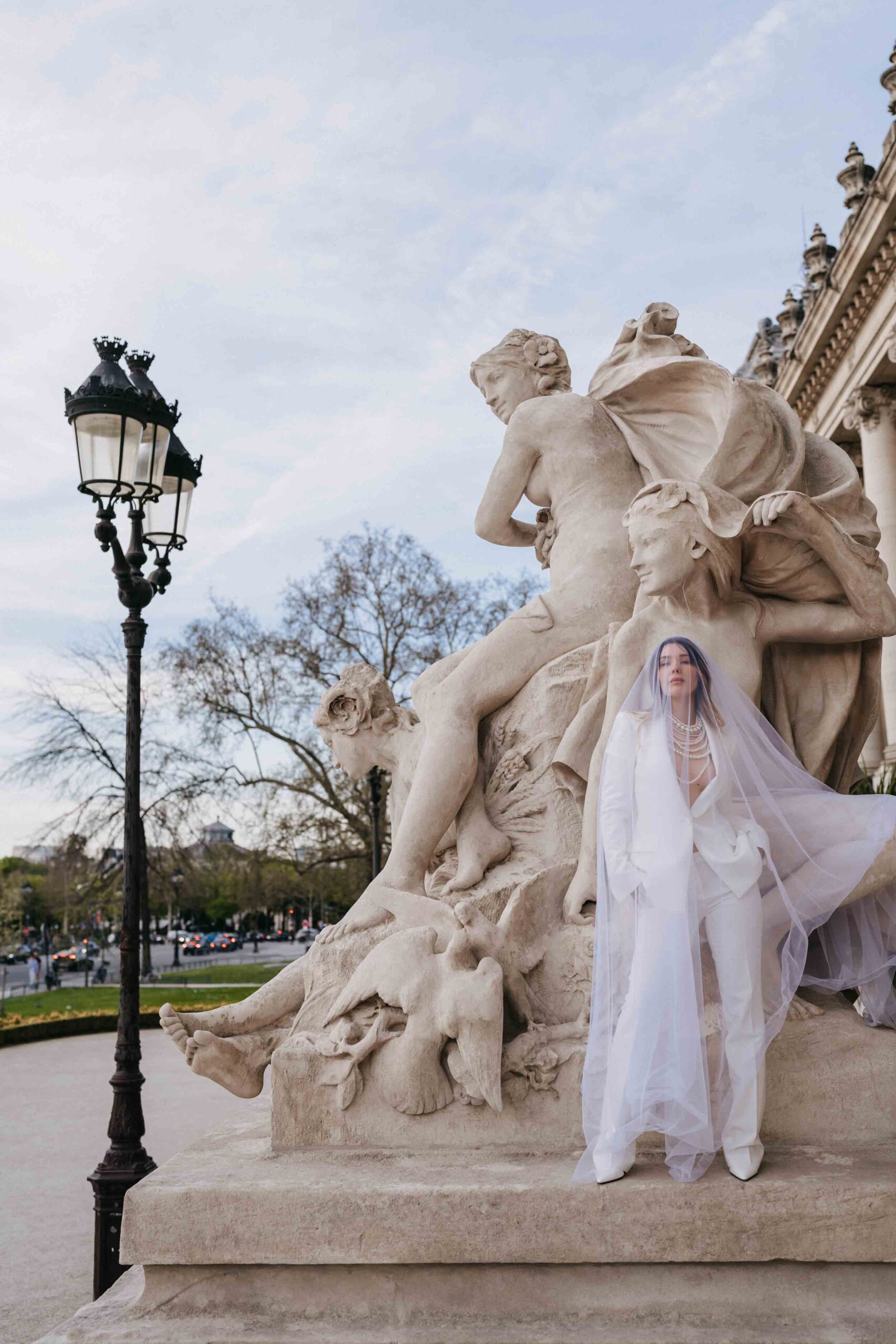
Where permits are usually not required
Sidewalks, cafes, most Parisian streets, and hotel interiors where the couple are registered guests do not require a municipal permit. Small, discreet coverage in those spaces is allowed, provided pedestrians are not obstructed. Private residences and hôtels particuliers do not require city permits, though they often have their own policies about external photographers.
When the process needs to begin
For a Paris wedding, we advise beginning the permit process no later than six weeks before the date. Eight to twelve weeks is better, especially for high-demand locations and peak season dates. Processing times vary: some requests are cleared within ten business days, others require several weeks if the location hosts concurrent events.
Couples who book the studio more than a year in advance have the advantage of starting this process early and reserving the ideal early-morning windows at the most competitive sites.
Who submits the request
There are three possible setups.
The couple submits directly. This is workable but rarely optimal, because the paperwork is in French and the language used by the permit offices is technical.
The wedding planner submits. This is the most common arrangement when the planner is Paris-based. French-speaking planners have existing relationships with the permit offices, which speeds the process considerably.
The photographer submits, or co-signs with the planner. Roberto Panciatici Studio provides the documentation required (insurance certificates, equipment lists, team size, shot list summary) and coordinates directly with the planner for the submission. We have found this hybrid approach to be the most efficient.
How permits shape the timeline
Permits are almost never granted for the full day. They are granted for specific windows, usually one to two hours, at specific locations. This means the timeline of a Paris wedding, when iconic public locations are involved, is built around the permit grid rather than the other way around. A typical sequence might look like this.
Early morning, six to seven thirty, permit window at Trocadéro or the Louvre exterior for a brief couple session before the tourist flow begins, the same early logic we describe in avoiding crowds in Paris. Transfer to the ceremony venue, which usually has no permit requirement since it is a private space. Ceremony and cocktails run without municipal constraint. Late afternoon, sometimes a second short permit window at a public garden for additional portraits. Dinner and evening coverage run indoors or in private gardens with no permit concern.
The studio designs the timeline with these windows in mind and treats the permits as fixed points around which the rest of the day is organized.
Fees and what they cover
Permit fees in Paris are modest relative to the overall wedding budget. Small-team permits at public monuments typically run from a few hundred euros per window. Cultural institution fees are higher and often include partial use of private spaces. What the fee covers is the right to be present, set up light modifiers, and work without being asked to leave by security. It does not grant exclusivity, except in limited cases where the institution closes the area for the shoot.
What happens without a permit
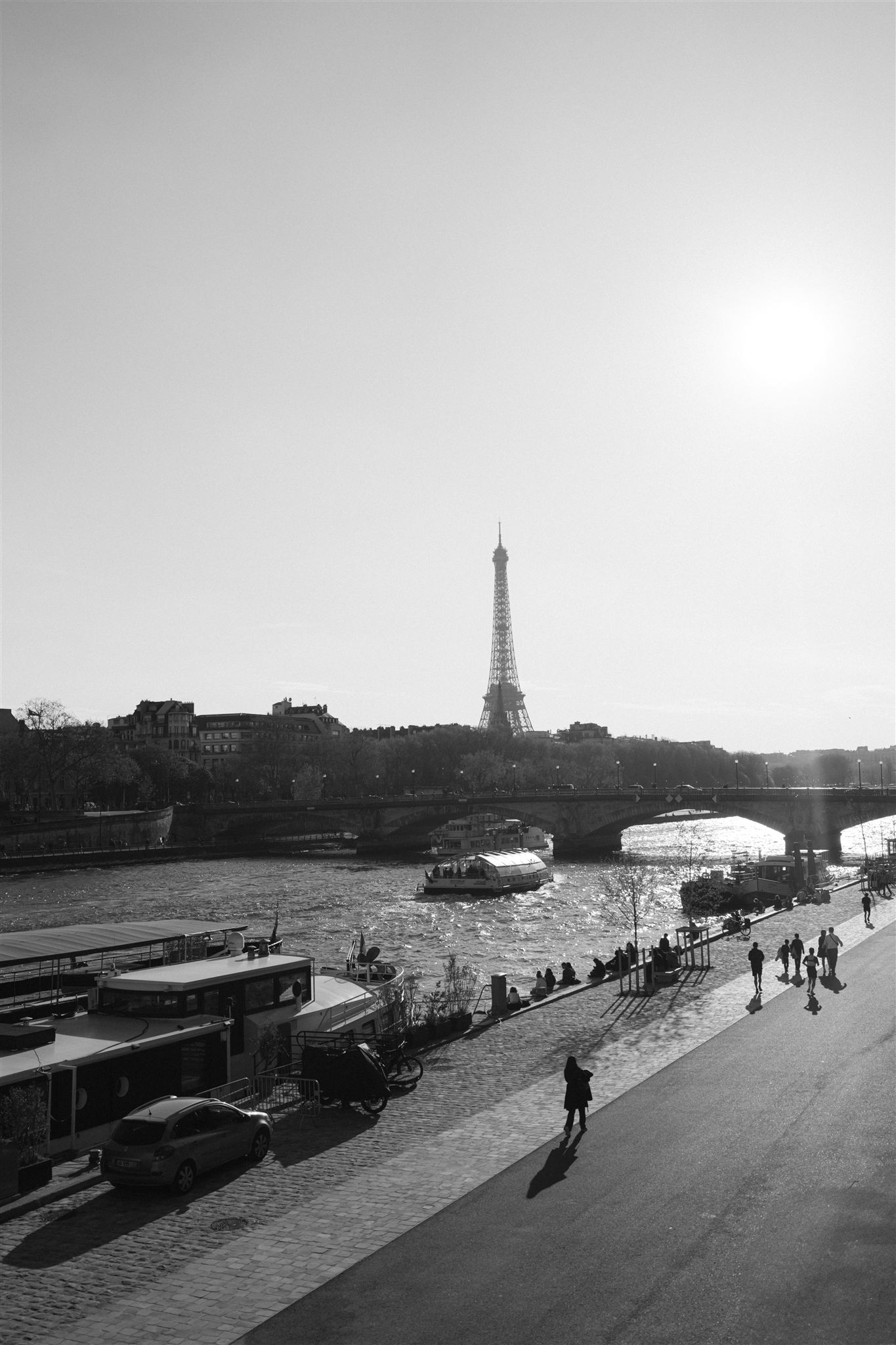
Paris authorities are patient but consistent. A professional team photographing a wedding at the Trocadéro without a permit will, in our experience, be approached by security or police within the first thirty minutes. The shoot is stopped, the team is asked to leave, and in some cases a fine is issued. The more serious consequence is usually not the fine but the loss of the photographic window the couple had planned around.
Weather, protests, and the flexibility question
Paris has a relatively active calendar of public demonstrations, marathons, and official events. These can override a permit at short notice. Our timelines always include at least one indoor fallback location with no permit requirement, so that a cancellation on the public side does not mean a lost hour. Weather, similarly, is treated as a planning variable. Most permit offices are flexible about minor rescheduling within the same day, as long as the shift is communicated promptly.
A note on Roberto’s approach
Roberto Panciatici has photographed in Paris for more than a decade. His preference, when working with permits, is not to maximize the number of iconic locations included in a day but to make sure the two or three that are included carry real photographic weight. A Paris wedding does not need five monuments. It needs one or two, approached at the right hour, in the right light, with enough time to work properly.
Frequently asked questions
Is a permit always needed for wedding photos in Paris?
No. Permits are needed for professional photography at regulated monuments, gardens, and cultural institutions. Casual photography in private hotel rooms, sidewalks, and cafes does not require a permit.
How long does the permit process take?
Between ten business days and several weeks depending on the location and the season. Roberto Panciatici Studio recommends starting eight to twelve weeks before the date.
Are permit fees refundable?
Usually not. Some sites allow a date change within a defined window for weather or official events. Each permit has its own terms.
Can we be photographed at Trocadéro without a permit if we are careful?
In our experience, a professional team will be stopped within half an hour. It is not a workable approach. The studio always recommends securing the proper permit.
Who handles the paperwork?
Roberto Panciatici Studio prepares the documentation and coordinates directly with the planner, who submits the request. If there is no planner, the studio can handle the submission through a trusted Paris-based partner.
Do private venues require permits?
Not from the city. Private venues have their own internal policies, which are handled directly with the events team of the venue.
If you need a permit for wedding photos in Paris and want the iconic locations handled properly, reserve a conversation with the studio.

