Puglia has one of the longest usable wedding seasons in Italy. Where Lake Como effectively closes its outdoor season by mid October and Tuscany’s hills turn cold in the evenings, the heel of Italy stays warm from May into late October, and the light remains generous on either side of that window. Length, however, is not the same as uniformity. The months differ sharply in heat, crowds, and the color of the landscape, and the choice of date will shape the photographs more than almost any other planning decision. So the best time for a wedding in Puglia is not a single answer, it is a short list of months that each give you something different.
September first, and why
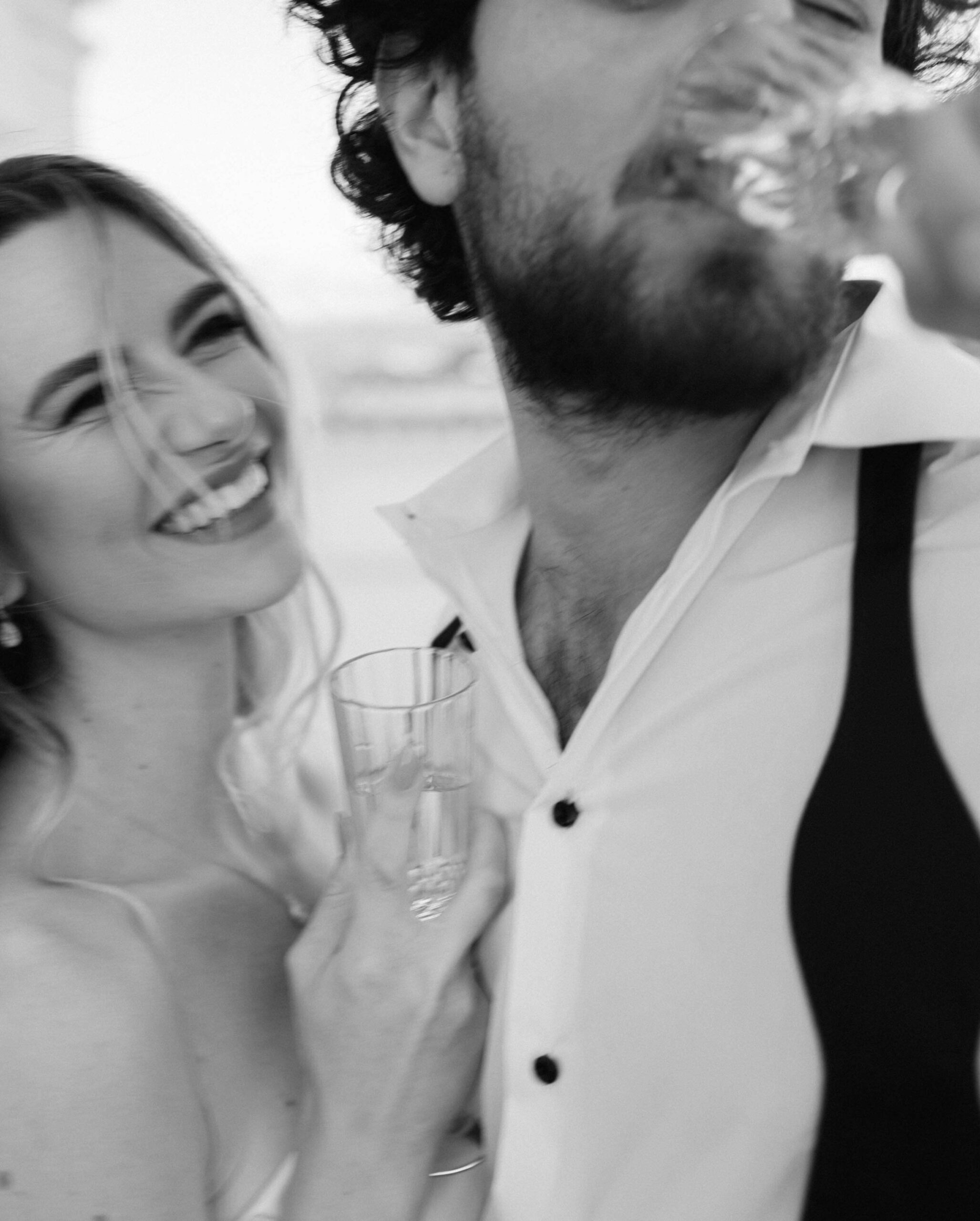
If a couple asks us for a single recommendation, it is September. The sea is at its warmest, the violent heat of midsummer has broken, daylight still stretches past seven thirty in the early weeks, and the countryside holds a dry gold that suits the whitewash of a masseria. The harvest atmosphere is real rather than decorative: vineyards are being picked, and the olive groves are weeks from their own harvest.
There is also a practical argument for calling September the best time for a wedding in Puglia. The month sits after the Italian holiday exodus of August, so coastal towns like Polignano a Mare and Monopoli return to a livable rhythm, transfers shorten, and dinner outside needs no contingency plan. For photography, the sun’s lower arc lengthens golden hour without shortening the day too much. It is the month where we compromise least.
The shoulder seasons, May, June, and October
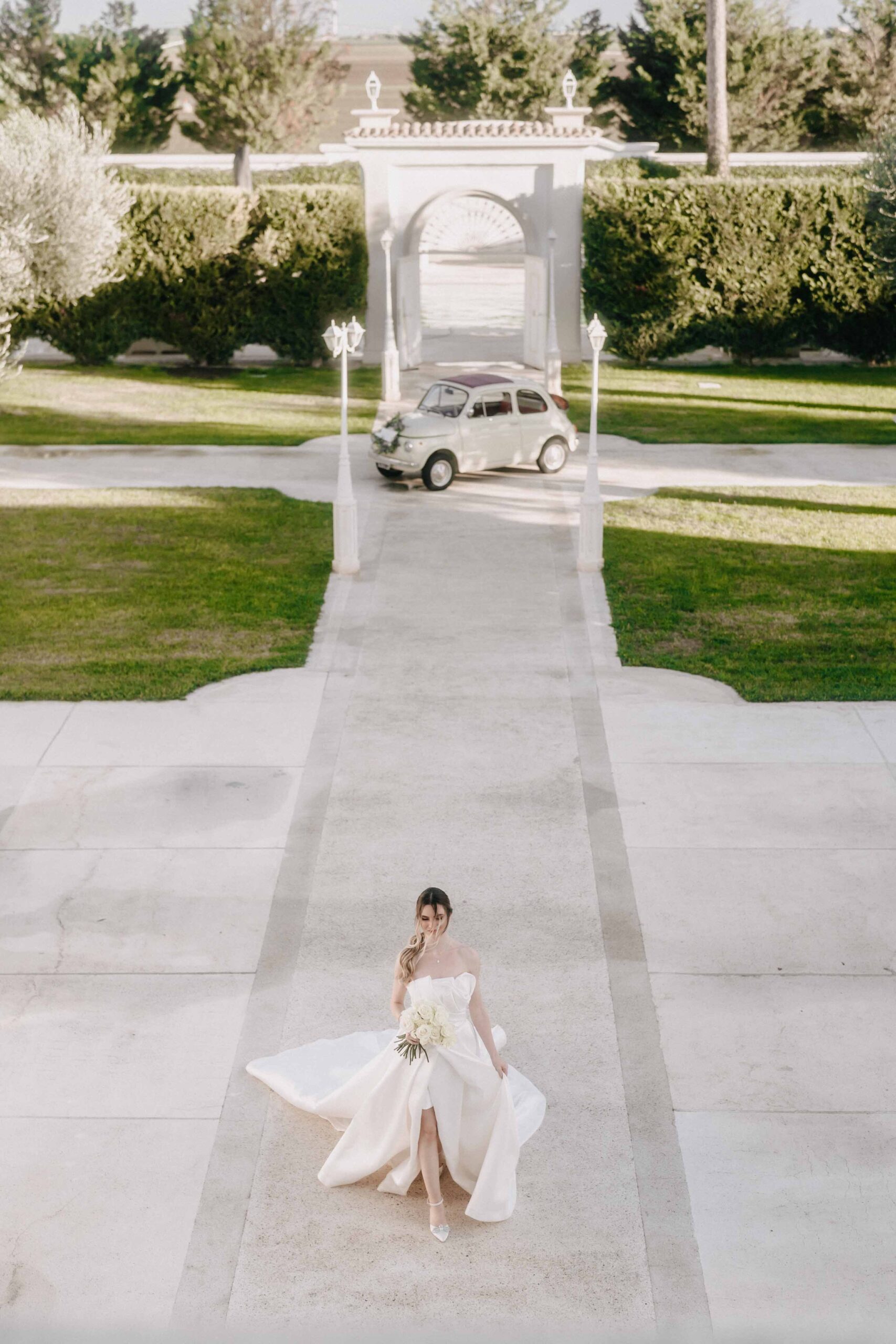
Late May and June are the spring equivalent. The land is at its greenest, a condition Puglia loses quickly once summer arrives, wildflowers edge the dry stone walls, and temperatures sit in the comfortable mid twenties. June brings the longest days of the year, which gives a wedding timeline unusual freedom: a ceremony at five, portraits at eight, and light still in the sky at nine.
October is the quiet achievement of the calendar. The first half of the month remains reliably warm for outdoor dinners, the light turns amber earlier in the evening, and the region empties of tourism almost entirely. Rain risk rises modestly, so we plan a covered alternative, but the trade is favorable: an October masseria wedding often has the entire landscape to itself. These three windows, with September, are our first choice for full celebrations.
Peak summer, possible with adjusted logistics
July and August work in Puglia, with honesty about what they involve. Daytime temperatures regularly exceed thirty-five degrees, and the interior plains hold heat into the evening. We photograph peak summer weddings on an inverted timeline: preparation and a small number of portraits in the early morning, a long protected pause through the middle of the day inside the courtyard’s shade, ceremony from six, and the principal couple session in the final ninety minutes of light. Guests are happier, dresses survive, and the images gain rather than lose, because Apulian light at the day’s edges is the best the region offers.
August adds the social factor: it is the Italian holiday month, the coast is full, and venue and supplier availability tightens. Couples set on August should book further ahead and accept that any photography outside the estate, in Ostuni or along the coast, needs early morning timing to avoid crowds.
Winter, for elopements and portraits
From November to March we do not recommend Puglia for a full outdoor celebration, and we do recommend it for something else. Winter light on whitewashed towns is low, raking, and clean, close to the stillness Luigi Ghirri found in the Italian off season, and an elopement or a portrait session in a near-empty Ostuni or Locorotondo has an intimacy the summer cannot produce. Many masserie remain open with fireplaces lit. It is a different photograph, made for couples who want the place rather than the weather.
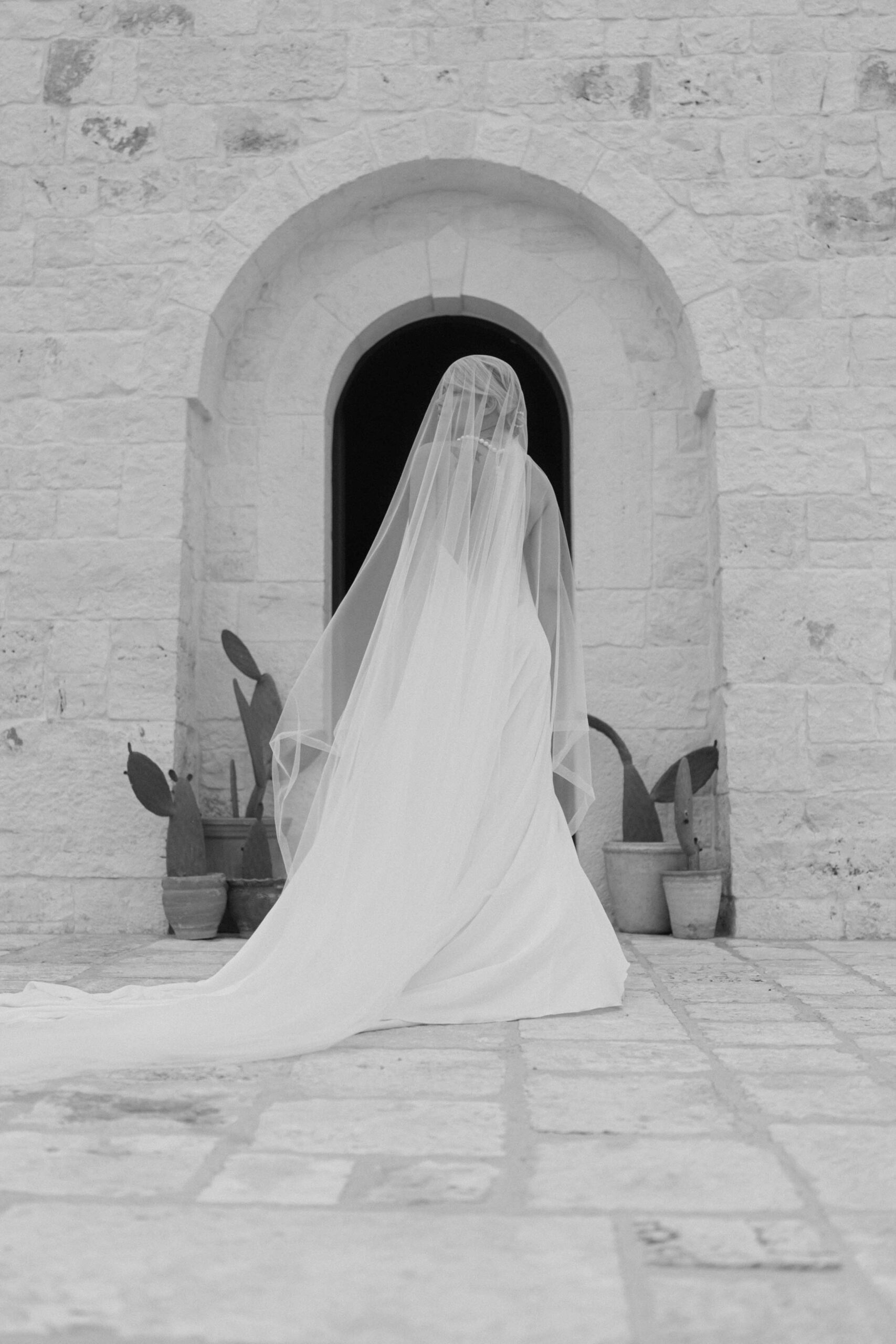
Matching the best time for a wedding in Puglia to the venue
The final variable is the venue’s own geography. Coastal masserie near Savelletri and Fasano gain a sea breeze that softens July; interior estates in the Valle d’Itria run hotter in summer and cooler in October evenings. Whitewashed courtyards extend the usable hours at midday all year. When a couple is deciding between two dates, we read the specific property against the specific month rather than quoting regional averages, because a masseria with deep shade in July can outperform an exposed one in June.
How we approach the region as a whole, venue by venue, is covered in the Puglia wedding photographer pillar page, and the architecture itself is examined in our piece on what makes masseria wedding photography different. If you are weighing two dates for the same property, get in touch and we will read the calendar against the venue with you.
Frequently asked questions
What is the best time for a wedding in Puglia?
September is the single best month. It combines warm sea, broken summer heat, long golden hours, post-holiday calm, and a dry golden landscape that flatters masseria architecture. The first half of the month keeps the longest evenings.
Is a July or August wedding in Puglia a mistake?
No, it is a choice with conditions. Expect temperatures above thirty-five degrees, build the timeline around early morning and the last two hours of light, keep the midday inside courtyard shade, and book earlier because August is the Italian holiday peak.
How long is the outdoor wedding season in Puglia?
Roughly May to late October for full outdoor celebrations, which is notably longer than Tuscany or Lake Como. Early May and late October need a covered backup for rain, but both regularly deliver warm, quiet, beautifully lit days. Within that window the best time for a wedding in Puglia is September, then late May and the first half of October.
When is Puglia greenest?
From April to mid June. The landscape dries to gold through the summer and stays golden into autumn, so couples who want green fields and wildflowers should aim for late May or early June.
Is winter worth considering at all?
For elopements and portrait sessions, yes. The white towns are empty, the light is low and clean, and many masserie stay open. For a full celebration with outdoor dinner, the season works against you.
Does the coast or the interior make a difference to heat?
Yes. Coastal estates around Savelletri and Fasano benefit from sea breeze in peak summer, while Valle d’Itria interiors run hotter by day and cooler at night. The same month can feel different between two venues forty minutes apart.
Are you looking for a
wedding photographer?

Are you looking for a
wedding photographer?
We’d love to hear about your unique vision. We will craft something truly unforgettable together.
