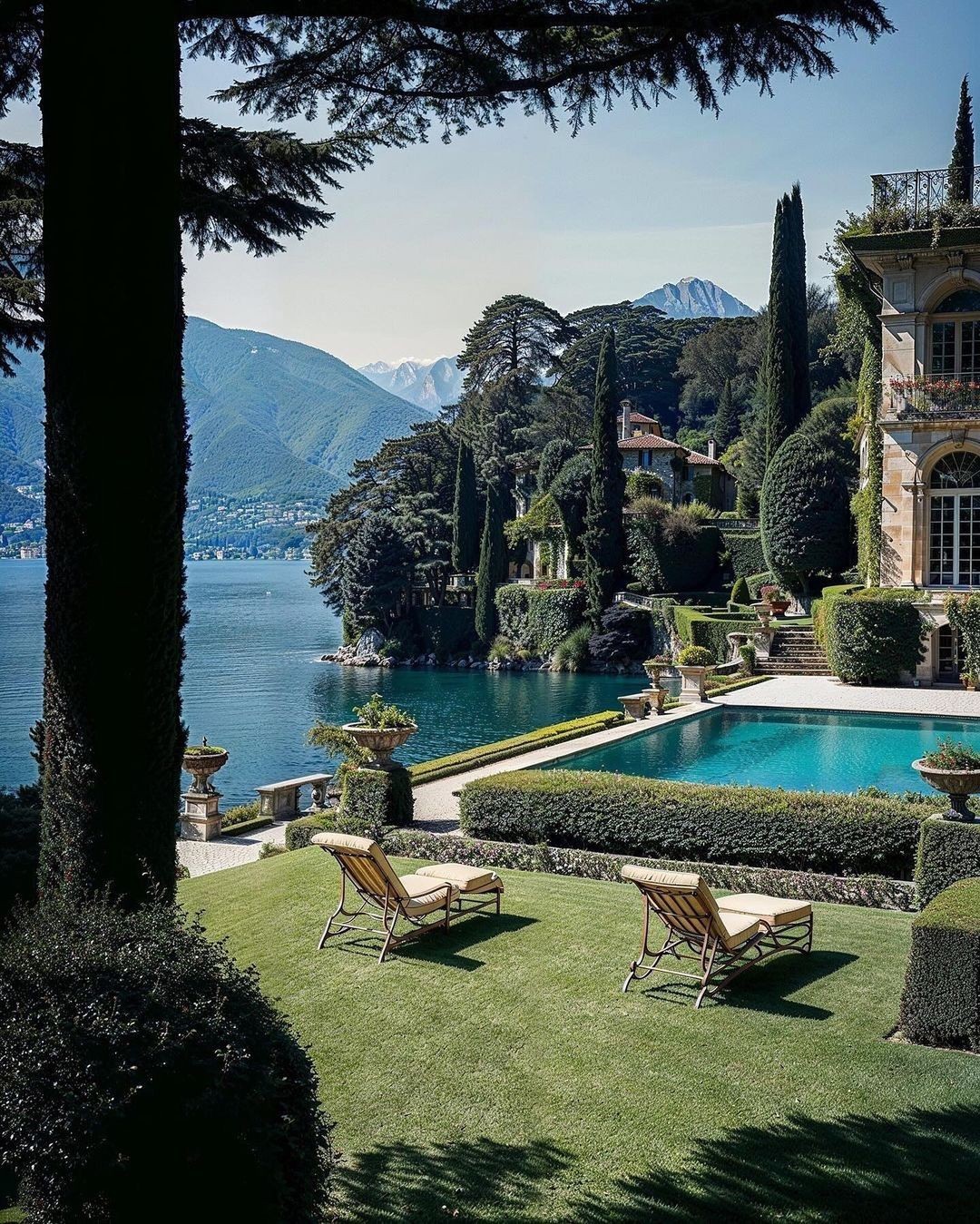
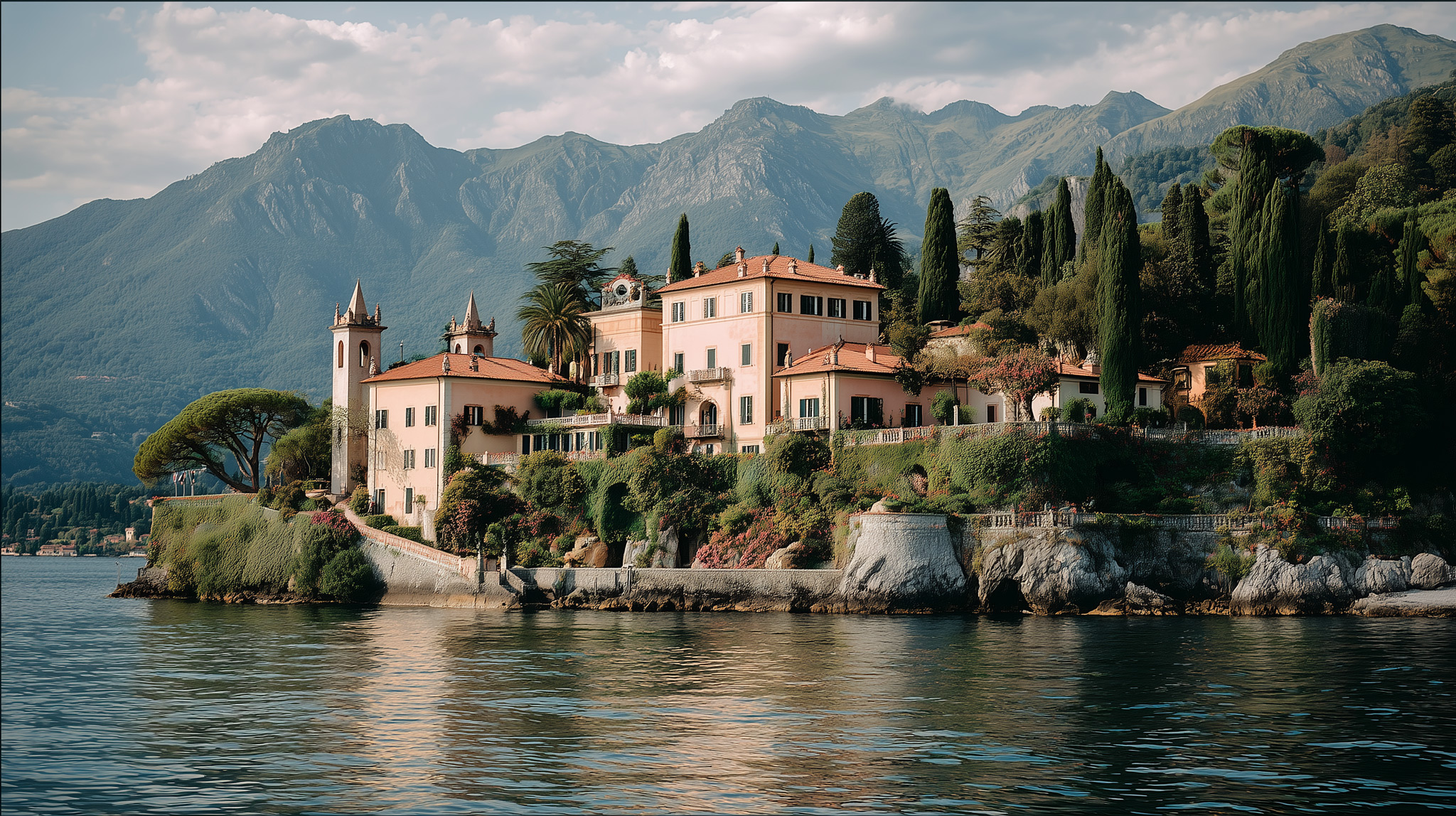
Lake Como compresses its day. The mountains that enclose the basin lift the horizon on both sides, which means the sun appears later and disappears earlier than the calendar promises. Choosing the best time of day for wedding photos on Lake Como is therefore not a matter of looking up sunrise and sunset and planning around them. It is a matter of understanding where the light actually is, hour by hour, on the specific shore and the specific terrace where the wedding takes place.
This article is the studio’s hour-by-hour reading of the lake, the companion piece to our seasonal and logistical notes on Como.
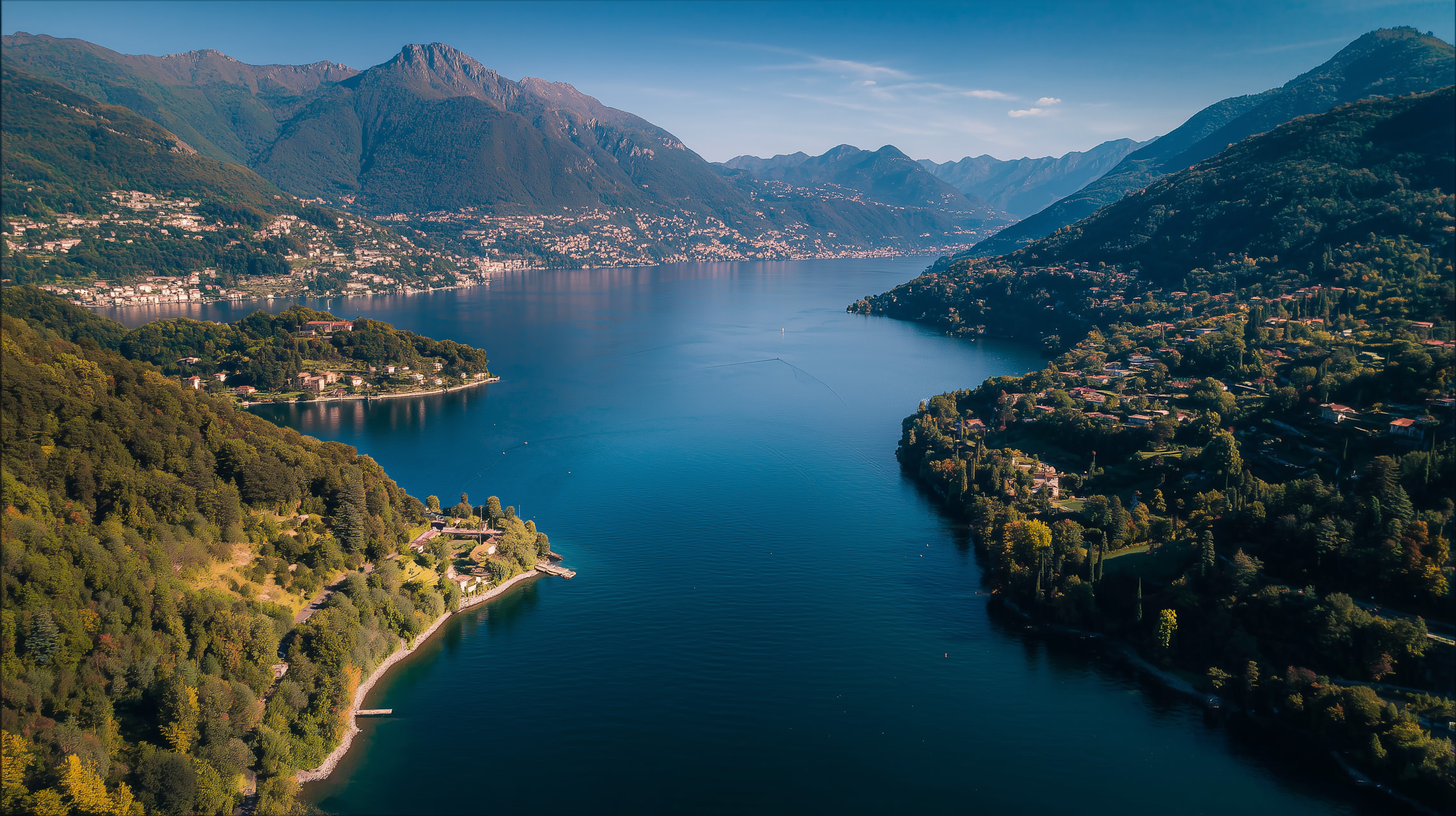
The mountain horizon, Como’s defining constraint
On an open coastline, published sun times are a reliable planning tool. On Como they are an approximation. The ridges on either side of the basin delay the first direct light by thirty to sixty minutes after the official sunrise and remove direct sun from many venues well before the official sunset. The effect varies by shore, by village, and even by the level of the venue: a lakefront terrace can be in shadow while the garden thirty meters above it still holds full sun.
The practical consequence is that every Como timeline the studio designs starts from the venue, not from the clock. Published times are the outer frame, and a service like the Como sunrise and sunset calendar gives the raw numbers, but the working windows are narrower and have to be read against the topography.
Early morning, the lake at its calmest
The first two hours of light are the most reliable window of the Como day. The water is glassy before the wind cycle begins, the promenades of Bellagio and Varenna are empty, and in spring and autumn a layer of mist often sits on the surface and burns off as the session progresses.
This is the window for portraits that use the lake as a mirror: the couple on a stone dock, a villa facade doubled in still water, the mountains stacked in receding planes behind. It is also the only moment of the day when the iconic public spots can be worked without crowd management. The cost is the usual one, an early call for hair and makeup, and the reward is a set of images that cannot be made at any other hour.
The wind clock, not just the sun clock
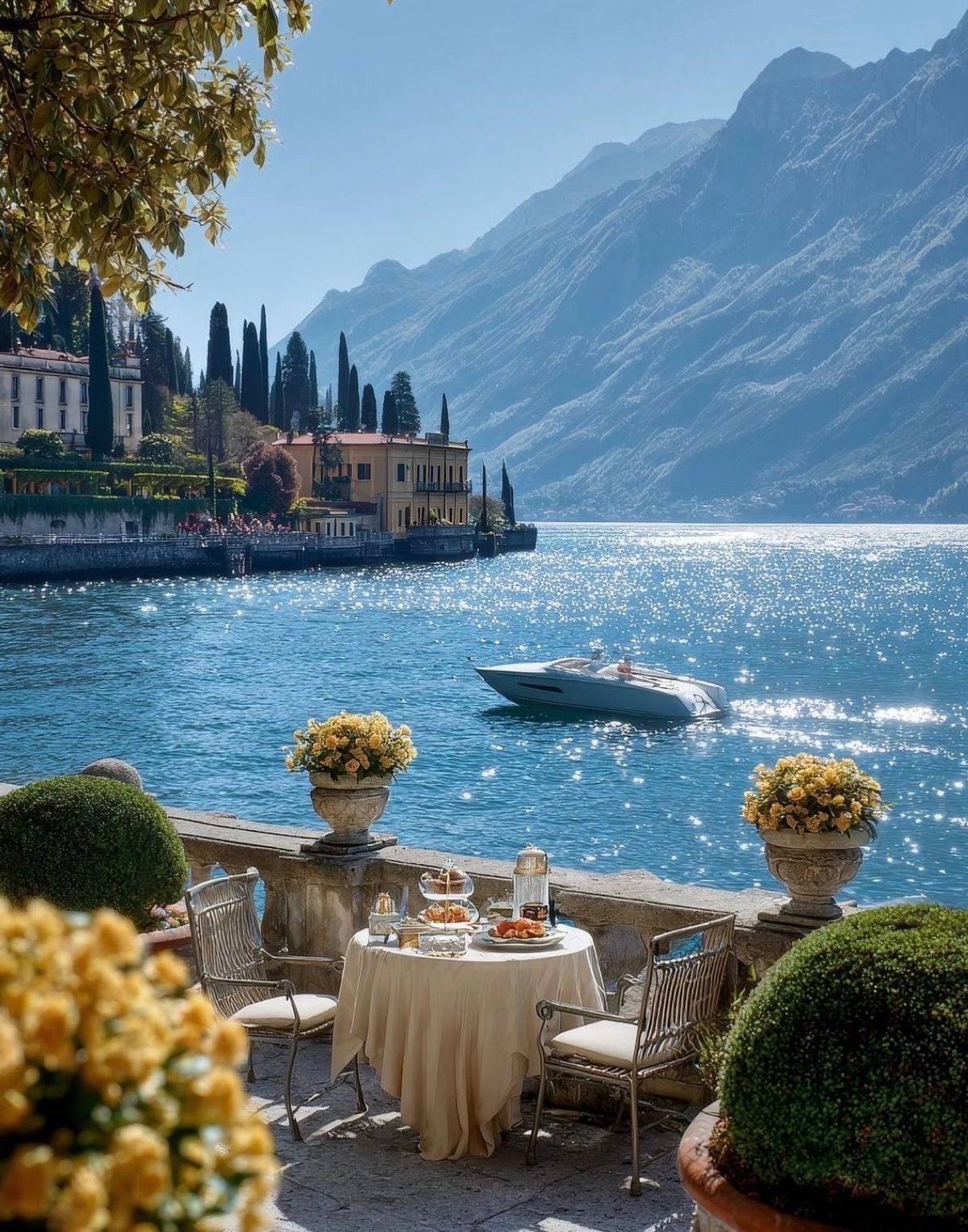
Como runs on two clocks. The breva, the southerly wind, rises in mid-morning and textures the water surface until mid-afternoon, which changes reflections, boat movement, and hair. The evening brings the tivano cycle and, frequently, a return to glassy water around sunset. Any portion of the day that involves the water directly, an arrival by boat, a transfer between venues, an open-water portrait, is scheduled against this cycle. We covered the full logic in how boat transfers affect wedding photography on Lake Como.
The short version for timeline design: water-based photography belongs to early morning and early evening. The middle of the day belongs to land.
Midday, from eleven to three
Midday on Como is more forgiving than midday on Santorini or the Amalfi cliffs, but it is still the weakest portrait window. The sun is high, the water surface throws reflections upward, and the contrast between sunlit stone and shaded loggia exceeds what a natural rendering can hold.
The lake’s villas absorb this window well. The interiors, loggias, and tree-shaded gardens of properties like Villa d’Este, Passalacqua, and Grand Hotel Tremezzo give the studio controlled light for detail work, documentary coverage, and indoor portraits while the couple and guests rest. Midday is also the natural slot for travel between locations, which on Como almost always takes longer than planned.
Late afternoon, and the shore you stand on
From mid-afternoon the day splits by geography. The east shore, from Varenna down toward Lecco, receives its best light in the morning and falls into mountain shadow in the late afternoon. The west shore, from Cernobbio up through Moltrasio and Tremezzo, holds direct light longer and faces the warm light as it lowers. A ceremony at five in the afternoon is a different photographic event on the two shores.
This is the single most common correction the studio makes to draft timelines: a ceremony or portrait session placed at an hour that is right in general and wrong for that shore. The fix is always venue-specific, and we walk every property, in person or through plans and sun-path references, before confirming the schedule.
Golden hour, shortened and sharpened
Golden hour exists on Como, but the mountain edge cuts it short. At many venues the final hour before official sunset is already indirect light, which means the strongest dimensional window often sits earlier than couples expect, roughly from two hours to one hour before the published sunset. In that window the facades on the west shore take full warm light, the water begins to calm, and the mountains separate into layers.
When the brief calls for the loggia of Villa del Balbianello or a comparable westward composition, we time it for this earlier window rather than for the sunset itself, and we protect it in the schedule the way other destinations protect the sunset slot.
Blue hour, the lake turns on its lights
After sunset the basin enters a long, stable blue hour. The villages light up along the shore, the water frequently returns to glass, and the reflections double every lamp and window. Twenty to forty minutes in this window, usually between the end of cocktails and the start of dinner, produces the most cinematic frames of the Como day: the couple in the foreground, the lit shoreline behind, the last saturation in the sky.
It is a short session by design. We bring the couple out, work two or three compositions, and return them to their evening.
A note on seasons
The windows above shift with the calendar. June stretches the day and pushes blue hour past nine in the evening, October compresses everything into amber and adds morning mist, and the transitional months move the wind cycle by an hour or more. The full seasonal picture is in weather and light on Lake Como, which is the companion reading to this article.
A summary timeline for a Como wedding
For a west-shore villa wedding in late spring, with official sunset around nine, the studio’s recommended structure looks approximately like this.
Early morning couple session on the water or at the dock, seven to eight-thirty, optional but recommended.
Preparation and detail coverage in the villa interiors, ten to twelve.
Midday rest, lunch, and any transfers, twelve to three.
Ceremony in the venue’s best late-afternoon light, five to six.
Cocktails and documentary coverage, six to seven-thirty.
Golden-window portraits, around seven to eight, depending on the shore and the date.
Blue hour session, twenty to thirty minutes after sunset.
Dinner and evening, from nine.
Frequently asked questions
Is sunrise worth the early call on Lake Como?
For couples who want the lake as a mirror and the villages empty, yes. The first two hours of light are the calmest and most private window of the Como day.
Why is golden hour shorter on Lake Como than elsewhere?
The mountains around the basin remove direct sun before the official sunset. At many venues the best warm light sits between two hours and one hour before the published time.
Can we schedule portraits at midday on the lake?
In controlled conditions, yes. The studio moves midday work into villa interiors, loggias, and shaded gardens, and keeps open-water and full-sun portraits for the morning and evening windows.
Which shore holds evening light longer?
The west shore, from Cernobbio through Moltrasio and Tremezzo, keeps direct light later in the day. The east shore around Varenna receives its best light in the morning.
Does the wind change the photography schedule?
Yes. The mid-morning to mid-afternoon wind textures the water and complicates boat-based photography. Water sessions are planned for early morning and early evening, when the surface is calm.
Do the seasons change these windows?
They shift them. Summer stretches the usable evening, autumn compresses the day and adds mist and amber light. The structure of the day remains the same, the hours move.

