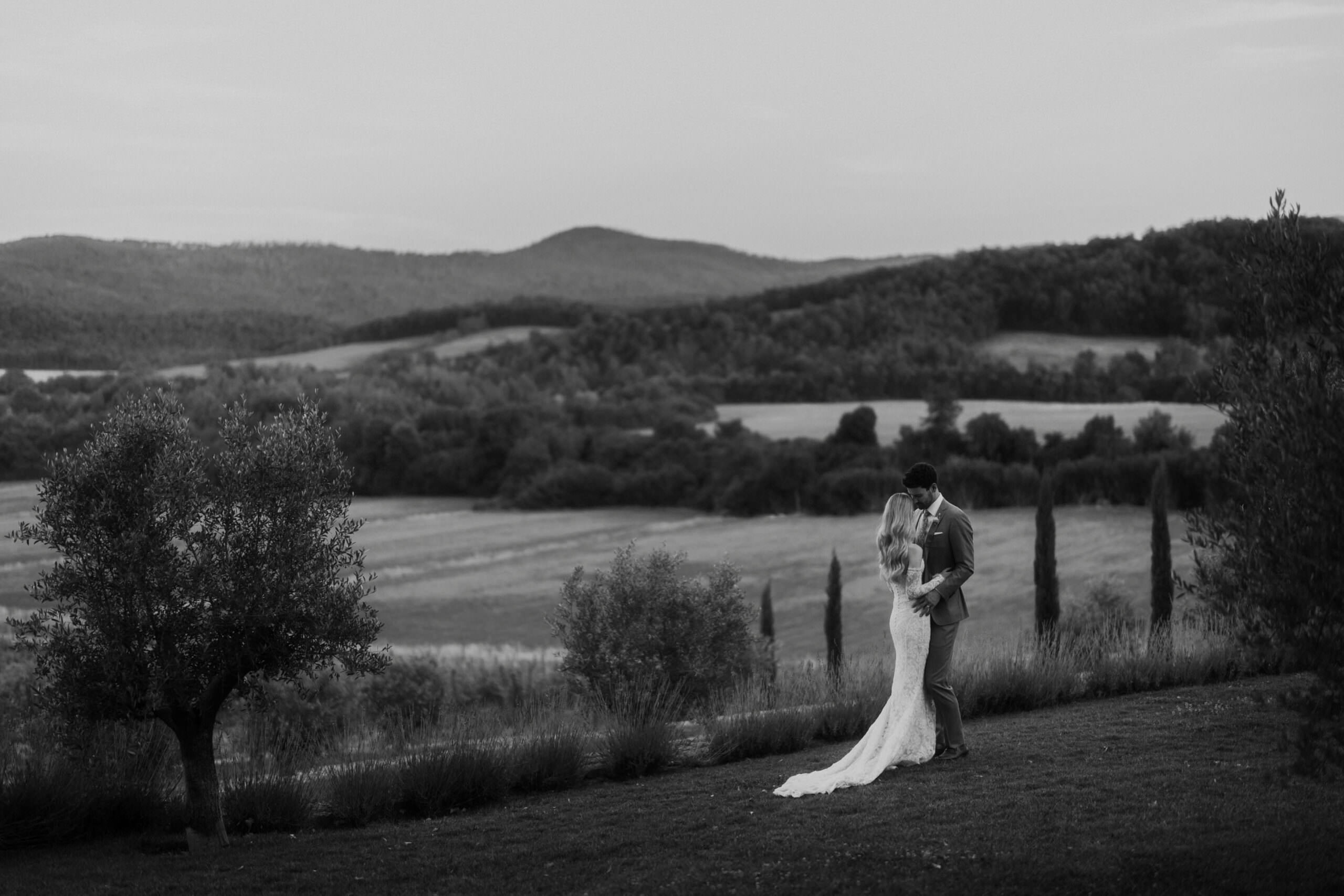
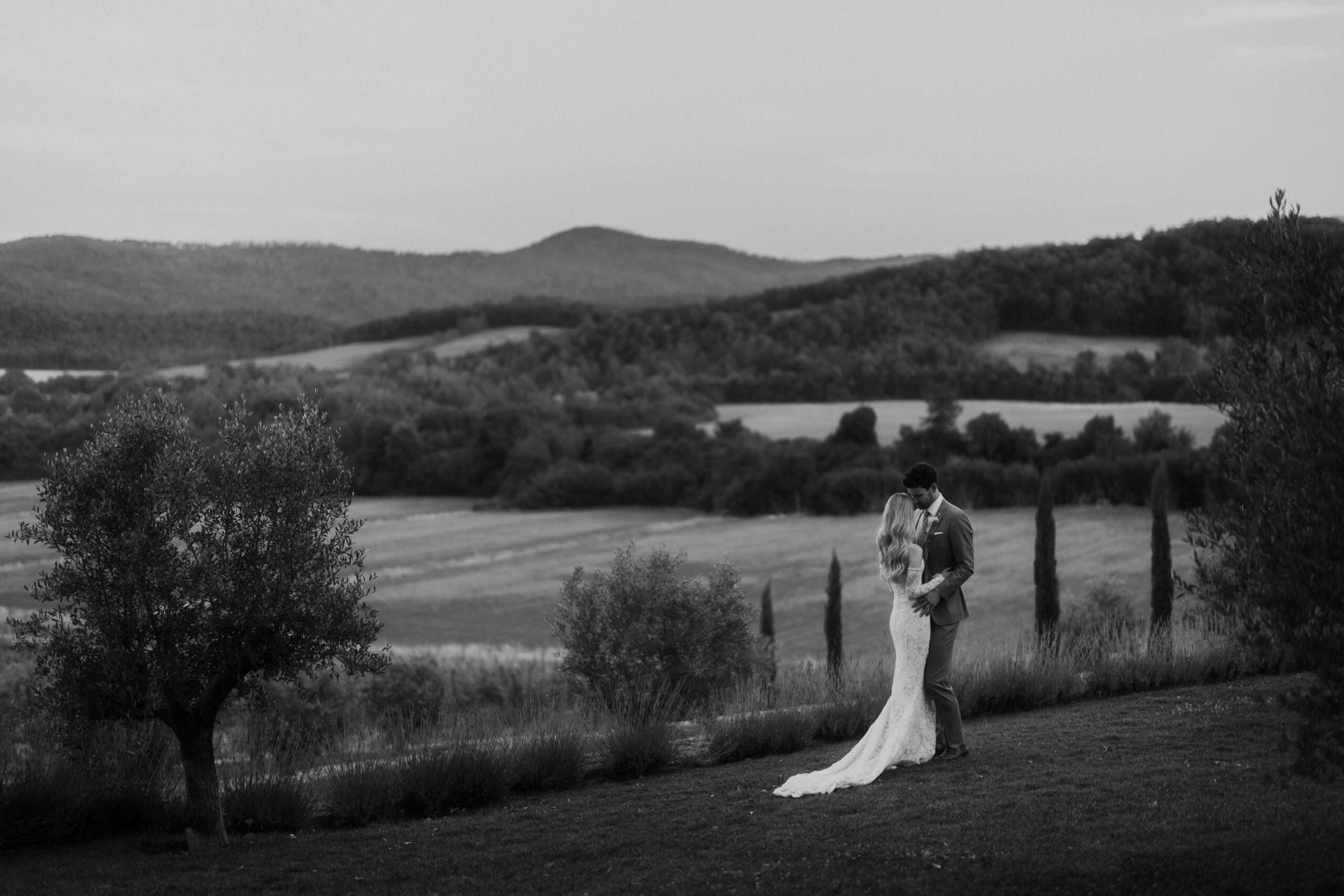
Every Tuscan wedding lives or dies by its timeline. Not because couples care about minutes, but because the light in Tuscany changes character four or five times a day, and the photographs produced at each of those moments are fundamentally different. Deciding when to shoot is the single most consequential design choice a couple can make after choosing the venue itself.
This is a short reference for couples, planners, and venues thinking about how to schedule a wedding in Tuscany for editorial photography. It explains what happens to Tuscan light across the day, which windows are worth designing around, and how Roberto Panciatici Studio structures timelines to work with the region rather than against it.
Why timing matters more than equipment
A wedding photographer can work with any camera. No photographer, however experienced, can fix a timeline that puts the ceremony under the worst light of the day. Tuscan light, especially in the two wedding seasons that matter (late spring and early autumn), moves fast. The same loggia at 2 pm and at 6 pm are two different locations in photographic terms. Budget for this understanding in pre-production, not in post-production.
Morning, the quiet hour
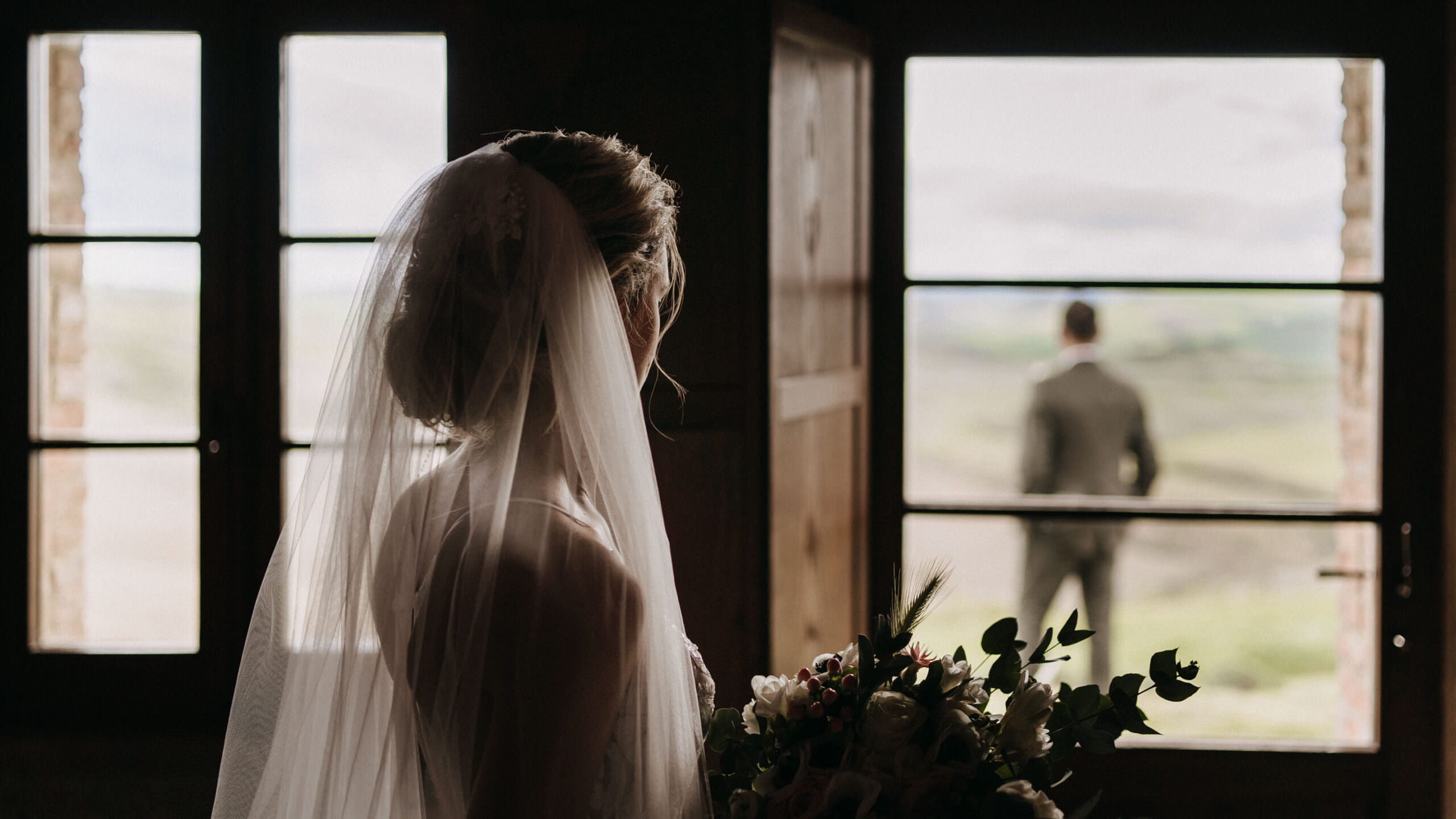
The hour after sunrise, in Tuscany, is the most underused asset in destination wedding photography. Most couples dismiss it because it falls before guests arrive. That is exactly why it works. The region is empty, the light is level and lateral, the air is still. A couple’s first-look session or an early bridal portrait at this hour produces some of the most compositionally clean photographs of the entire day.
In practical terms, this means beginning hair and makeup earlier than most planners recommend, and budgeting a real portrait window between sunrise and breakfast. The return on this single decision is disproportionate.
Midday, the light to navigate
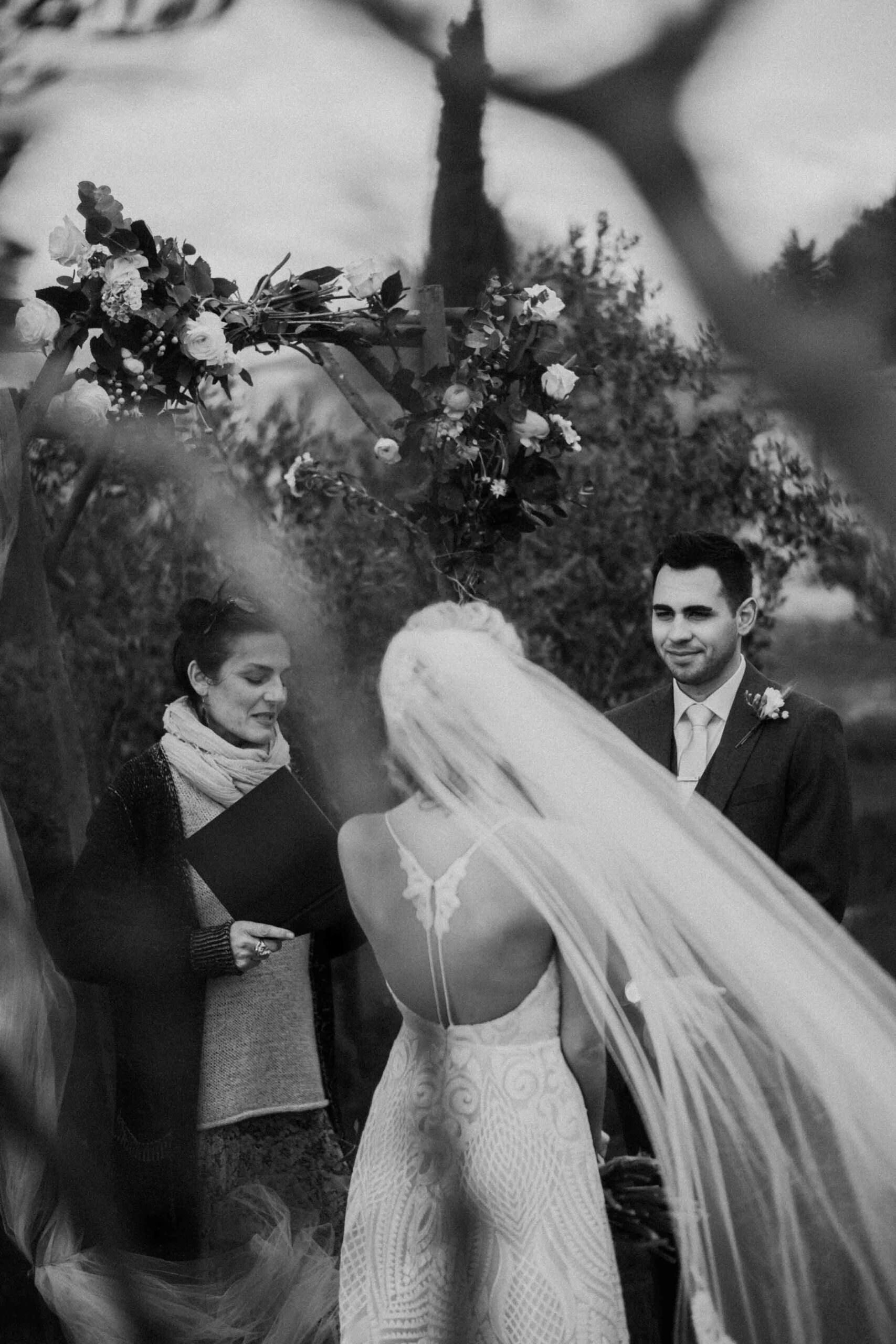
Between roughly 11 am and 3 pm in summer, Tuscan light goes vertical. Shadows fall straight down. Faces darken under brows. The landscape flattens visually. For editorial work, this is the worst window of the day. The studio uses it for interior coverage (dressing, details, still life) or for shaded activities like lunch, because those are settings where the light is controlled rather than photographed directly.
Planners who understand Tuscany design timelines to hide midday inside indoor moments or shaded social time. A ceremony scheduled at 1 pm in July, in full sun, is a design error that no camera can correct.
Late afternoon into golden hour
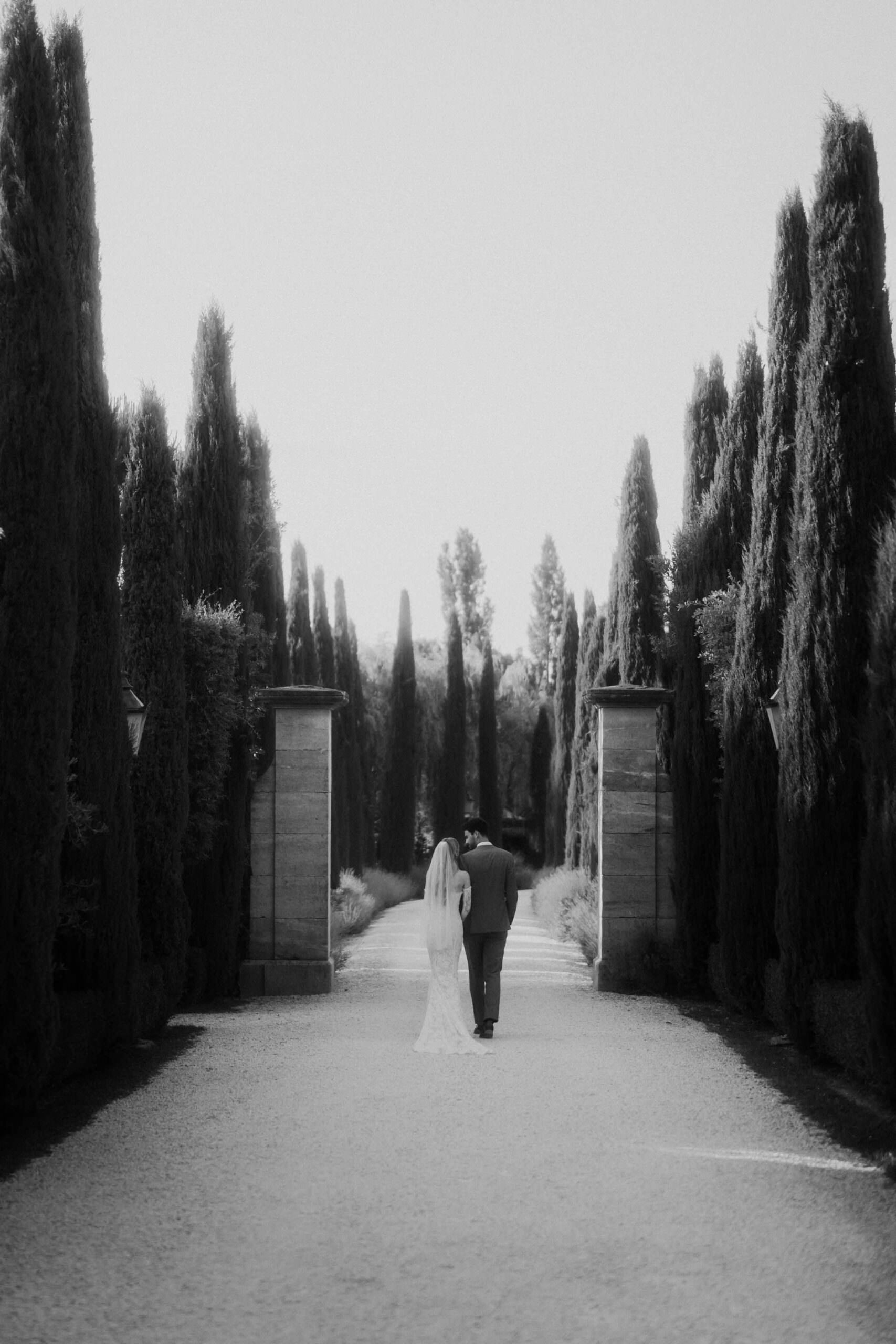
Between two and three hours before sunset, something begins in Tuscany that does not happen with the same intensity anywhere else in Europe. The light slides from neutral to warm. Walls built in Tuscan limestone start to glow. Cypresses go from green to bronze. Shadows stretch sideways and become sculptural. This is when most well-designed Tuscan ceremonies take place, because the ceremony itself and the portraits that follow can ride the same wave of light for roughly ninety minutes.
The studio plans ceremonies to begin between 5 pm and 6 pm in September, or between 6 pm and 7 pm in late May and early June, depending on the specific venue and its sun path. The goal is to reach the exchange of vows approximately forty-five minutes before sunset, so that the recessional, the cocktail hour, and the couple’s portrait session all happen during the most flattering light window of the day.
Blue hour, the cinematic close
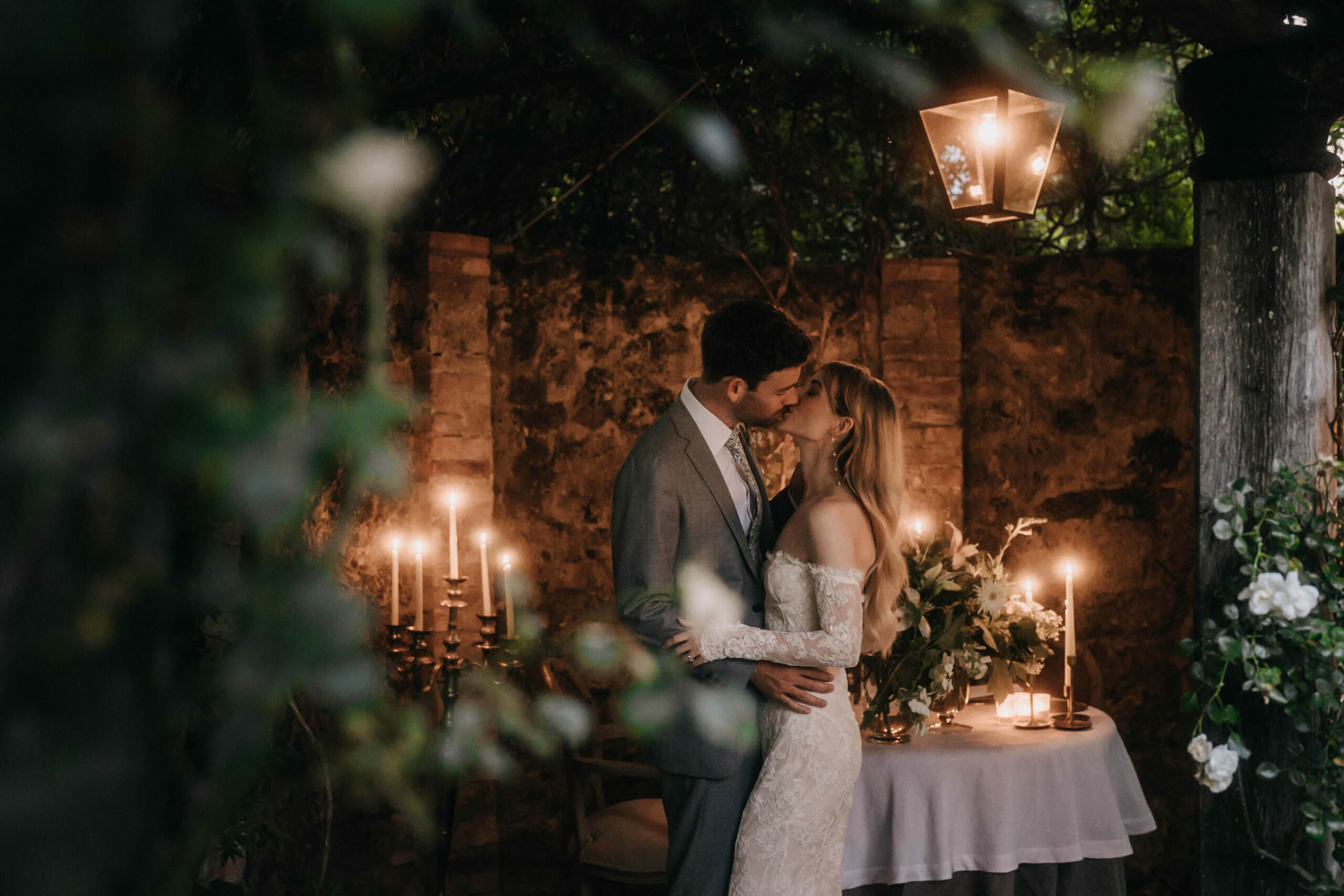
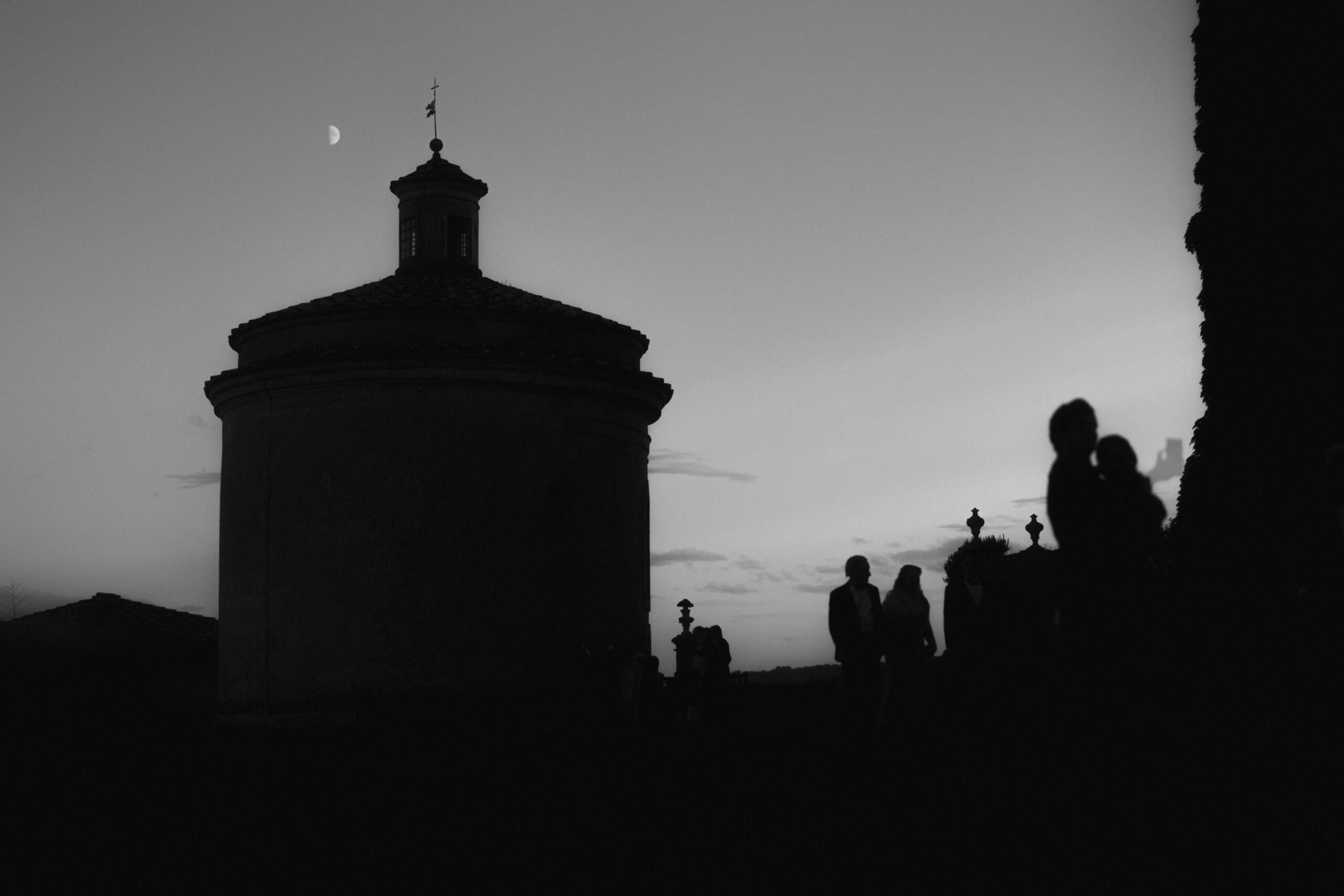
Once the sun has set and before full darkness arrives, Tuscany enters a short window (roughly twenty to thirty minutes) where the sky goes from warm orange to cool blue while architectural details remain visible. This is blue hour. It is the window for editorial portraits that feel cinematic rather than sentimental: a couple silhouetted against a villa wall, the dinner table set under pergola lights, the bride crossing a stone courtyard while the sky behind her still holds light.
Planners tend to underestimate blue hour because guests are usually in transition between ceremony and dinner. The studio plans ten to fifteen minutes of discreet portrait work inside this window, because it delivers images that cannot be reproduced at any other moment.
The timeline that respects all four windows
An editorial Tuscan wedding timeline, built correctly, looks roughly like this in late September:
Early morning, 6:30 am to 8:30 am. Bride solo portraits or a first-look session in low directional light, inside the estate or in its immediate surroundings.
Mid-morning to early afternoon. Preparation coverage indoors, controlled light, dressing and details. Lunch or family social time in shaded spaces.
4:30 pm to 5:15 pm. Couple moves to a pre-ceremony portrait location. Golden light begins.
5:30 pm. Ceremony. Sun low and warm.
6:15 pm to 7:15 pm. Recessional, cocktails, guest candid coverage, formal group portraits, couple session in golden light.
7:15 pm to 7:45 pm. Blue hour couple session, short and editorial.
8:00 pm onward. Dinner under designed lighting.
These numbers shift by thirty to sixty minutes depending on month and venue orientation, but the shape is consistent.
What to avoid
Three timeline decisions to avoid, if editorial quality matters:
Scheduling the ceremony between 1 pm and 4 pm in summer. The light is hostile, the guests are uncomfortable, the photographs lose atmosphere.
Starting preparation coverage too late. If hair and makeup finish at 4 pm and portraits begin at 4:15 pm, the early-morning window is gone and with it some of the best quiet images of the day.
Ending the photography coverage at sunset. The final thirty minutes after the sun drops are where some of the strongest editorial frames are made. Cutting coverage at that point is losing the best shots to save a fraction of the budget.
How Roberto Panciatici Studio designs the timeline
Every Tuscan wedding photographed by the studio starts with a custom sun path analysis for the specific property. The position of the ceremony altar, the orientation of the loggia for cocktails, the line of sight from the dinner table to the horizon, all are checked against sunrise and sunset times for the wedding date, and the timeline is built backward from there.
The studio works in collaboration with the planner, because the timeline touches every vendor. Catering, florists, musicians, officiants, everyone inherits the consequences of the photography schedule. When this collaboration happens early, the whole wedding flows more naturally and the photographs are not just moments captured, but moments designed.
For the broader context of how the studio approaches the region, read the pillar page on wedding photography in Tuscany. For the seasonal dimension, see Tuscany wedding photography by season.
Frequently asked questions
Is sunrise really worth it for a wedding photography session?
Yes, for couples who want images that are genuinely rare. The light window between sunrise and breakfast in Tuscany produces a quality of light (low, lateral, golden) that no other moment of the day reproduces, and it does so in a region that is essentially empty at that hour. The cost is waking up early. The return is a set of photographs no other wedding will have.
Can midday be used at all?
Yes, but not for outdoor portraits under direct sun. Midday in Tuscany works for interior coverage, shaded courtyards, long lunches under pergolas, and preparation scenes. Treat it as the light you control rather than the light you photograph.
How long before sunset should the ceremony begin?
Approximately forty-five minutes before sunset. That gives the exchange of vows soft directional light, the recessional happens during peak golden hour, and the couple’s portrait session fits inside the best light window without feeling rushed.
What is blue hour and why does it matter?
Blue hour is the short window (twenty to thirty minutes) after sunset when the sky is still luminous but has shifted from orange to deep blue. Architectural details remain visible, ambient warm lights begin to glow, and the contrast between sky and venue becomes cinematic. It produces photographs that feel like film stills rather than wedding documentation.
How does the studio handle venues with limited sunset visibility?
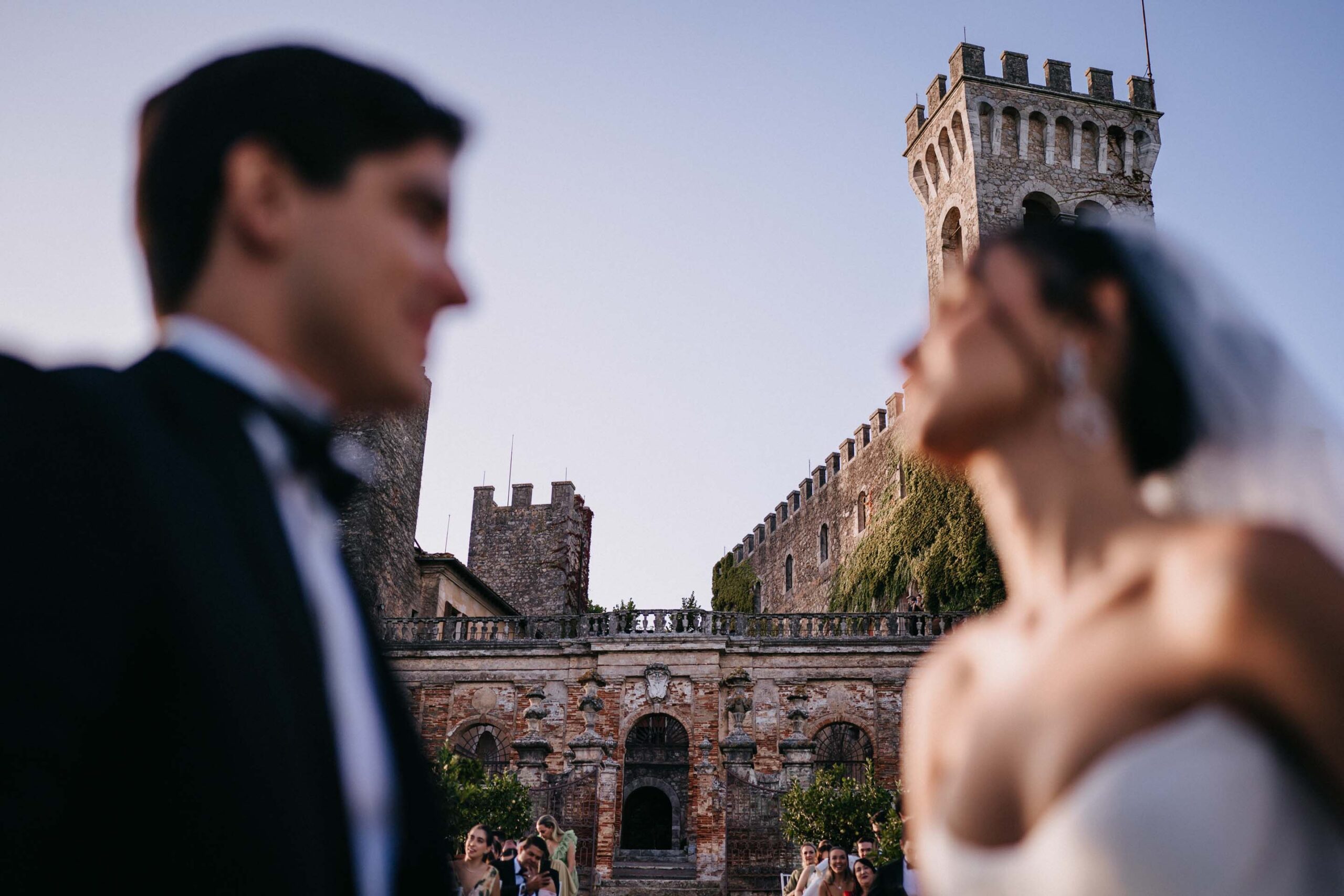
Every Tuscan venue has a different relationship with the sun. Some, like Villa Cetinale, offer clear western exposure. Others are tucked into valleys or oriented north. The studio does a sun path analysis for the specific property and designs the timeline around where the light actually lands, not where it would land in a generic Tuscan venue. Site visits or detailed planner briefings are standard.
Wedding photography in Tuscany rewards couples who plan around light. If you are designing a Tuscan wedding and want to discuss timeline, venue orientation, or the way the studio approaches editorial imagery in this region, reserve a conversation.

