A masseria is not a villa with a different name. It is a fortified farmhouse, built between the sixteenth and nineteenth centuries to defend olive harvests and the families who produced them, and that defensive logic still defines how it photographs today. Thick limestone walls, a closed central courtyard, almost no ornament. Where a Tuscan villa performs, a masseria withholds. For couples drawn to that restraint, and for the kind of editorial wedding photography we practice, the difference matters more than any styled detail.
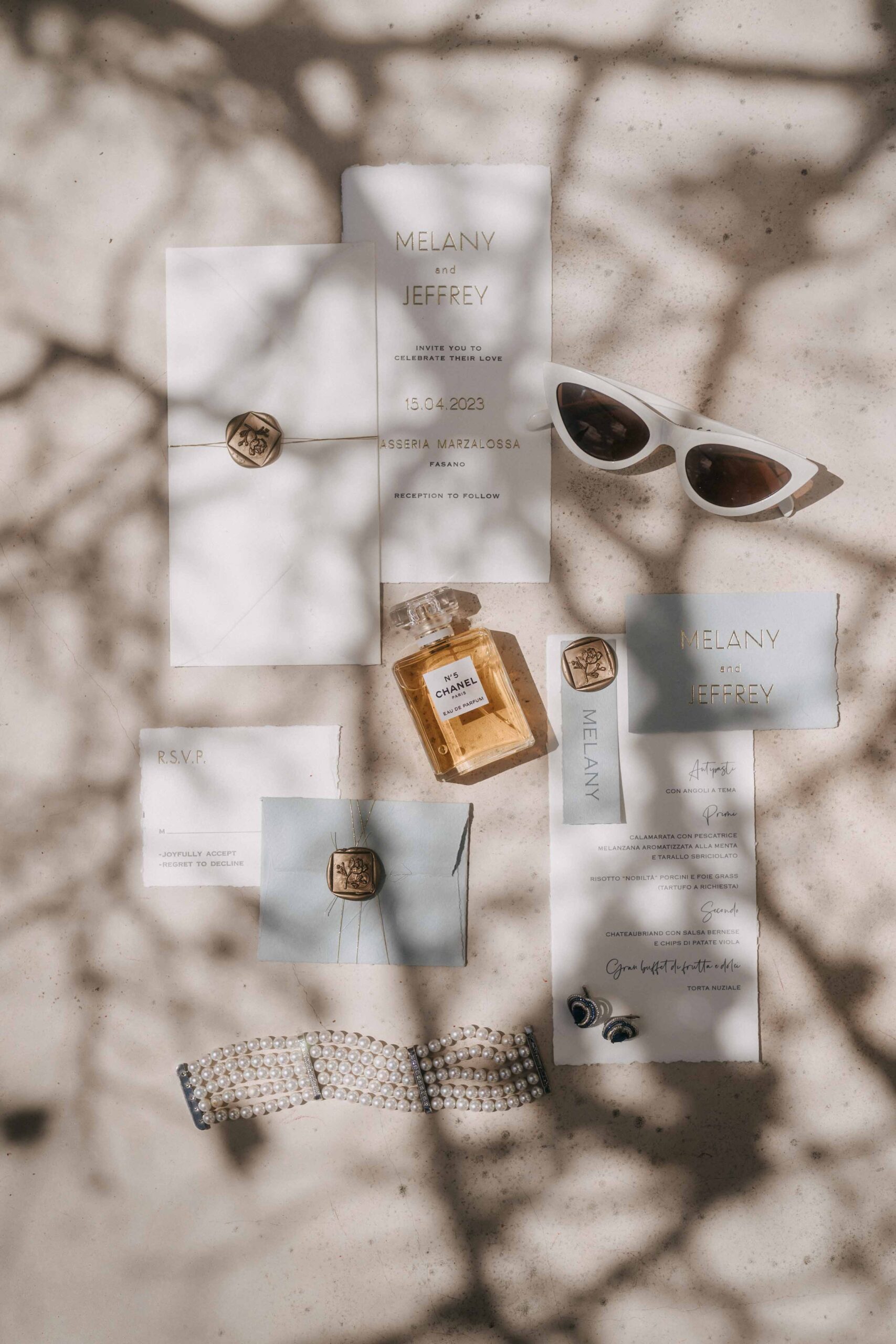
Architecture built for work, not display
Most wedding venues in Italy were built to impress visitors. Masserie were built to process olives, shelter animals, and resist raids from the sea. The result is an architecture of function: vaulted ceilings in stone, courtyards proportioned for carts rather than ceremonies, walls a meter thick with small, deep windows.
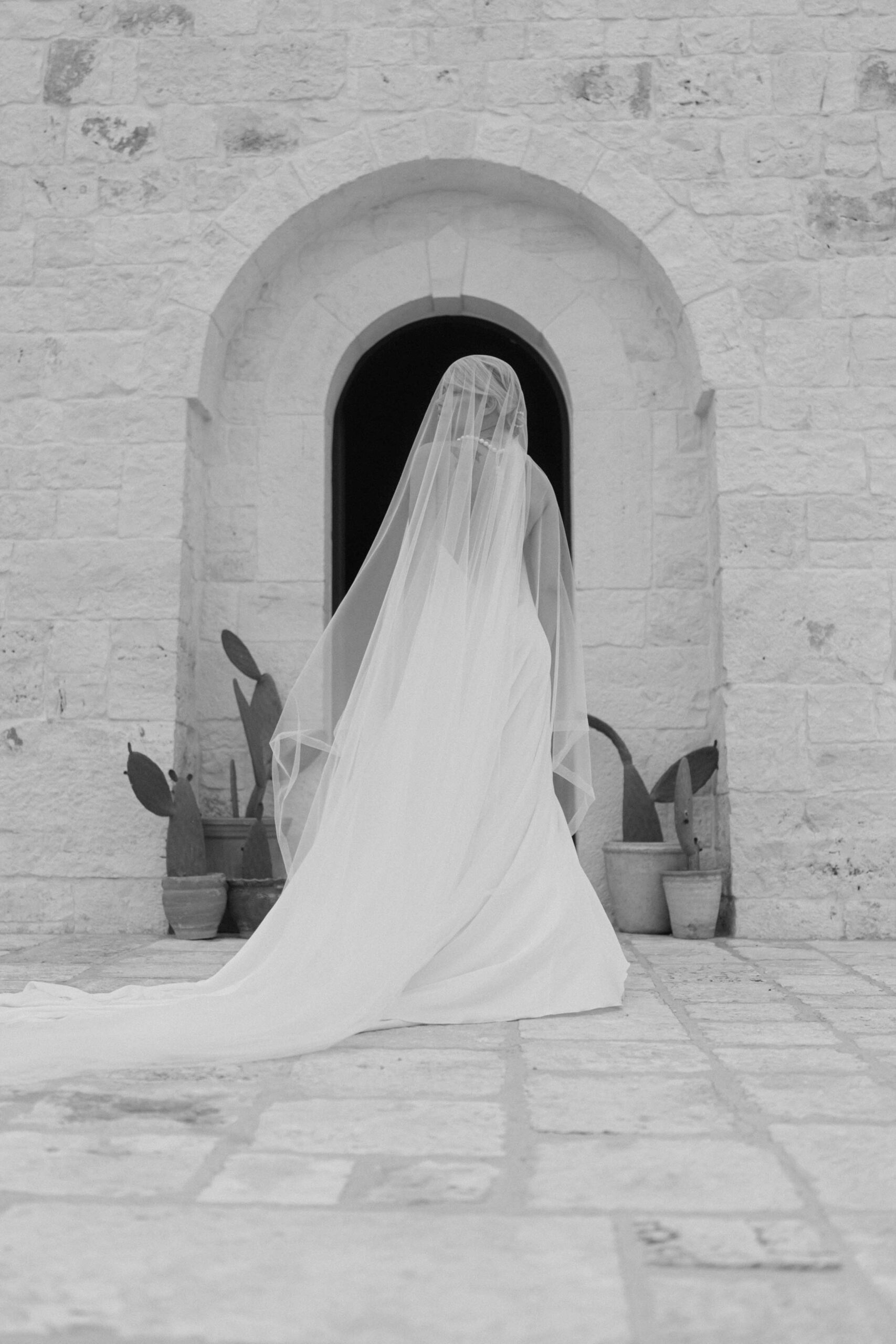
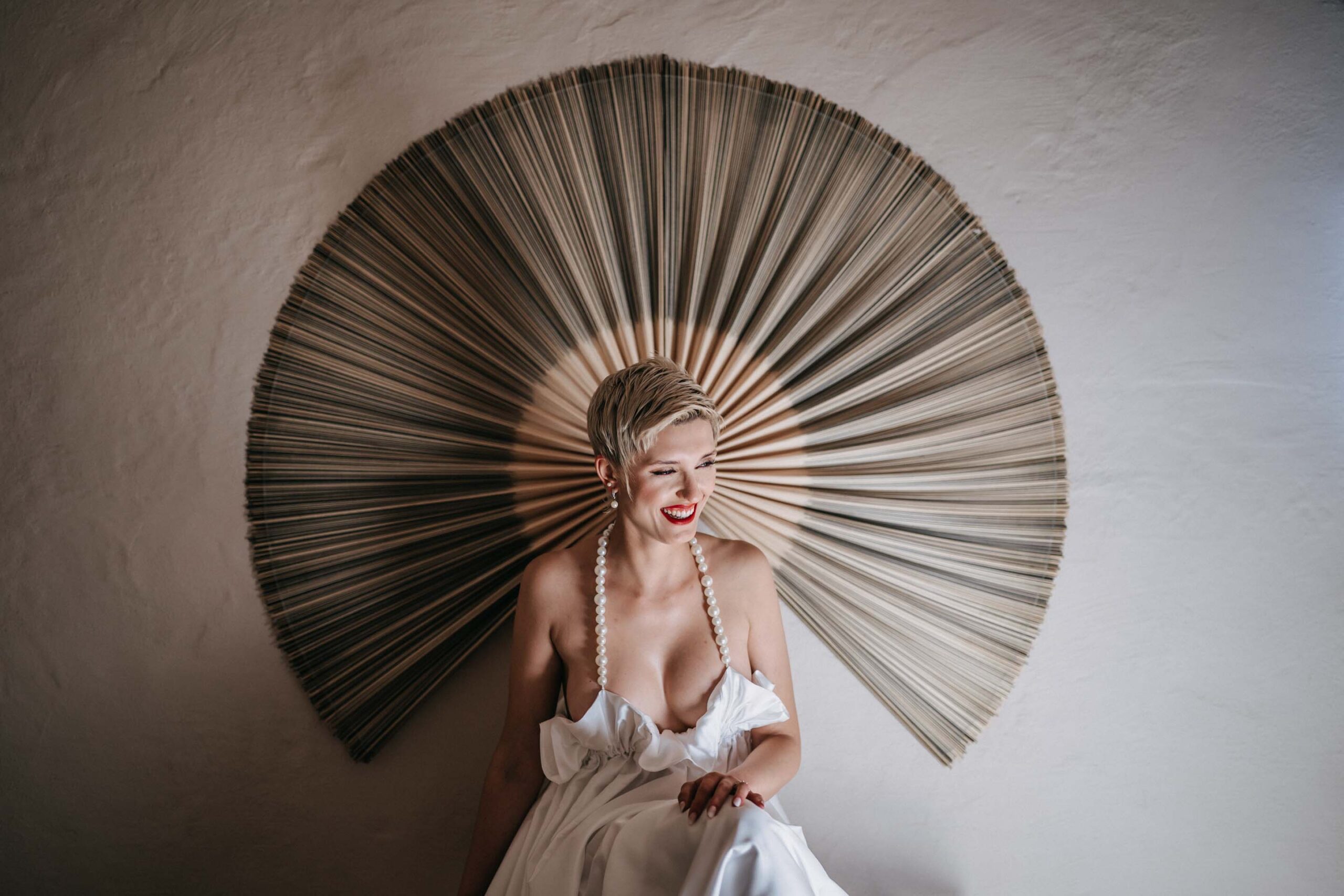
This matters photographically because nothing in a masseria asks to be the subject. The building recedes, and the people in front of it come forward. When we photograph a couple against a limewashed wall in the Valle d’Itria, the frame holds two tones, skin and stone, and almost nothing else. That reduction is close to what Irving Penn built in his studio with a plain backdrop; here the backdrop is four centuries old and was never designed for a camera.
The conversions of the last two decades, from Borgo Egnazia’s contemporary reading of Apulian vernacular to smaller family-run estates near Ostuni and Fasano, have generally respected this character. The best ones added comfort without adding decoration, which keeps the photographic problem clean.
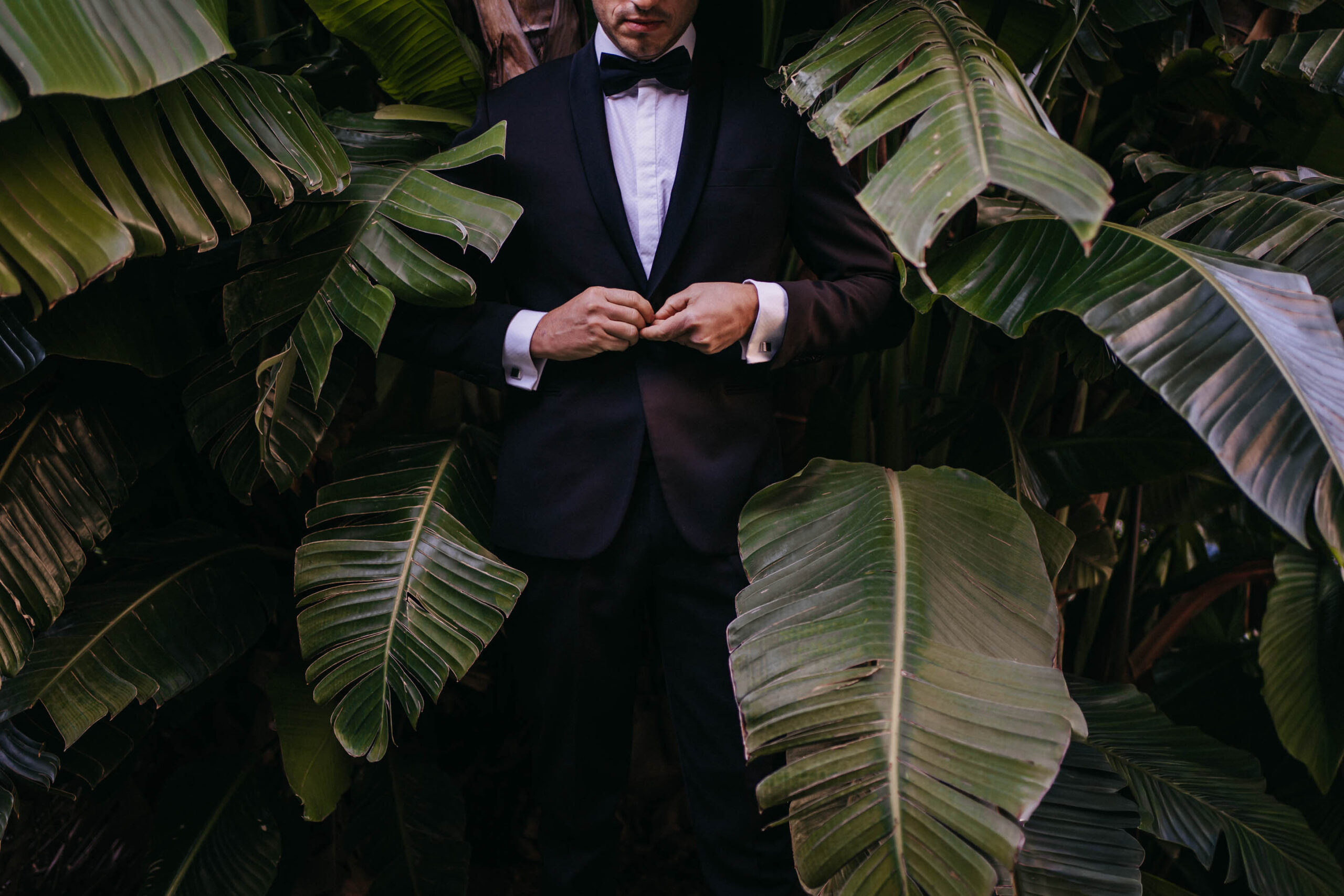
What the courtyard does to light
The central courtyard is the masseria’s defining space, and it behaves like a light modifier the size of a building. White walls on all four sides bounce sun into open shade, producing soft, directional light for most of the day. At noon in July, when the open countryside outside is unusable for portraits, the shaded side of a courtyard gives clean, even illumination with a subtle wrap. We often build the middle hours of a masseria wedding day entirely inside this perimeter.
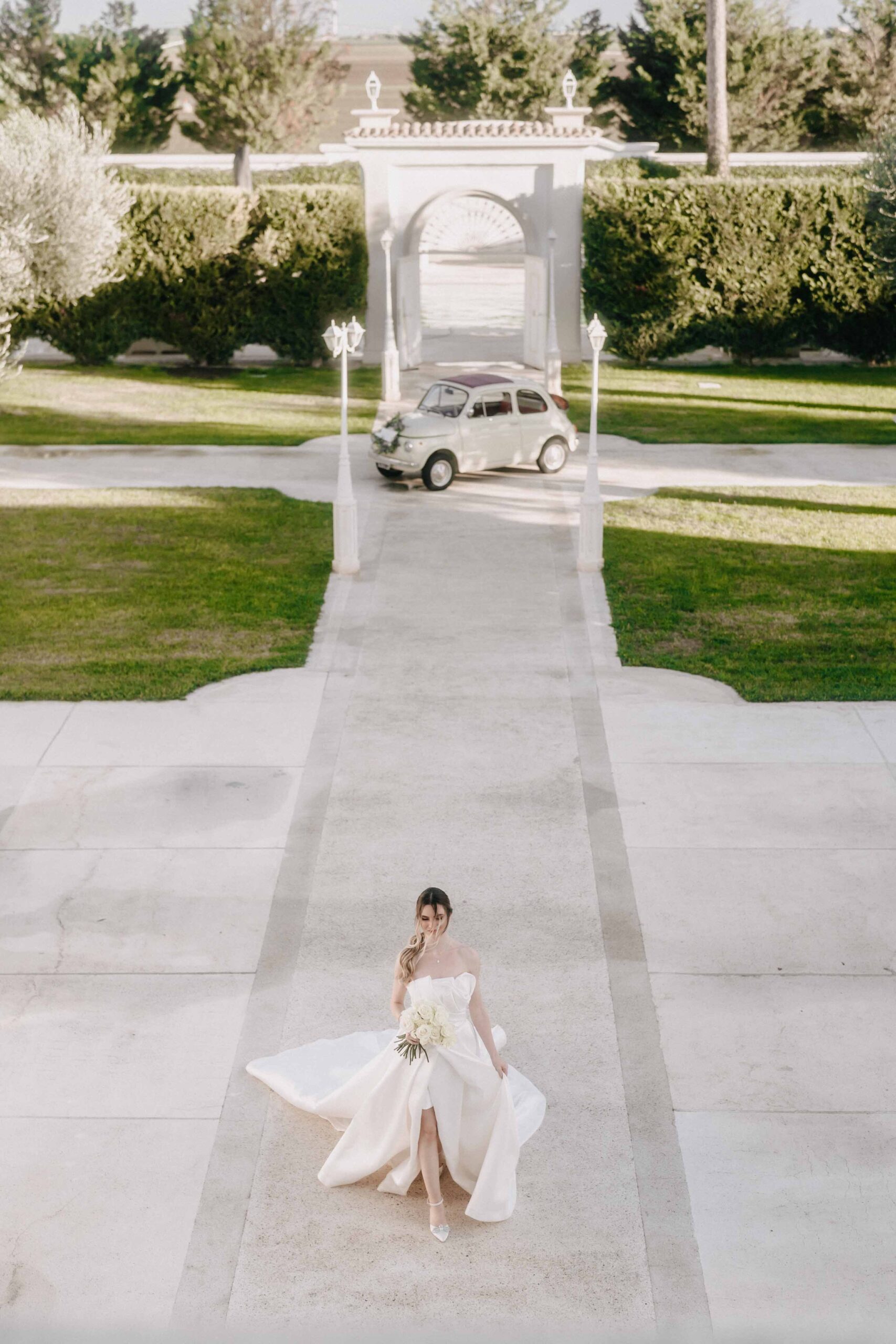
Golden hour reverses the logic. The low sun rakes across whitewash and turns it amber, and the olive groves outside the walls, silver-green and planted in long rows, become the stage. The transition from enclosed courtyard to open grove, within a fifty meter walk, is a range of settings that few venue types in Europe can match.
There is also a quality specific to Apulian light that we associate with Luigi Ghirri’s work in the Italian landscape: a slightly bleached clarity, horizontal lines, an absence of drama that rewards composure. We expose for it rather than against it. Heavy contrast and saturated sunsets are available here, but they flatten what is singular about the place.
The angles everyone photographs, and how we treat them
Puglia has developed its own canon of over-photographed images: the couple framed in a trullo doorway, the aisle of olive trees at sunset, the long dinner table under string lights shot wide from a drone. These pictures exist by the thousand and they all look the same, regardless of who is in them.
We do not refuse these setups; some of them earn their popularity. We use them sparingly, and differently. The long table interests us less as an aerial graphic than at eye level, between the candles, where Helmut Newton or Paolo Roversi would have stood: close, imperfect, alive. The olive grove interests us in the flat light of late morning as much as at sunset, because that is when its geometry reads. If an image can be produced identically at any masseria with any couple, it tells us nothing, and we would rather spend that time on the pictures only this wedding can produce.
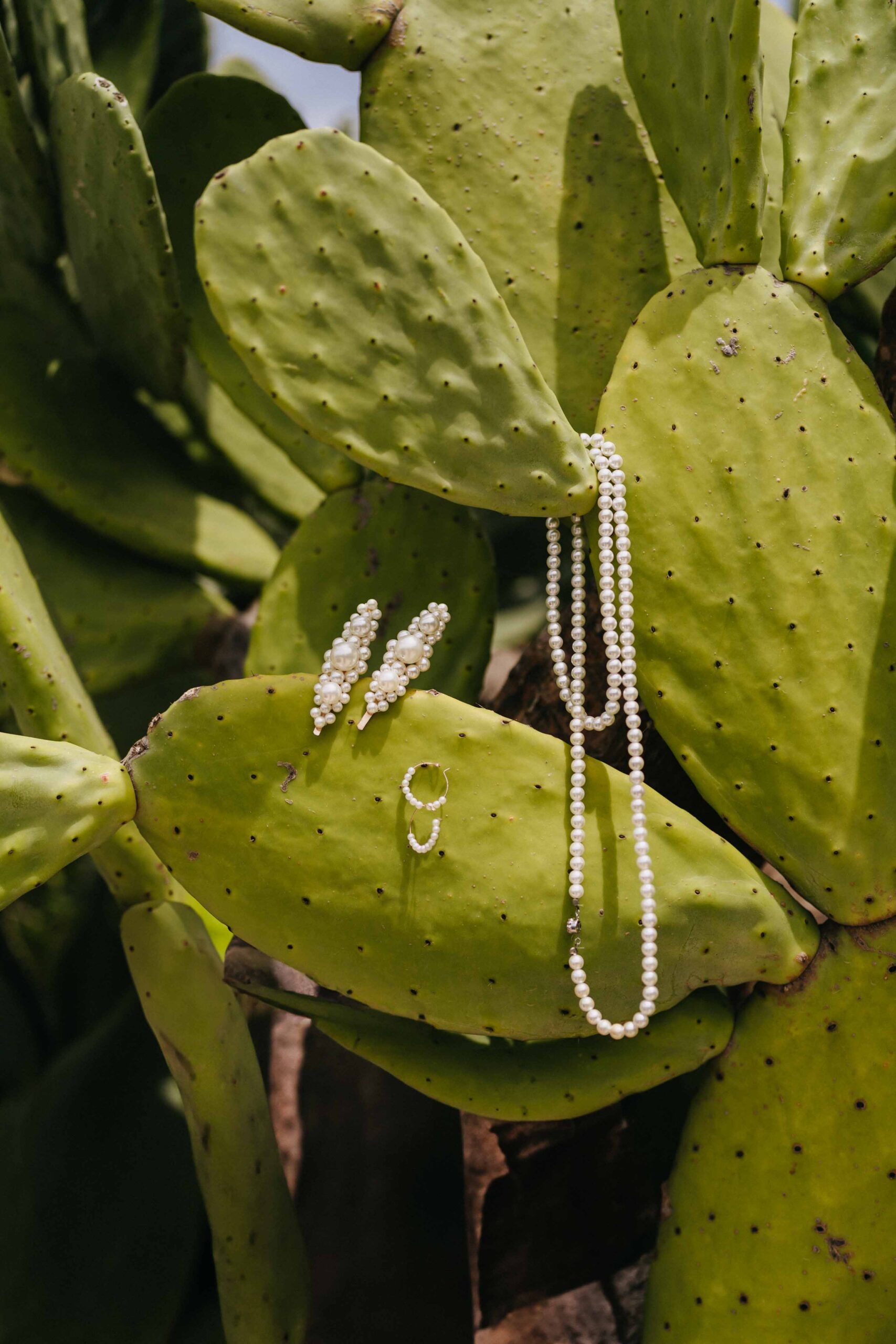
Logistics that shape the images
Masserie are rural. Most sit twenty to forty minutes from the nearest town, with limited public transport, which means the wedding tends to concentrate on the estate: guests sleep on site, the day unfolds in one place, and nobody is watching the clock for transfers. For photography this is an advantage. Preparation, ceremony, dinner, and party happen within walking distance of each other, so we lose no light to logistics and gain time for unscripted moments.
The same remoteness imposes discipline. Vendors bring everything; there is no running back for a forgotten item. Summer heat in the open country is real, often above thirty-five degrees in July and August, and we plan portrait sessions accordingly: early, late, or inside the courtyard’s shade. Couples marrying in peak season should expect us to propose a timeline that protects both the images and the people in them.
What we do not do at a masseria
We do not dress a masseria up as something it is not. No heavy flash setups that erase the natural fall of light on stone, no compositions that crop out the agricultural character in favor of generic luxury, no recreation of Tuscan or Amalfi imagery transplanted south. Couples who want a masseria to look like a five-star resort anywhere in the world will be better served by another photographer. Couples who chose Puglia because it is unlike anywhere else will find that conviction reflected in the work.
For the full picture of how we work across the region, from the Valle d’Itria to the coast, the Puglia wedding photographer pillar page covers venues, seasons, and method in depth.
Frequently asked questions
What exactly is a masseria?
A masseria is a fortified farmhouse typical of Puglia, built between the sixteenth and nineteenth centuries as the center of an agricultural estate. Many have been restored as boutique hotels and wedding venues while keeping their original architecture: limestone walls, central courtyards, and vaulted interiors.
How is a masseria different from a villa for wedding photography?
A villa is built for display, with formal gardens and ornament that compete for attention in the frame. A masseria is built for work, with plain surfaces and enclosed courtyards. Photographically, the masseria gives cleaner backgrounds, softer bounced light, and a more restrained, editorial mood.
Is the light difficult inside a masseria courtyard?
The opposite, in most conditions. White walls bounce sunlight into large areas of soft open shade, which makes the courtyard usable for portraits even at midday in summer, when the open countryside is too harsh.
Can large weddings work at a masseria?
Many converted masserie host events of one hundred fifty guests or more, with on-site accommodation for a core group. Capacity varies widely, so it should be confirmed with the venue early, together with backup spaces for wind or heat.
When is the best time of year for a masseria wedding?
Late spring and September are the most balanced windows, with long light and manageable temperatures. July and August work with an adjusted timeline that moves portraits to early morning and the last two hours of daylight. Winter suits elopements and portrait sessions rather than full celebrations.
Do you photograph the classic Puglia shots, like the olive grove at sunset?
Yes, when they serve the couple, and sparingly. We prioritize images that are specific to the people and the day over setups that look identical at every masseria in the region.
Are you looking for a
wedding photographer?

Are you looking for a
wedding photographer?
We’d love to hear about your unique vision. We will craft something truly unforgettable together.
