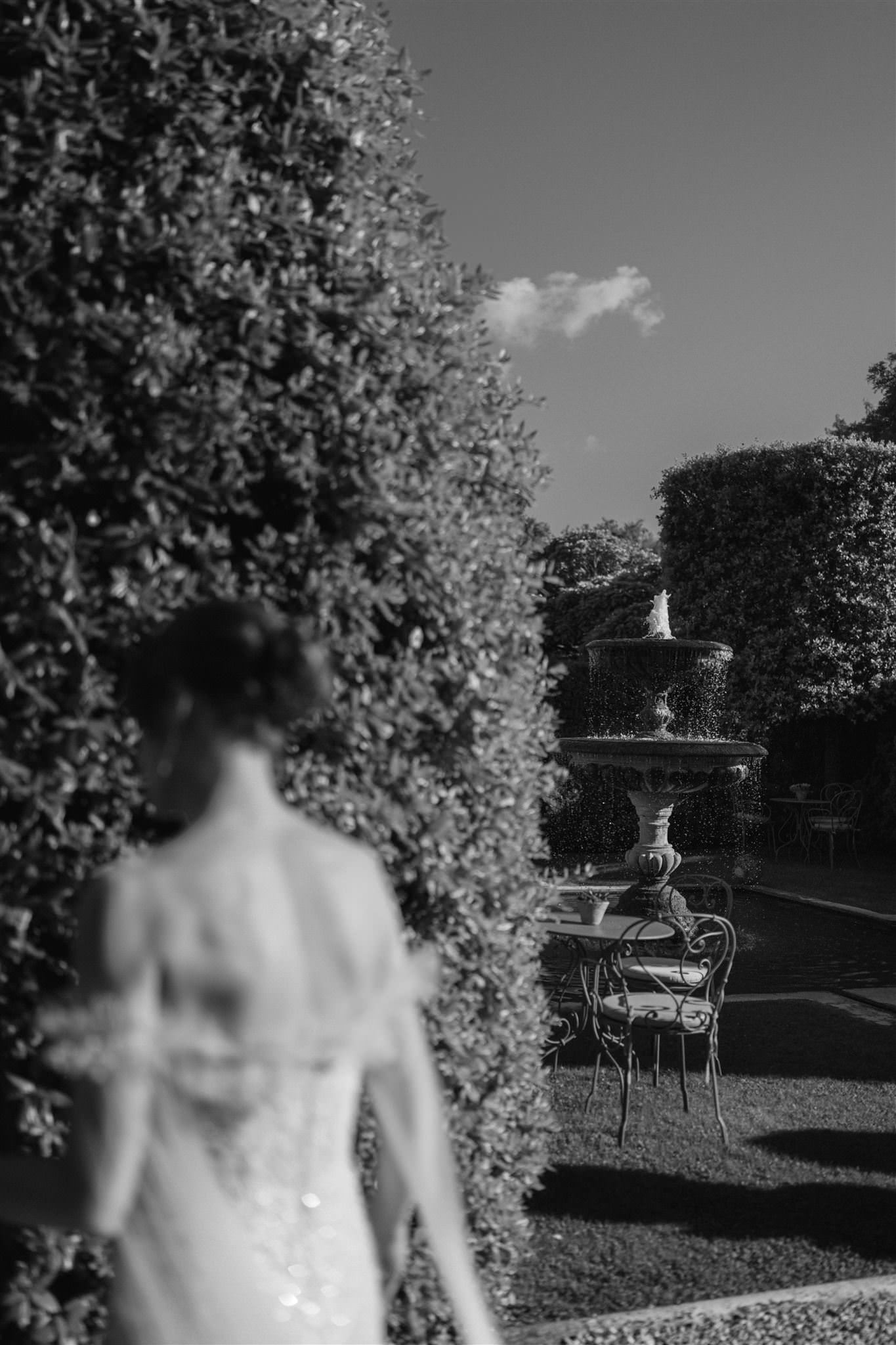
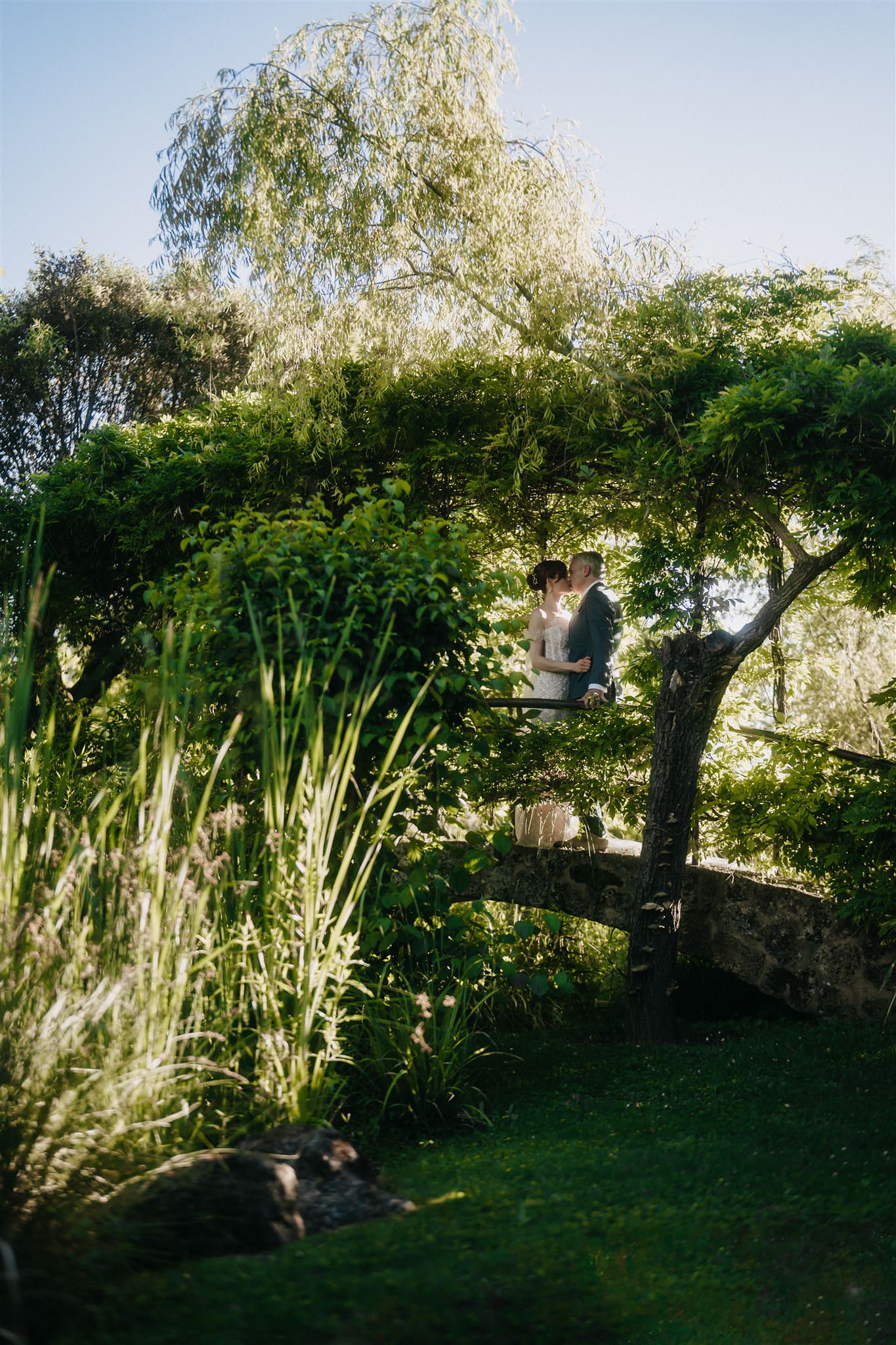
Borgo Santo Pietro is the kind of property that explains what has changed in Tuscan hospitality over the last decade. It is not an old villa that has added a spa. It is an integrated estate that treats every element (the hotel, the farm, the kitchen, the garden, the architecture, the light) as part of a single editorial project. That is why couples who care about design choose it, and why photographers who care about editorial outcomes recognise it as a reference rather than just another venue.
This piece is written for couples considering a Borgo Santo Pietro wedding, planners looking for photographic insight into the property, and anyone researching how Roberto Panciatici Studio approaches this specific estate. It is not a promotional piece for the venue. It is a photographer’s reading of what makes this place work for modern Tuscan weddings.
A working farm that became a five-star relais
Borgo Santo Pietro is located near Chiusdino, in the Val di Merse south of Siena. The estate covers roughly three hundred acres of organic farmland, vineyards, and gardens. It holds the Condé Nast Traveler Readers’ Choice Award 2025 and was awarded Three Michelin Keys in the same year. These are not trivial recognitions. The Michelin Keys system evaluates hotels on architectural, culinary, and experiential terms, and Three Keys is the highest tier available.
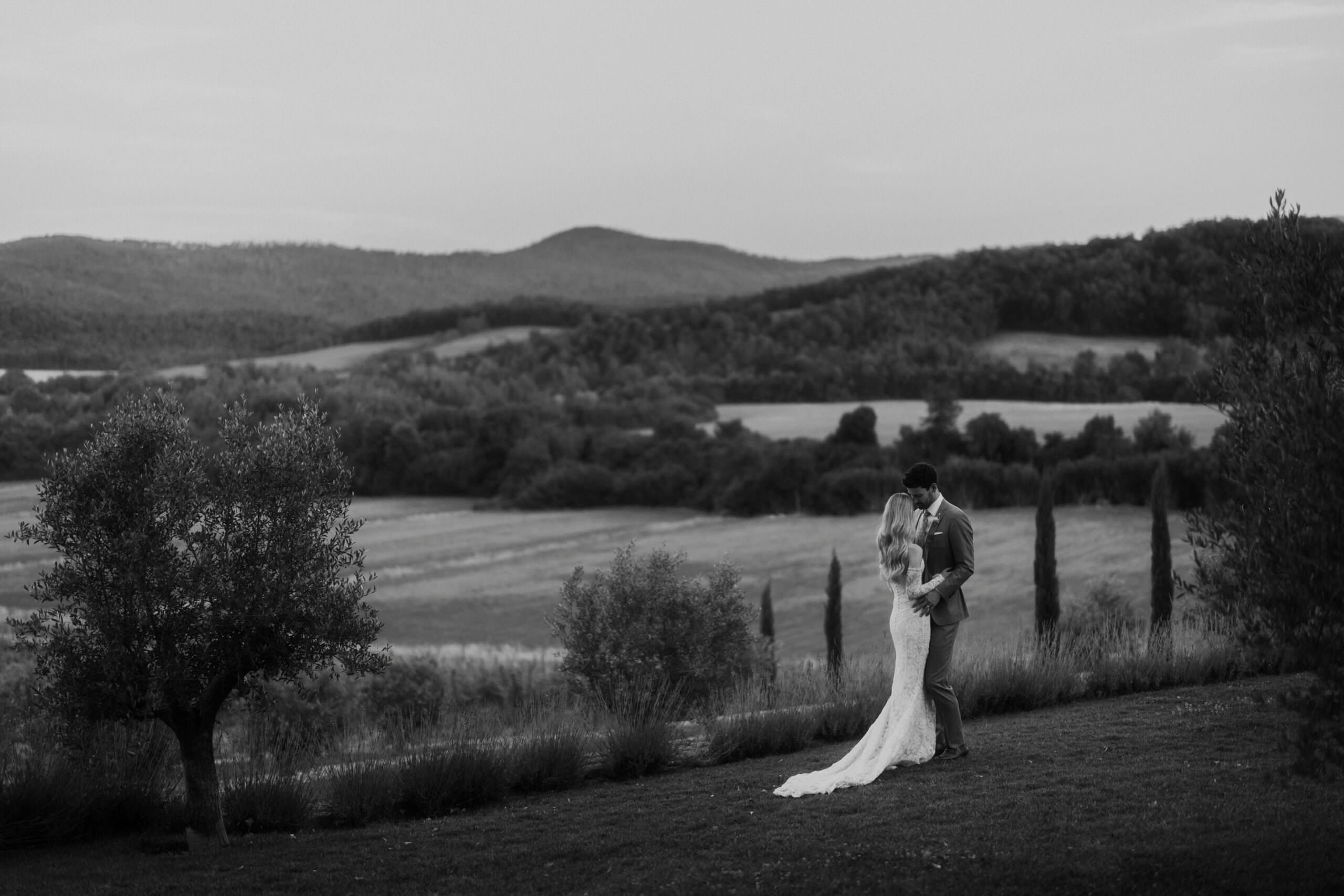
The practical consequence for weddings is that Borgo operates at a level of coherence most venues never reach. The flowers on the ceremony table come from the kitchen garden. The meat at dinner comes from animals raised on the estate. The linens come from a workshop on site. This integration, which reads as marketing copy when described this way, translates into photographs that have a quality rarely found in staged wedding imagery: everything looks like it belongs where it is.
What the light does here
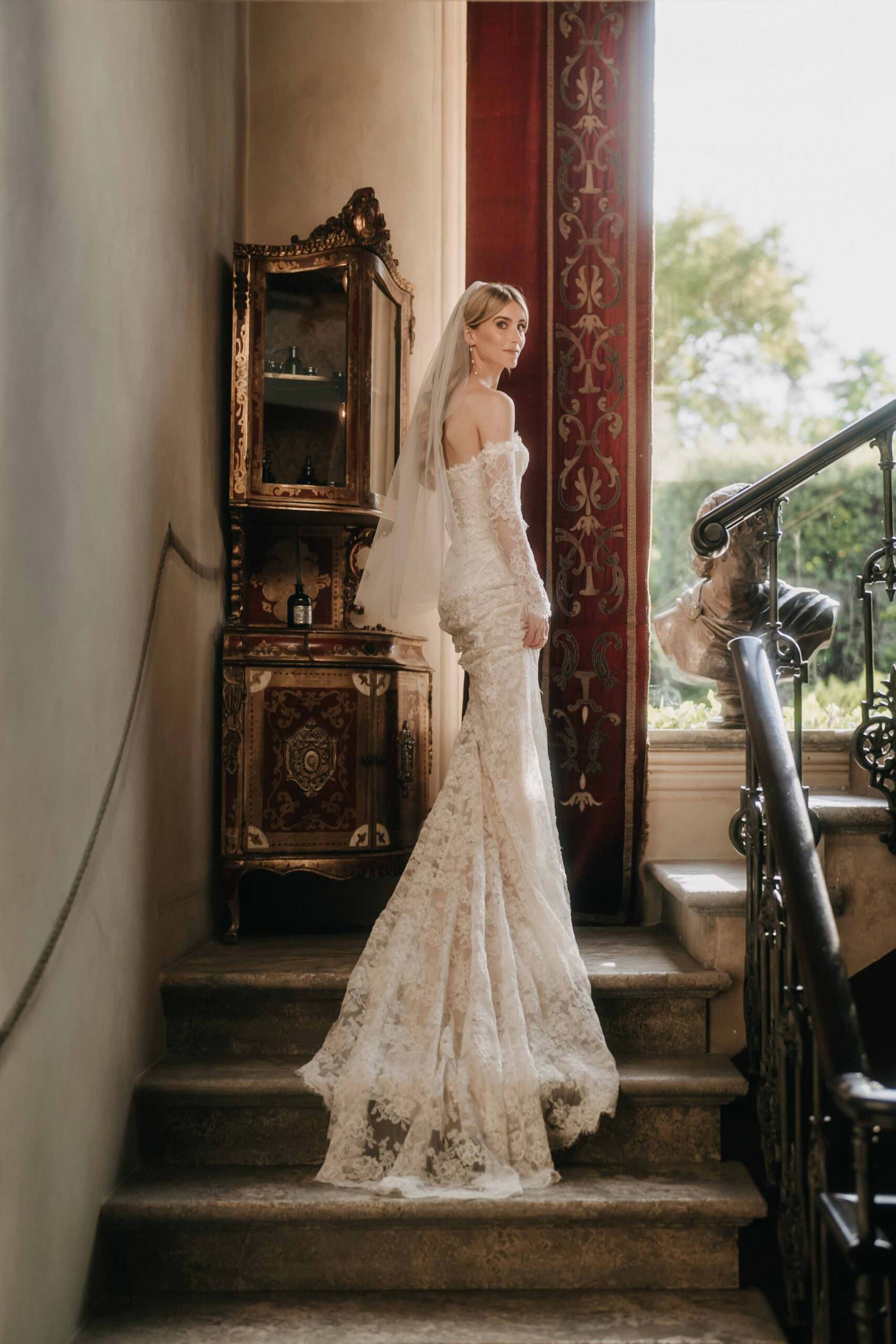
The estate is oriented in a way that rewards photographers. The main courtyard faces roughly east-southeast, which means morning light floods it with clean lateral illumination and afternoon shadows fall across the stone in sculptural angles. The orangery, used for many ceremonies, has tall glazed walls on two sides and holds soft diffused light well into the evening, which is unusual for Tuscan interiors.
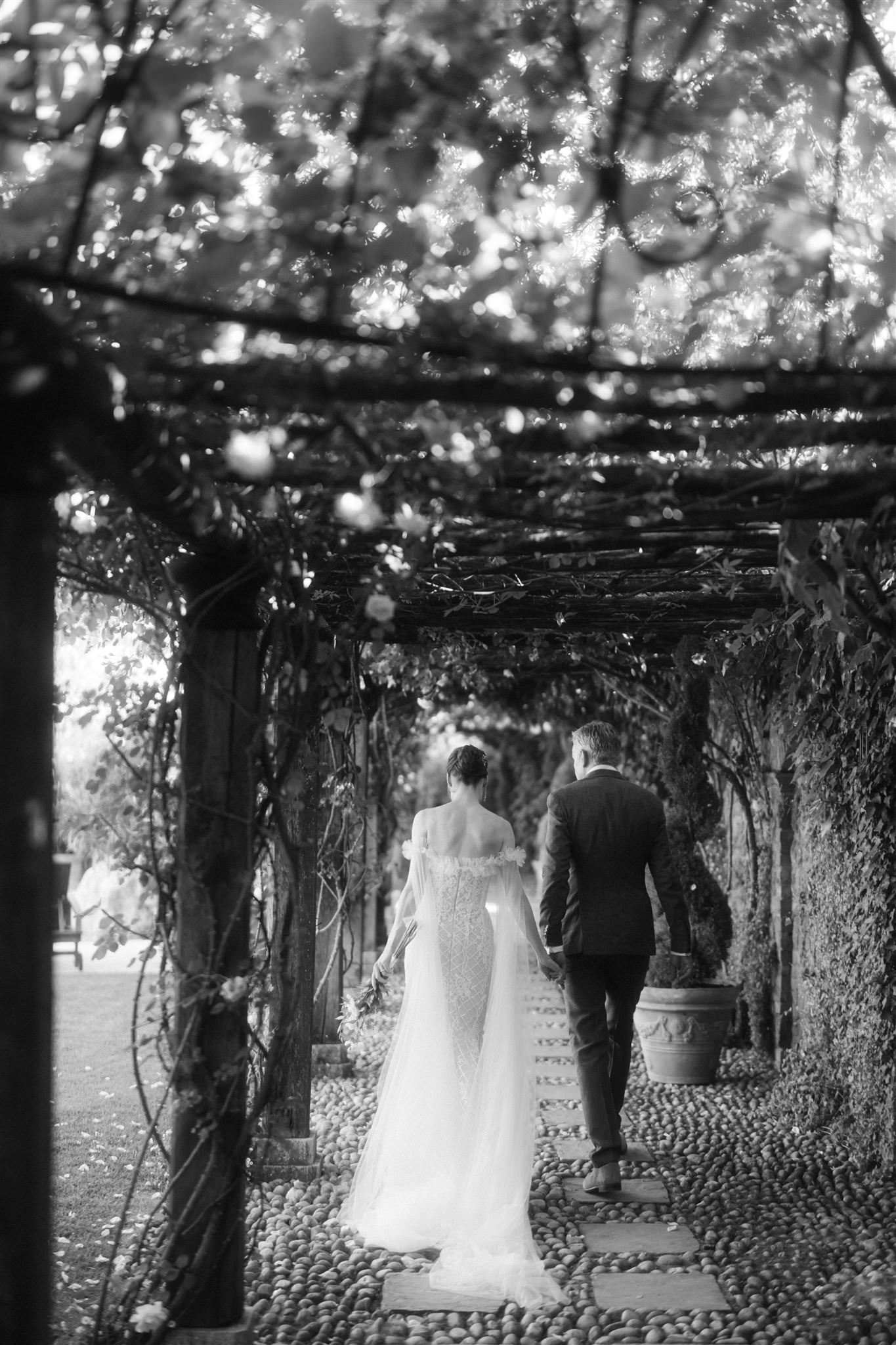
The pergola dinner space faces west over open fields. In late September, dinner begins while the sun is still above the horizon and light is actively warming the table. By the time the main course arrives, blue hour has begun and the ambient lights along the pergola come into balance with the sky. This natural choreography between daylight and design lighting is what makes dinner photography at Borgo feel cinematic.
For couples interested in the broader light strategy the studio uses across Tuscany, see best time of day for wedding photos in Tuscany.
The spaces that matter for photography
Borgo is generous in architectural variety, which is the single most useful trait in a wedding venue. Within a short walk couples have access to:
The main courtyard, with twelfth-century stone walls and a central space that works equally well for ceremony or reception.
The orangery, the ceremony hall that holds the best natural light on the estate.
The formal garden, with a long central axis that produces strong compositional lines for portraits and processionals.
The pergola, the dinner space with western exposure.
The kitchen garden and farm, providing non-traditional portrait backdrops for couples open to unposed imagery in working spaces.
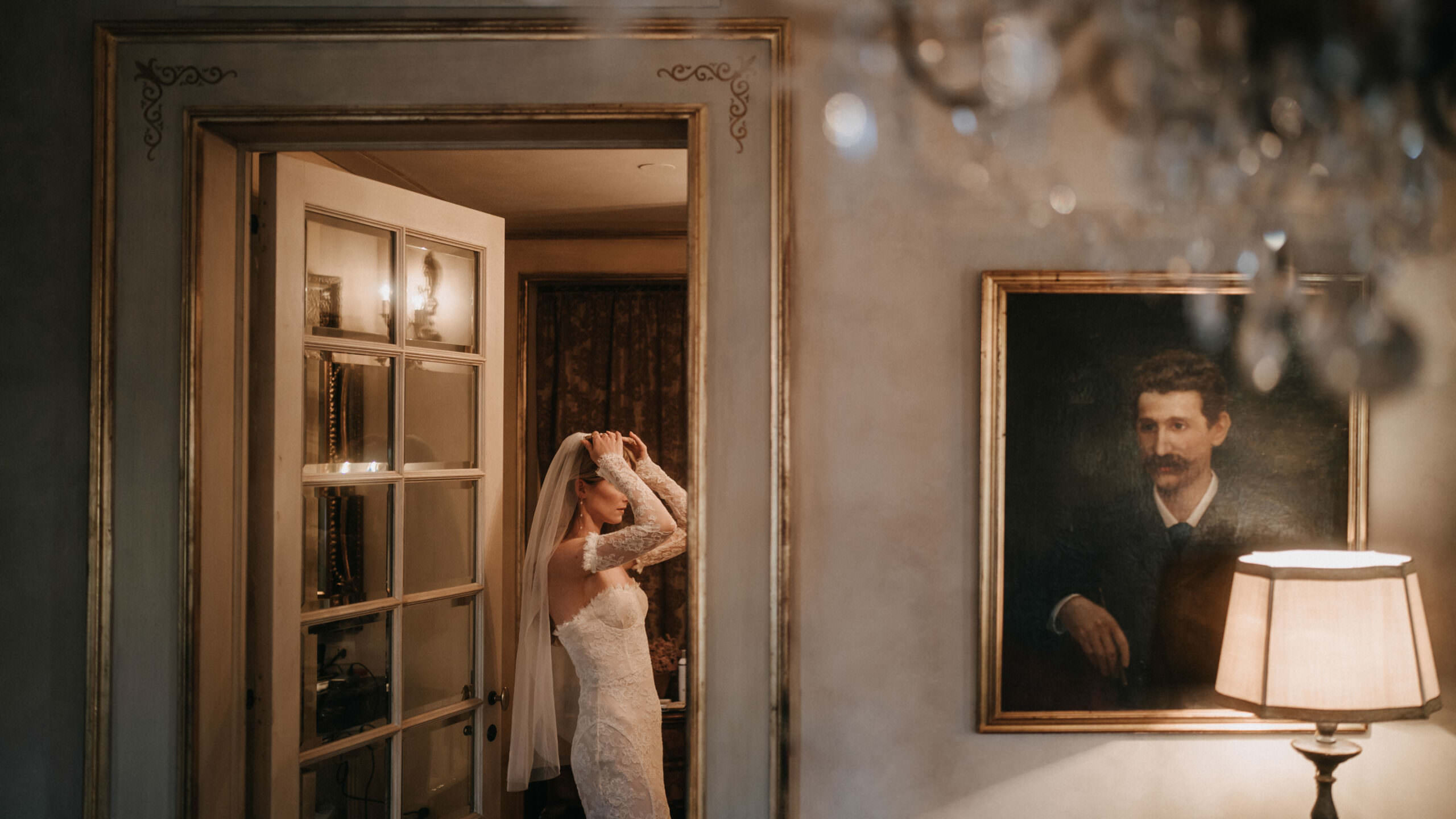
Interior suites and dining rooms, each with distinct character, useful for preparation coverage and bad-weather contingency.
This range means a full wedding day can unfold across multiple distinct settings without any guest transit, which is a significant advantage for both photographic rhythm and guest experience.
Why modern couples choose it
Borgo Santo Pietro attracts a specific kind of couple. Usually international, fluent in design, often working in creative or entrepreneurial fields, interested in minimal aesthetics and long-form craftsmanship. The venue does not compete with the maximalist end of Tuscan luxury. It sits at the other end: restrained, considered, integrated with nature rather than decorated with it.
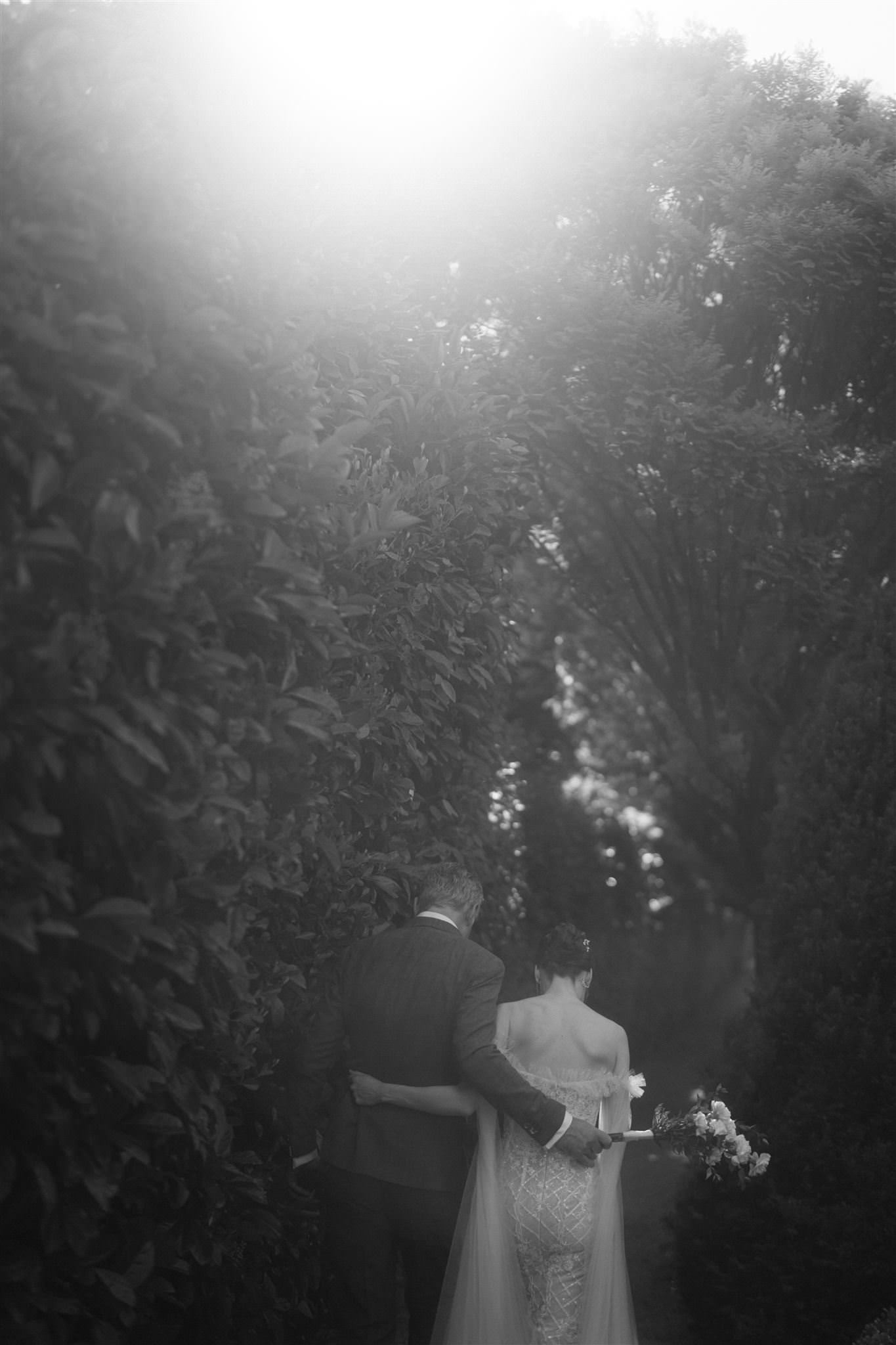
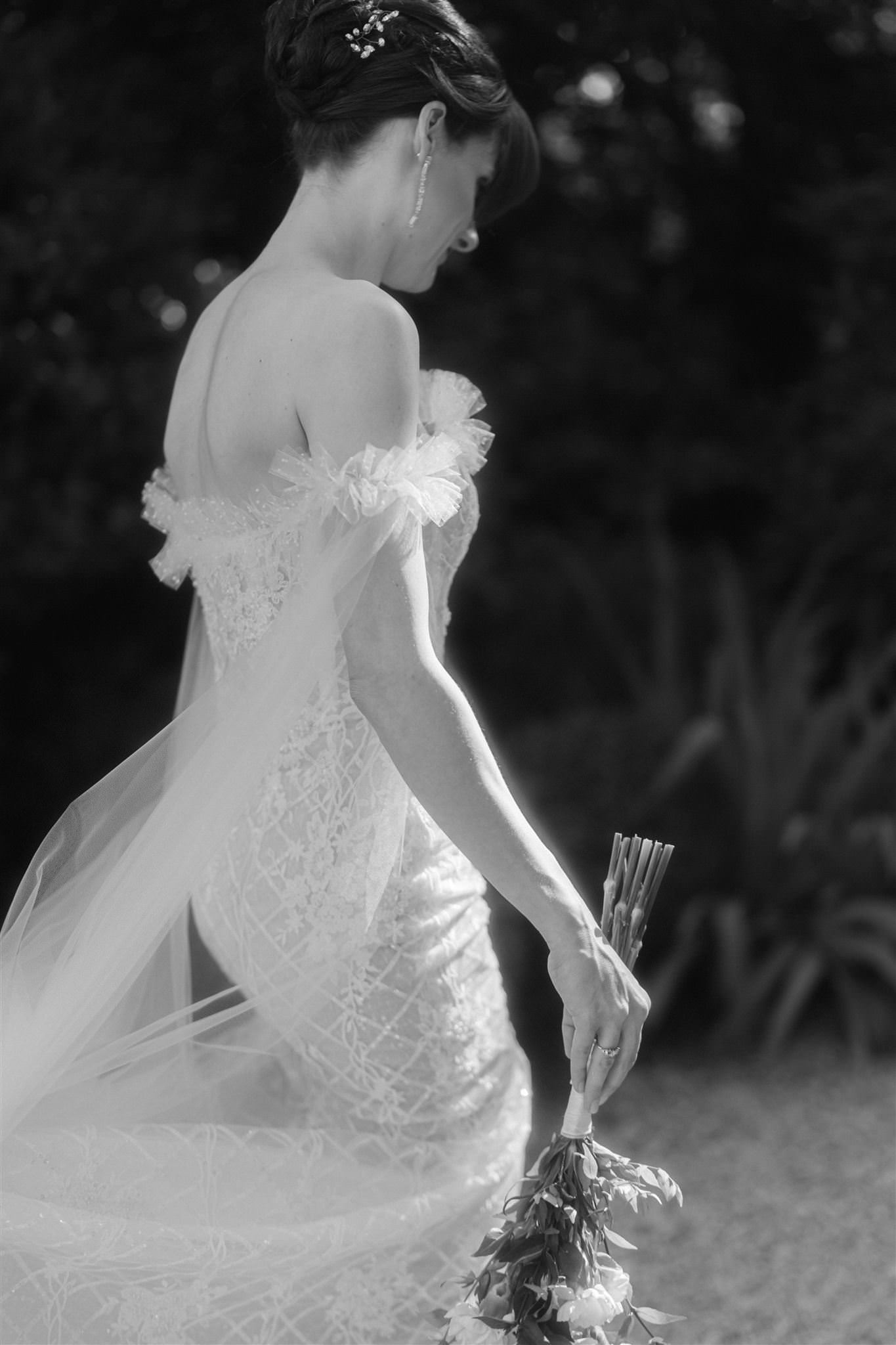
This makes it a natural fit for the kind of wedding Roberto Panciatici Studio photographs. The point of view of the property aligns with the point of view of the studio, which means the photographs come out feeling like an extension of the venue rather than a layer imposed on top of it.
How the studio works at Borgo
A Borgo Santo Pietro wedding benefits from a site visit before the event, because the estate is large and rewards familiarity. When a site visit is not possible, the studio works with the planner to map the timeline against the sun path for the specific wedding date, identify which interior spaces serve as primary backups, and sequence the couple’s portrait session to hit the light windows the property handles best.
Because the studio has photographed at Borgo repeatedly, pre-production is faster here than at properties encountered for the first time. Familiarity with a venue compounds into better outcomes, which is one of the reasons the studio documents each Tuscan estate it works with in detail.
For the full approach to the region, read the wedding photographer in Tuscany pillar page.
Frequently asked questions
How many guests can Borgo Santo Pietro accommodate?
The estate has twenty-two rooms and suites. Exact guest capacity for a full buyout or for ceremonial spaces varies by event design, and the estate team provides official figures during the planning process. For editorial photographic purposes, the property works equally well for intimate weddings of thirty guests and for larger celebrations up to the estate’s capacity.
Is a full estate buyout required?
No, but it is common for weddings that want complete privacy. For couples prioritising editorial outcomes, a buyout is usually worth the investment because it allows the entire property to function as a private film set for the wedding day.
When should we book Borgo Santo Pietro for a wedding?
For peak season dates (late May, June, early September, October), the estate is typically booked twelve to eighteen months in advance. Earlier bookings are strongly recommended, especially for full buyouts.
Does the property require a specific wedding planner?
Borgo works with a curated list of approved planners. Couples should confirm with the estate which planners are eligible before finalising selection. Several of the planners who collaborate with Borgo are also planners the studio works with regularly.
What makes Borgo different from other Tuscan five-star hotels?
Most Tuscan luxury hotels were villas first and became hotels later. Borgo was conceived as an integrated estate from the start, with the farm, kitchen, spa, and hospitality functioning as a single organism. This integration shows in the details a photographer notices: the flowers, the linens, the food, the architecture all share a consistent aesthetic language that reads as genuine rather than designed.
Can Borgo Santo Pietro be photographed from drones?
Drone use on the property is restricted and requires specific authorisation from the estate and compliance with Italian aviation regulations. The studio addresses this in pre-production when aerial imagery is relevant to the couple’s vision.
Borgo Santo Pietro is one of the properties Roberto Panciatici Studio photographs most often, and the studio is happy to collaborate with couples who choose it. If you are planning a wedding at Borgo and would like to discuss photography, reserve a conversation.

